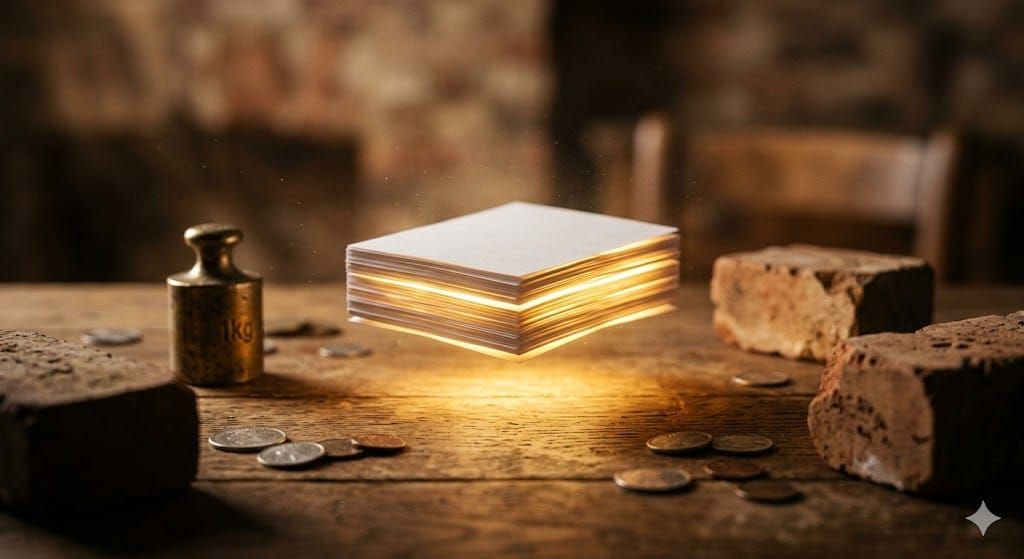
WB082: Worth far more than its weight in paper
I have always been intimidated by The Economist magazine.
Founded in 1843, it is a weekly British news and current affairs magazine whose name alone suggests a weighty, intellectual read. Probably the kind you would see in the briefcase or iPad of a globe-trotting business executive or world leader.
And then there are the pages densely-packed with tiny-sized words that immediately give you the impression that reading this magazine will be a mental marathon. The odd picture or graphic is always a welcome respite amongst the sea of text.
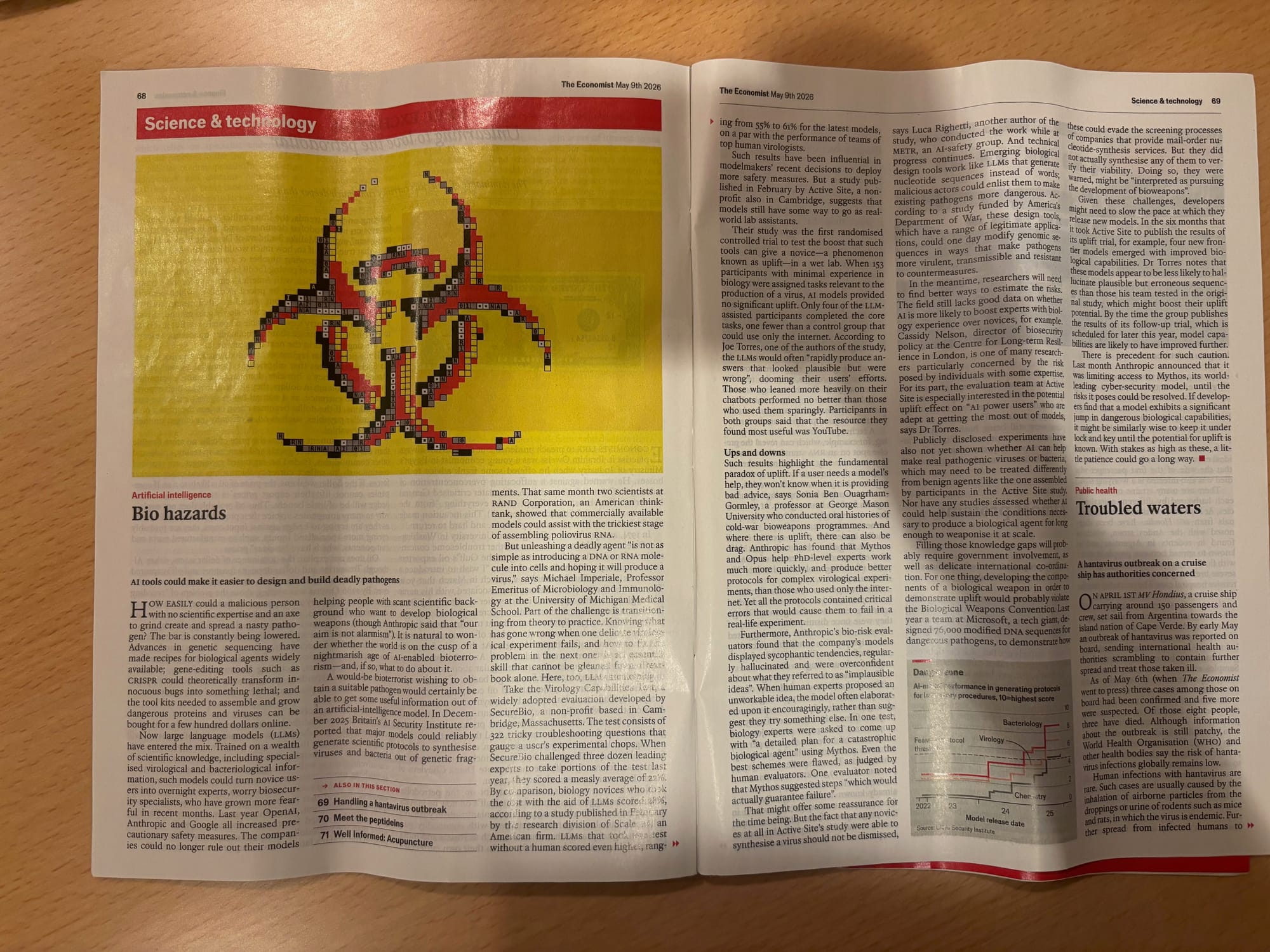
Lots of words!
Do you need to be an Economist or have studied Economics to read The Economist? On first impressions, one would think so.
A recent experience proved otherwise.
On a recent flight, I set aside my reservations and bought the April 11th issue at the airport to read on the plane. In Singapore, the magazine retails for S$21 (US$16.40), expensive enough to make you think twice about a purchase.
Surprisingly, this was a decision I ended up not regretting.
Don't judge a magazine by its price tag (or weight)
You can be forgiven for quickly writing off The Economist as a pricey and unnecessary read. If weight is a measure of worth, The Economist doesn't fare well as it weighs a paltry 100g.
So why pay "so much" for this magazine?
Warren Buffet once said, "Price is what you pay, value is what you get". After reading three issues of the magazine cover to cover, I came away convinced that Buffett's quote accurately describes The Economist.
Value is more easily appreciated quantitatively. In this year's April 11th issue, I counted no fewer than 60 articles in the contents section.
On a per article basis, this equates to about US$0.21 (assuming 60 articles) for well-written prose, a bucket-load of facts and a clear window into the state of global current affairs (not good, it seems).
What I really value are the many punchy headlines like "Stop Dawdling" (April 11th, 2026) and "The Case Against Trees" (May 9th, 2026). The headlines grab your attention, but not in a cringy, click-bait kind of way.
The Economist's articles are grouped by regions - Asia, China, the United States, the Americas and the Middle East & Africa. Articles are also grouped by topics including Business, Science & Technology and Culture.
Within these categories are regular columns with historical names like Bagehot (after Walter Bagehot) and Charlemagne (after Charlemagne, the first Holy Roman Emperor) that focus on specific topics - the former, on Britain, and the latter on European politics.
Despite being a regular reader of online news, I came to realise how little I know about global current affairs and general knowledge after reading The Economist. I blame the online news echo chamber and algorithms that decide what we consume and when. And also the ever-present risk of being distracted by an alert on a digital device.
In "Going old school" (May 9th, 2026), I learned how Nordic governments are returning to learning with books and pens, as growing evidence shows that digital learning is far less effective than initially thought. Quite the u-turn, considered the Nordic countries were among the first in the world to transition to digital learning.
"Which navy's better, down where it's wetter?" (May 9th, 2026) gave a detailed account of the fierce, yet seldom heard of, contest between China and America to establish underwater supremacy through advanced submarines. A key constraint to America's ambitions to maintain its lead is the poor state of her local manufacturing capabilities.
Same product, different global price. Why?
The price table of The Economist - always printed at the bottom of the cover page - is a great educational starting point to discover that the same product (content-wise) can be priced differently around the globe.
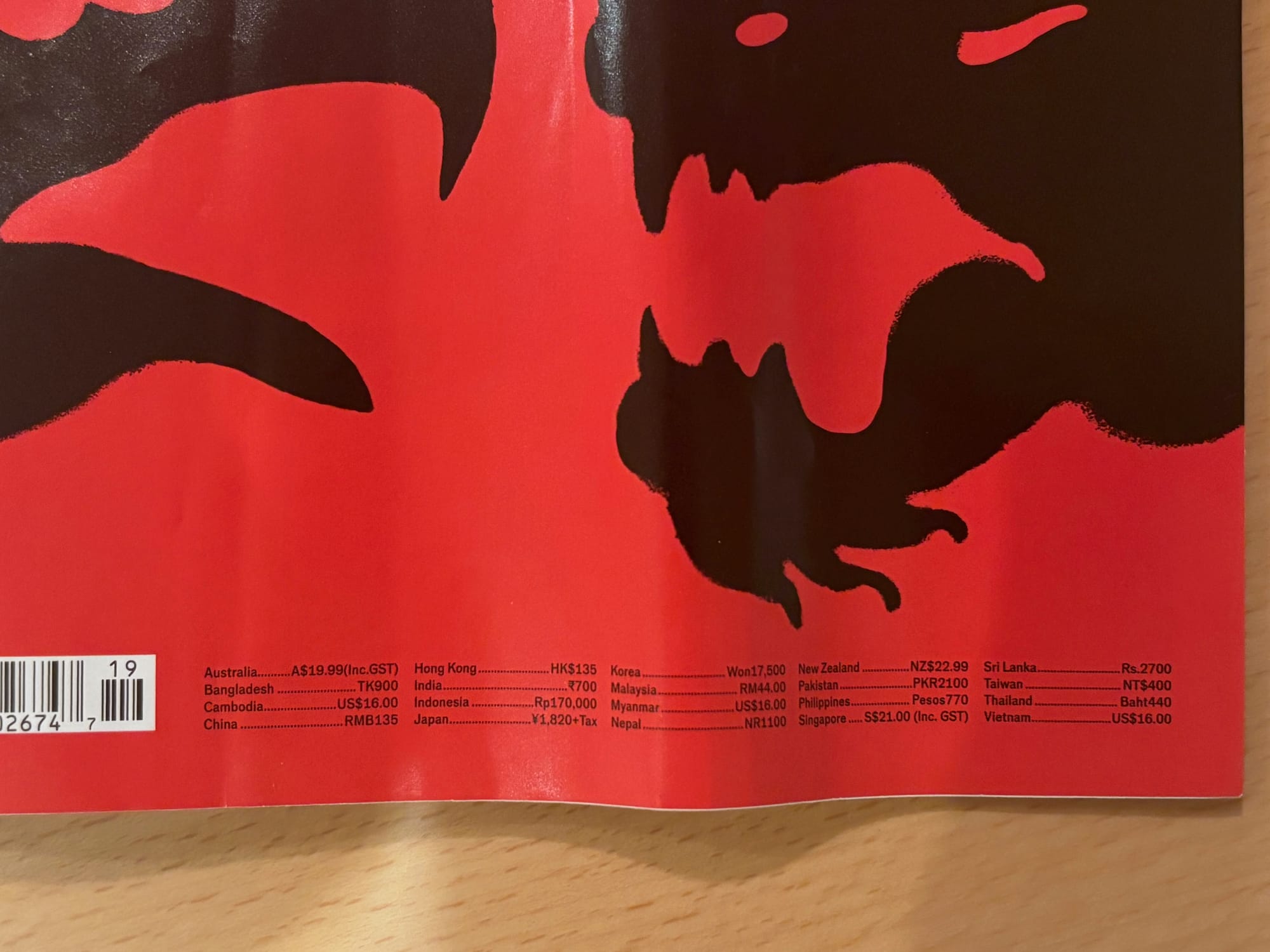
Case in point, in Singapore, The Economist retails for S$21.00 (including GST). In Malaysia, it retails for RM44.00. And in Japan, JPY2,000 (including consumption tax).
Standardising all the prices to US dollars, the magazine retails for US$16.40 (Singapore), US$11.08 (Malaysia) and US$12.58 (Japan).
It is clear, to a lay person, that Malaysia is the cheapest place among these three countries to buy The Economist. A curious lay person will wonder, "Why is this the case?".
Broadly speaking, countries around the world have different production, labour and transport costs. Material costs - paper and ink - also differ.
Now the actual reason(s) behind the pricing variation is definitely more nuanced. To understand this, you probably need to study Economics.
--Ends