WB098: Buyer Beware
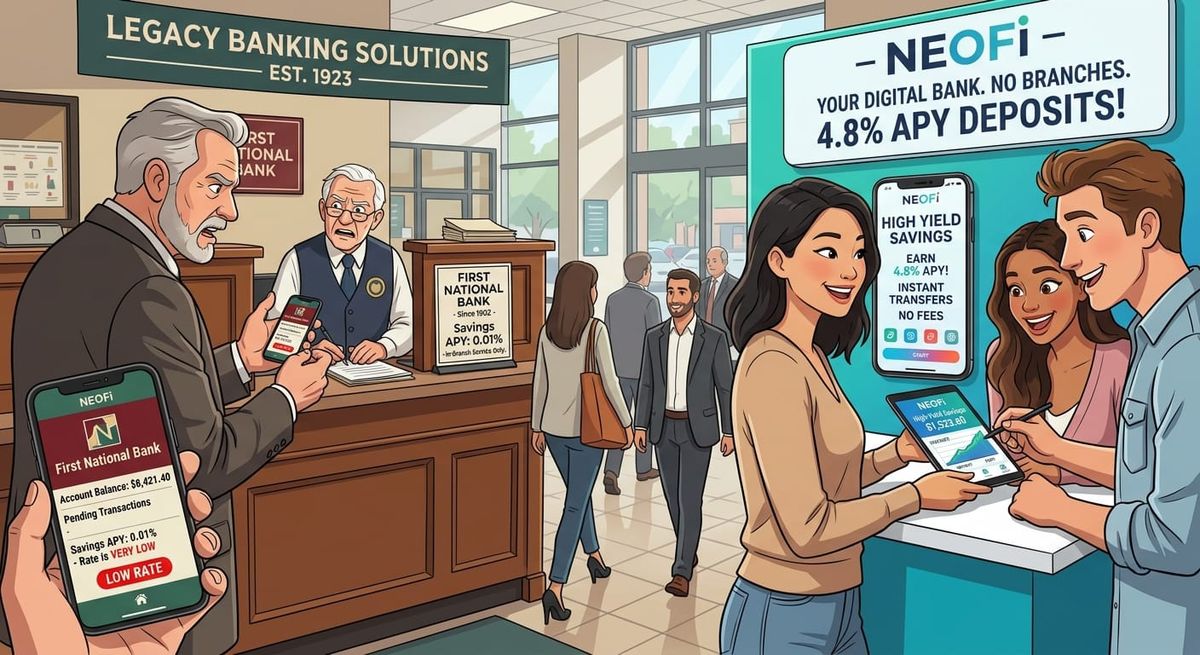
In recent years, there has been a noticeable increase in financial technology companies, also known as fintechs, that have been gaining market share from legacy financial institutions.
Fintechs have sprouted up in various corners of finance, including loans & deposits, mutual fund & share investments and foreign currency exchange. These have traditionally been profitable hunting grounds for legacy financial institutions like banks and securities companies.
Consumers are easily drawn to fintechs due to their smooth, digital-first user experience and competitive deposit rates. Yet, despite the allure of migrating all your financial assets to a hot new fintech, there are cautionary tales to be aware of.
The Yotta disaster
One such tale involves Yotta Technologies ("Yotta"), an American fintech founded in 2019 that marketed itself as a neobank whose customer deposits were FDIC-insured.
The FDIC, or Federal Deposit Insurance Corporation, is a US government agency that insures customer deposits up to US$250,000 per insured bank in the event a licensed bank fails.
A neobank is a fintech that offers a 100% digital banking service. Compared to legacy banks, neobanks can offer higher deposit rates as they are not bogged down by high operating costs of physical branches and leverage modern technology to lower their operating costs.
At long last, consumers were in a good position to benefit. Or so it seemed.
Long story short, Yotta abruptly halted deposit withdrawals in 2024, leaving customers unable to access their funds. As Yotta marketed itself as an FDIC-insured bank, customers assumed their deposits were safe.
Unfortunately, it became apparent that Yotta deposits were not FDIC-insured as it was not a licensed bank. Yotta simply acted as a middleman in collecting customers' savings and depositing these funds with a licensed bank.
From the FDIC's point of view, the deposit insurance could not be honoured, as technically no licensed bank had failed.
There is actually more to this story involving another fintech middleman called Synapses that sat between Yotta and the licensed bank. This complicated story is best understood by watching this video from the More Perfect Union YouTube channel.
Anyway, the point of bringing up the Yotta disaster is to highlight the risks of trusting newly-launched fintechs with your hard-earned savings.
Creating an account with a fintech and depositing your money is a frictionless experience. The same, however, cannot be said when you need to access your funds in the event of a Yotta-like disaster.
This process often takes years or decades. And even then, it is wishful thinking that you will see any of your original funds, as by then the liquidators, lawyers and accountants, who are ironically entrusted to ensure that creditors are fairly compensated, would have had many bites of the cherry.
Are consumers solely to blame?
It is very easy to point fingers at the average Joe for not practising the age-old saying of "buyer beware" and easily trusting flashy fintechs or neobanks that have unproven track records.
Yet, I feel the fault also lies with legacy financial institutions that have failed to prioritise their customers, instead favouring shareholder returns at the expense of investing in technology and innovation. This is ironic since customers are the lifeblood of any financial institution.
Before the emergence of fintechs, legacy financial institutions had been able to leverage the high switching costs to a consumer embedded in a bank's ecosystem.
A large corporate that wants to switch to another financial institution, for example, has to contend with administrative costs like re-working internal workflows, informing their customers and preparing the necessary documentation. Time also needs to be spent cultivating a new working relationship with the bank to secure "preferential" rates.
This moat is now under competitive threat, forcing legacy financial institutions to improve their offerings or risk having their lunch eaten by nimble and innovative fintechs.
Consumers will ultimately benefit from market-driven competition. Look at how the cost of electronic vehicle ownership globally has been driven down by cut-throat competition in China.
That being said, fintech blowups like Yotta are a cautionary tale that reaping these benefits is not as straightforward as it seems.
--Ends