WB086: Japanese Plum Rain
Japan's rainy season is known as tsuyu (Japanese: 梅雨). The literal translation is "Japanese plum rain". 梅 means Japanese plum and 雨 means rain. Why is this the case?
Well it turns out the rainy season traditionally coincides with the ripening of Japanese plums.
Tsuyu starts in early-June and goes on for nearly a month. The temperature during this period is in the high teens to low 20's.
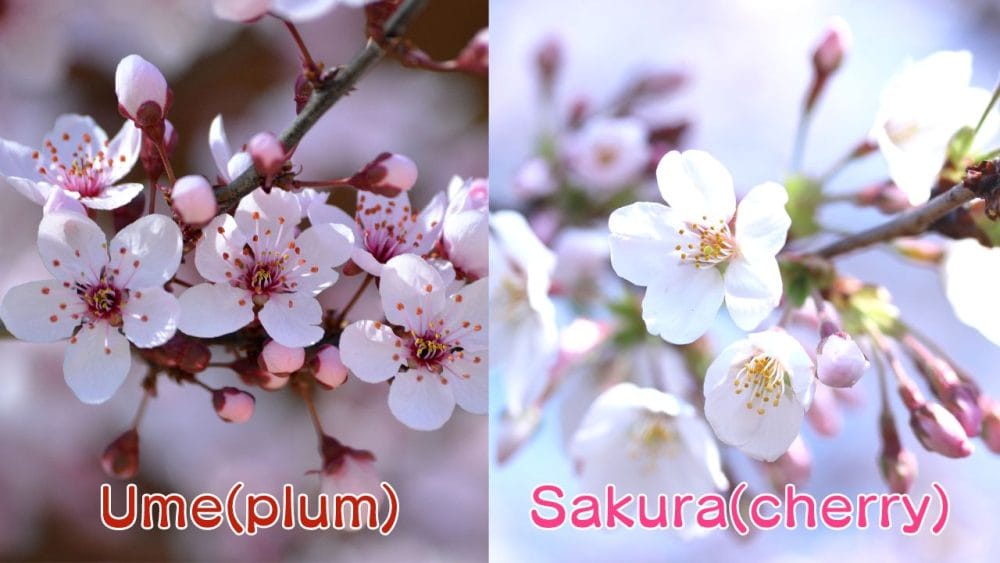
Interesting fact: the flower of a Japanese plum closely resembles the more famous sakura (Japanese: 桜, English: cherry). The ume flower starts blooming before the sakura flower, so it is quite easy to mistake one for the other.
Be sure to check before you excitedly take a photo with what you think is a sakura tree.
I actually just had a hunch that maybe the flowers look similar as both fruits are from the same fruit family. It can't be a coincidence right? Sure enough, according to Wikipedia both plants are from the Rose family. Interesting fact, peaches are also from the Rose family.
With every change of the season in Japan, consumer goods companies are busy marketing and rolling out their seasonal products.
During tsuyu, most, if not all, supermarkets you visit will have a dedicated section for DIY ume syrup kits. Being prominently displayed at either the supermarket entrance or the fruits section, they are very hard to miss.
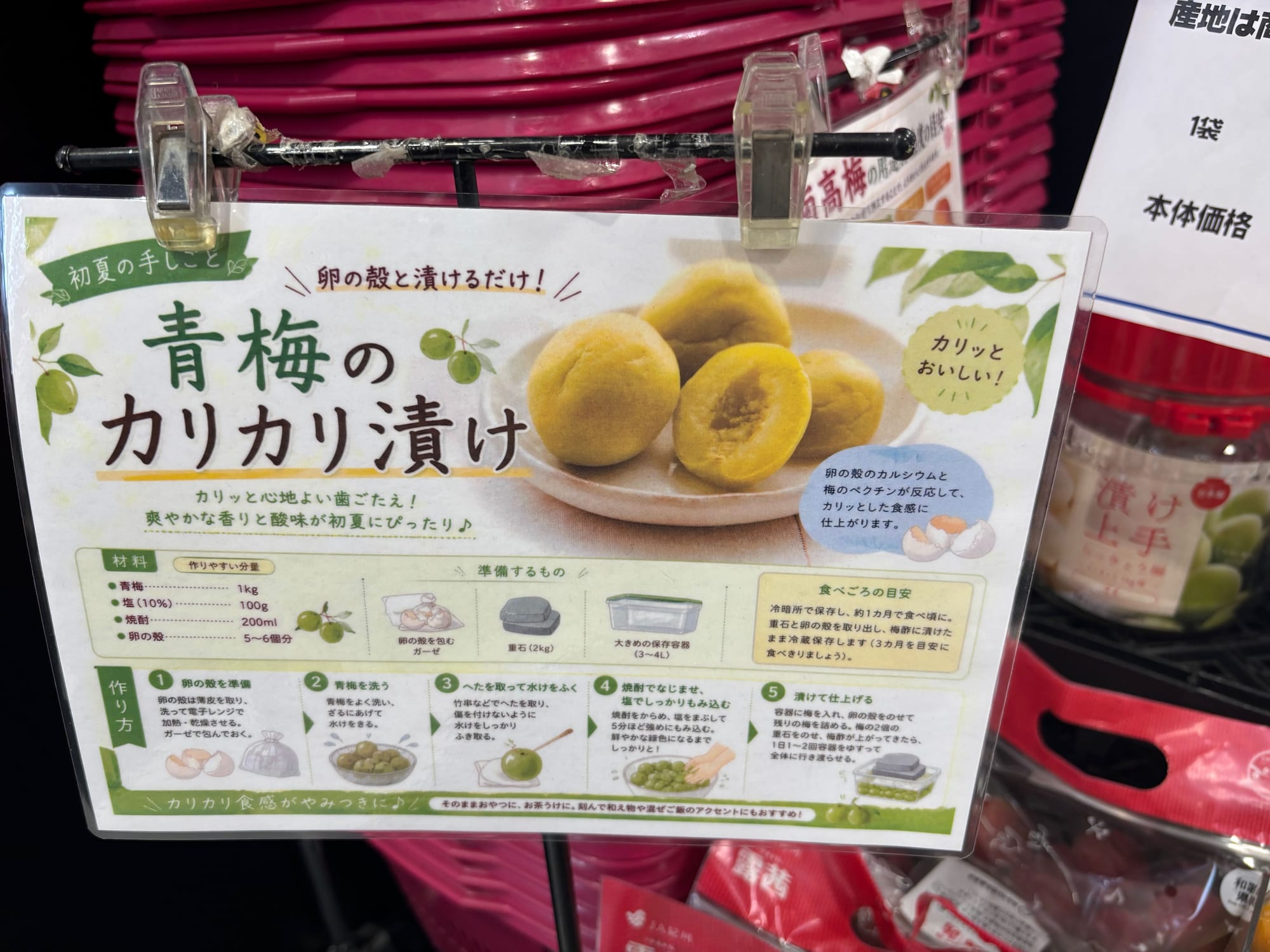
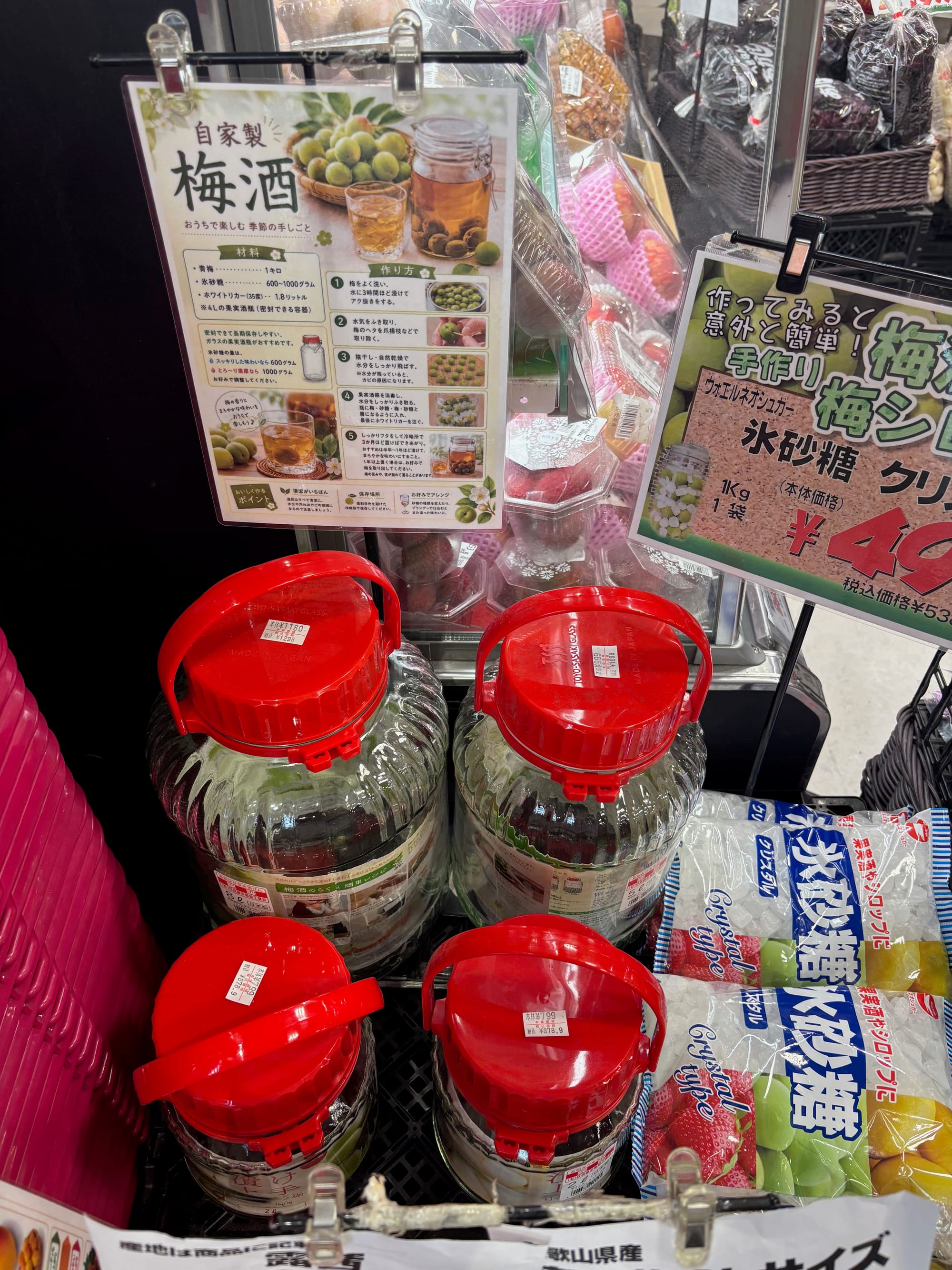
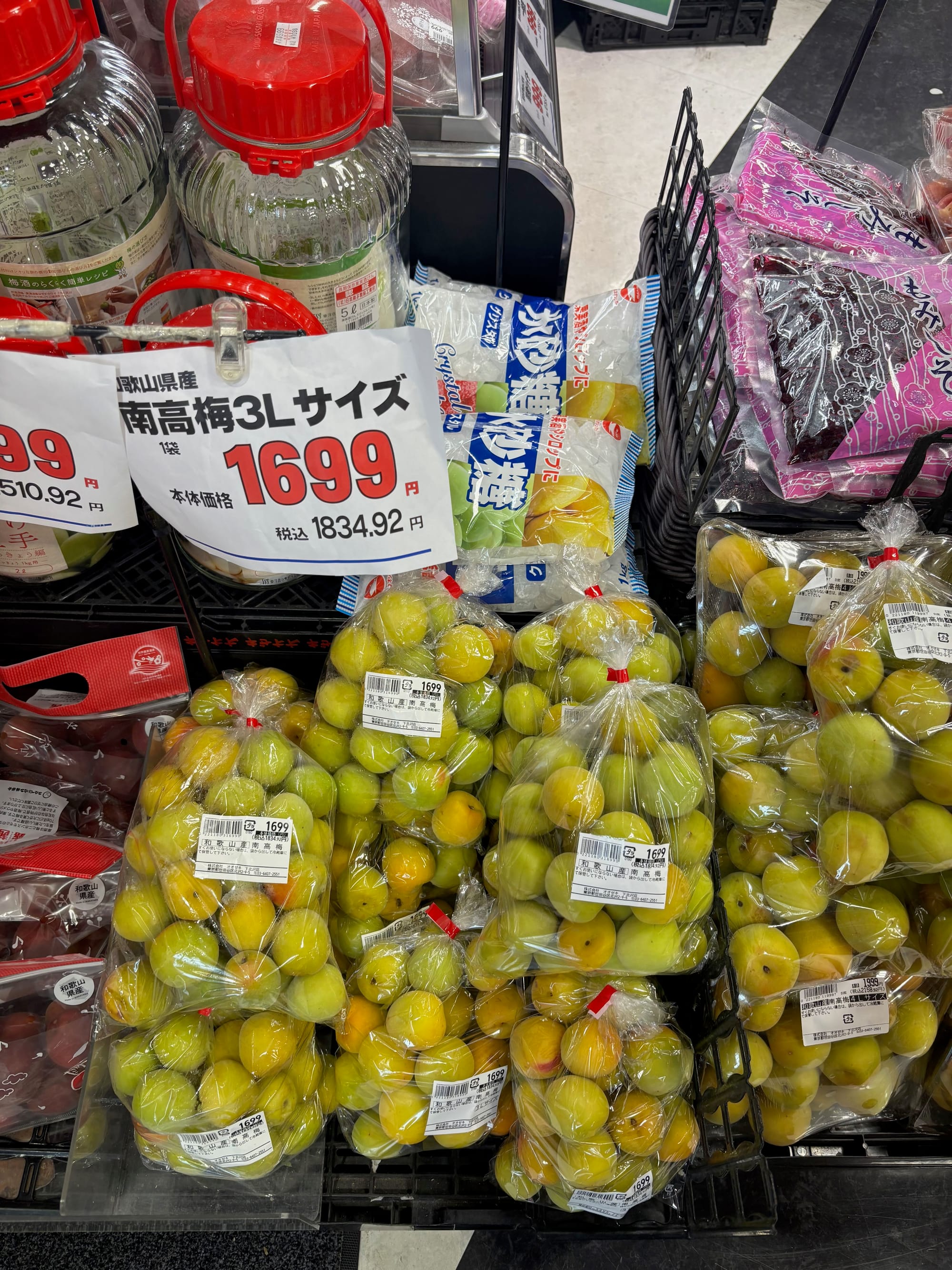
DIY Ume-making kits
The kits comprise a pre-weighed bag of ume and sugar (one to one ratio), along with a pickling jar. You can also buy the ingredients separately.
This year, we decided to give ume syrup-making a try so that we can enjoy a refreshing beverage of ume mixed with sparkling water during the hot and balmy summer months.
The process of making ume syrup is straightforward.
First, prepare the plums by giving them a good wash and removing the base of the stem with a toothpick. Apparently, the reason for doing this is because the stem releases a bitter flavour when pickled.
I am not sure whether there is any scientific basis behind this, but it's best not to question the instructions when you are none the wiser.
Next, poke holes in the ume's skin using a toothpick or fork. This makes it easier for the fruit's juice to be extracted during the pickling process.
Finally, create alternating layers of ume and sugar in the jar. Repeat this process until the jar is completely full. Set the mixture aside in a cool, dark place for at least 10 days and be sure to give the jar a shake once a day.
During the pickling period, the ume's juices are slowly drawn out by the sugar, which melts in the process and results in the ume syrup.
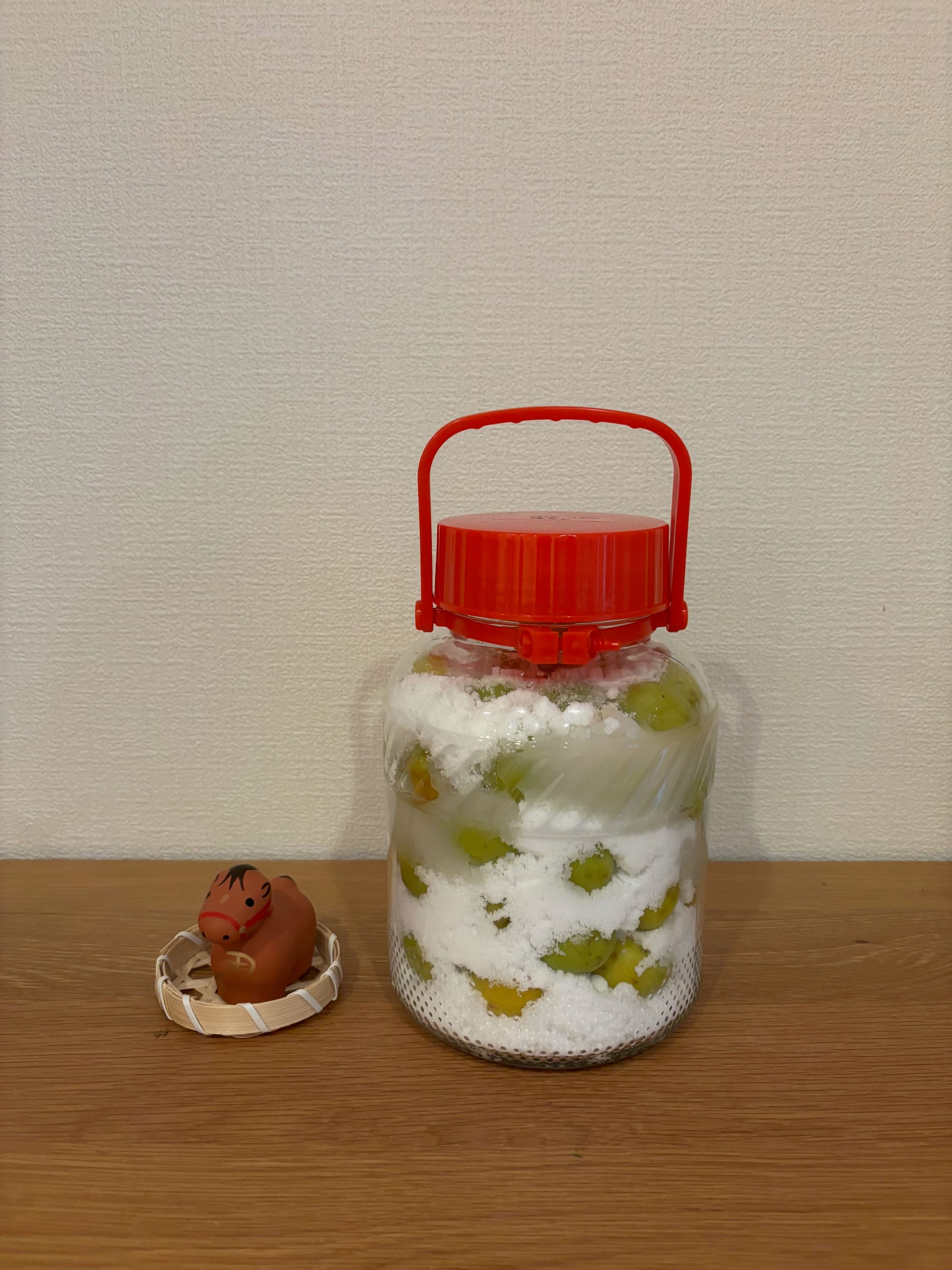
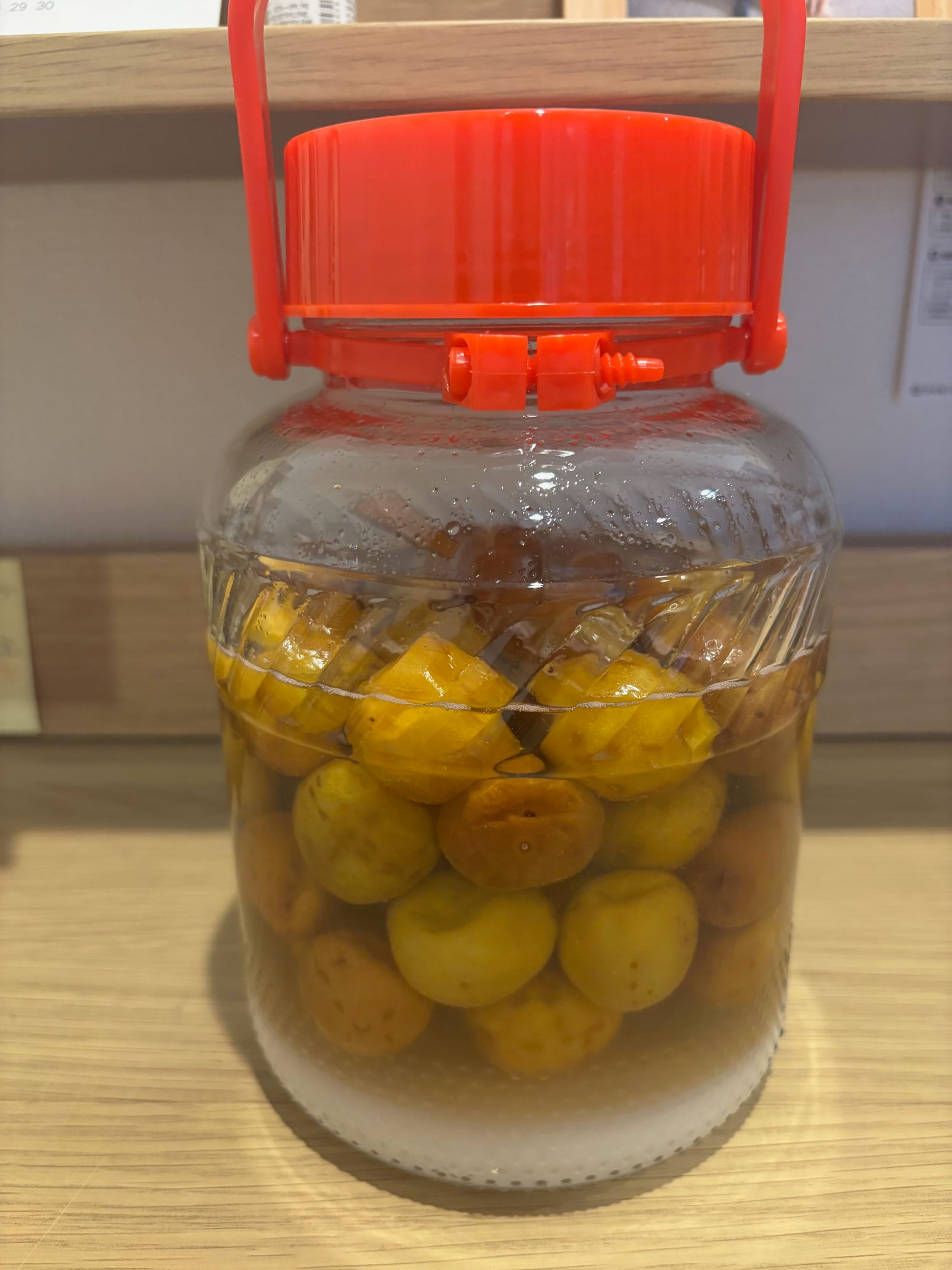
(L) Before and (R) After 10 days
We have yet to sample our ume syrup, but if all goes well we will be able to concoct a refreshing beverage to enjoy during summer.
--Ends