WB089: Okusuri Techou
Chances are that when you see a clinic (Japanese: クリニック) in Japan, there will be a pharmacy (Japanese: 薬局) next door or within walking distance.
Pharmacies are not to be confused with drug-stores. The former is for buying prescription medication while the latter is for buying over-the-counter medicines.
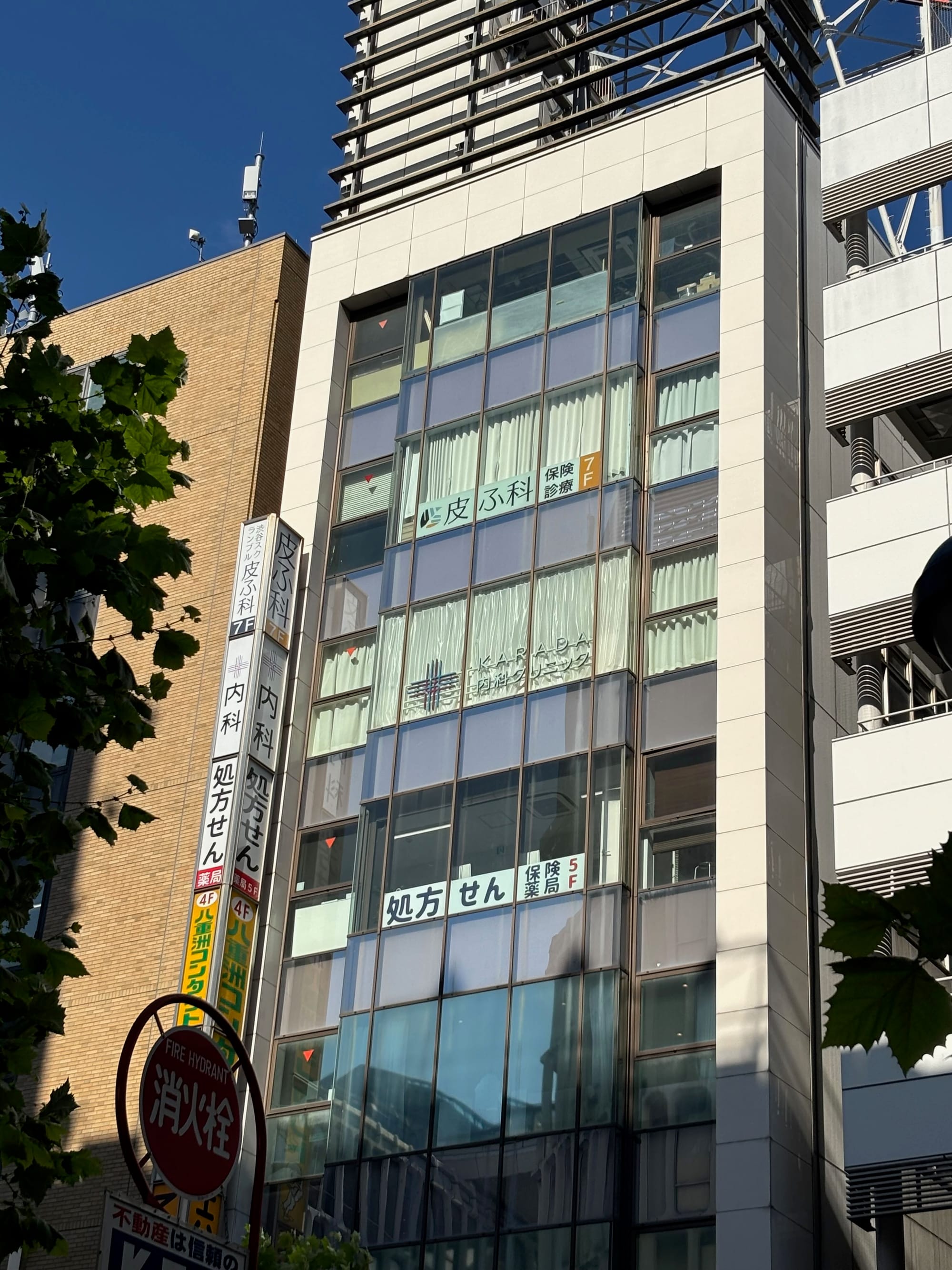
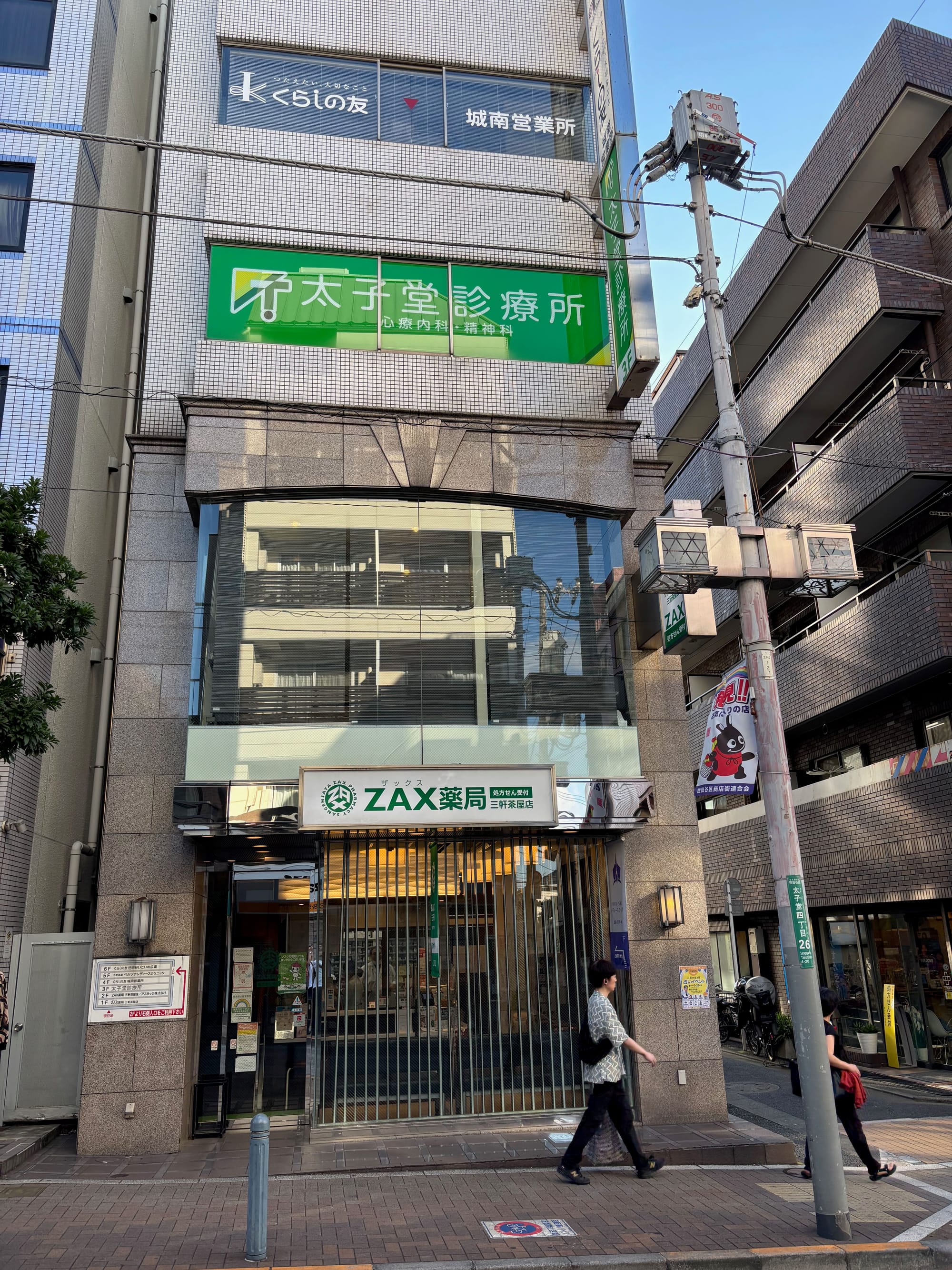
(L) Clinics on the 6th & 7th floor, pharmacy on the 5th floor (R) Clinic on the 3rd floor, pharmacy on the ground floor
In Japan, the roles of prescribing and dispensing prescription medication are separated. According to Wikipedia, this separation of roles is common in Western countries, largely to minimise conflicts of interest.
For example, a doctor who sells prescription medication might be inclined to over-prescribe medicine to chalk up more sales. Japan's practise differs from countries like Malaysia and Singapore, where both doctors and pharmacists are allowed to prescribe and dispense prescription medication.
This year, I visited a Japanese clinic for the first time and was prescribed medication as part of my treatment plan. I did not need to use Google to find a pharmacy, as sure enough there was one right next door to the clinic.
As this was my first time buying prescription medication in Japan, I was offered an okusuri techou (Japanese:お薬手帳, English: Medicine Notebook) at the pharmacy. 手帳 (techou) is Japanese for "memo" or "notebook" while 薬 (kusuri) means "medication".
I did not really know what an okusuri techou was and what purpose it served. Despite this, I said "Hai! (Ok!)" when the pharmacist offered a range of cute, animal-themed okusuri techou's to pick from.
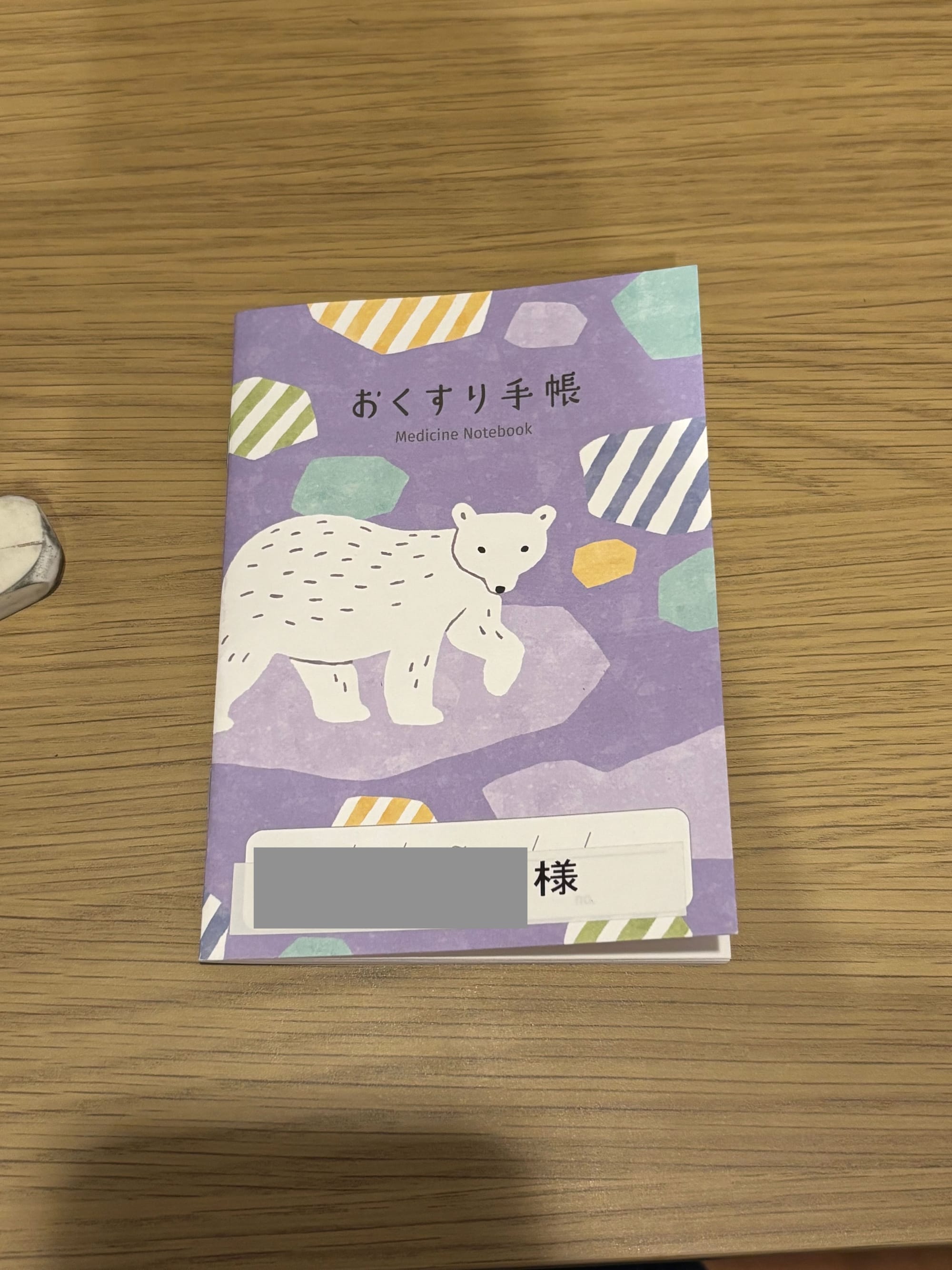
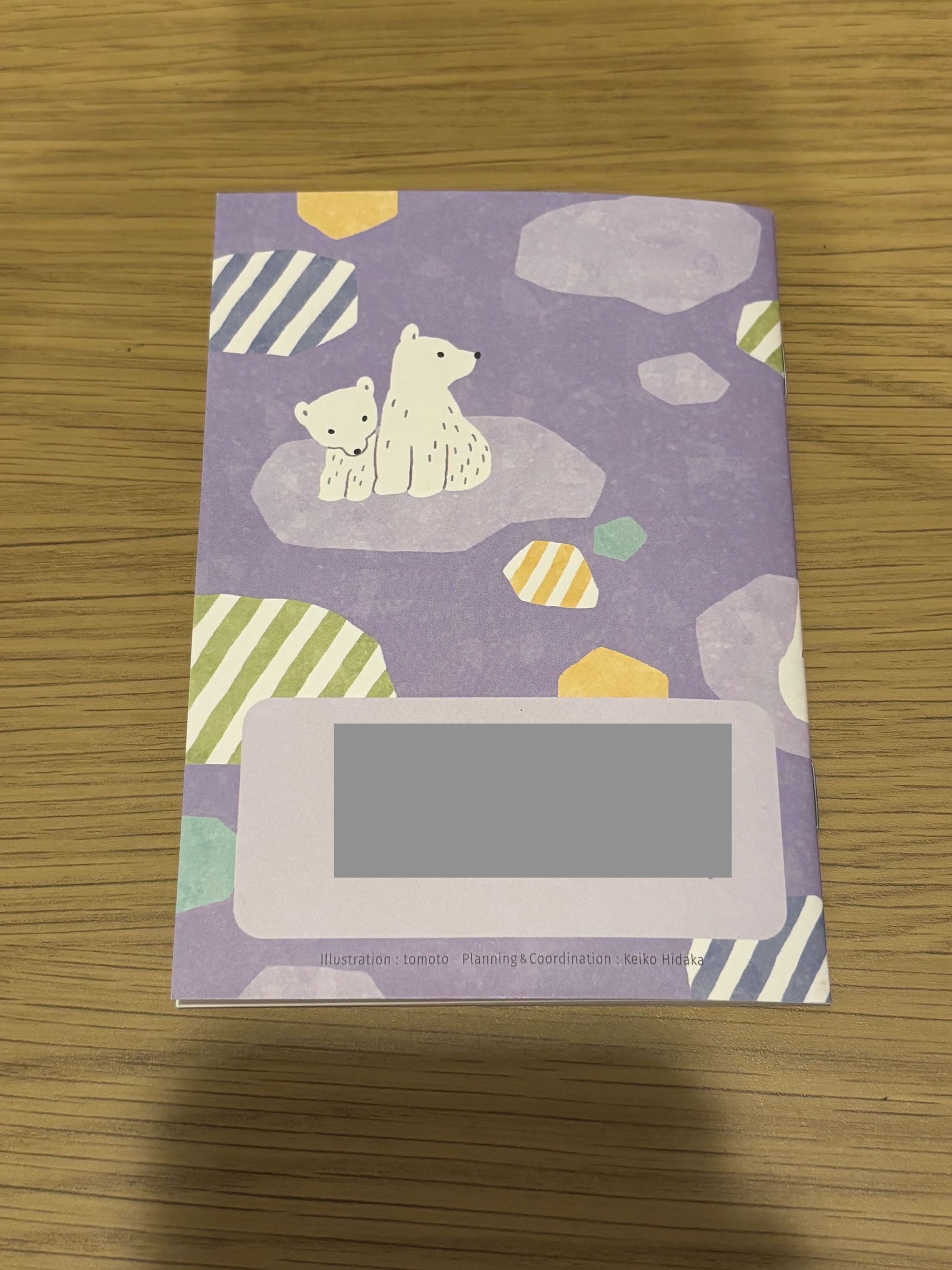
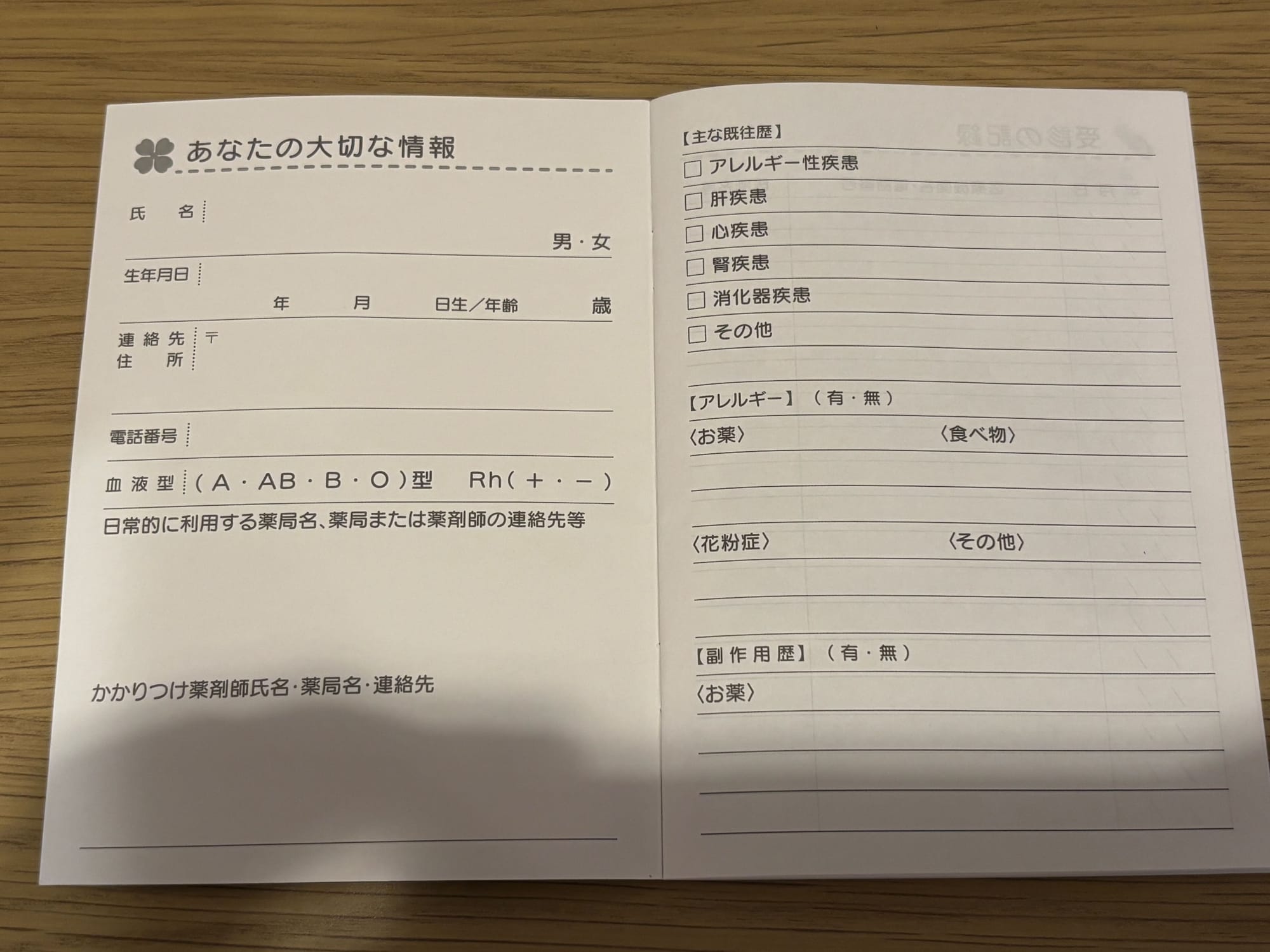
(R) You can fill out your personal details like blood type, allergies and your regular doctor's contact details
After processing my prescription slip, I was instructed to wait for a while. The medication took about an hour to be prepared as it was a busy day in the pharmacy.
Once my medication was ready, the pharmacist guided me through its usage and also showed me a printed label on one of the pages in my new medicine booklet.
This label contained details of the prescribed medicine, such as its name, dosage, frequency of use and the prescribing doctor's name. It became clear to me what the medicine booklet was for.
Whenever you pay a visit to a doctor, I am sure the first (or second) thing you are asked is whether you're currently on medication, or what medication you have been taking. You will also be asked what dosage you are on.
More often than not, such details are forgotten. And this pain point is exactly what an okusuri techou is for. As it is a historical record of the medicines you have been prescribed, it serves as an important reference for any doctor or pharmacist you visit.
According to some articles, pharmacists also refer to the medicine booklet to ensure there are no dangerous interactions between prescribed drugs and to also minimise dose duplications. This makes a whole lot of sense.
In my follow-up appointments at the same clinic, I brought along my medicine booklet, which the doctor referred to before starting my consultation.
These days, we default to our digital devices to record notes related to all aspects of our lives. Not only is this convenient, we also have the ability to retrieve information on-the-fly.
Though analog records like a medicine notebook appear primitive in this day in age, I feel it still has an important role to play.
During a natural disaster, for example, you might not be able to easily access your digital medical records if there is no internet connection. Or if you're incapacitated, your loved ones might not be able to access your password-protected digital device.
One also cannot deny that it also feels really good to have a physical notebook that you can flip through.
If the country you live in does not have an okusuri techou practise, you can always use a basic notebook to record your doctor visits and medical prescriptions. I am sure such living records will come in handy someday.
--Ends