WB091: Making the most of our yogurt diet
"Breakfast is the most important meal of the day", goes to the common saying.
I am not sure whether there is any scientific evidence to support this saying, but it makes sense that following a good night's rest, your body naturally craves a satisfying meal.
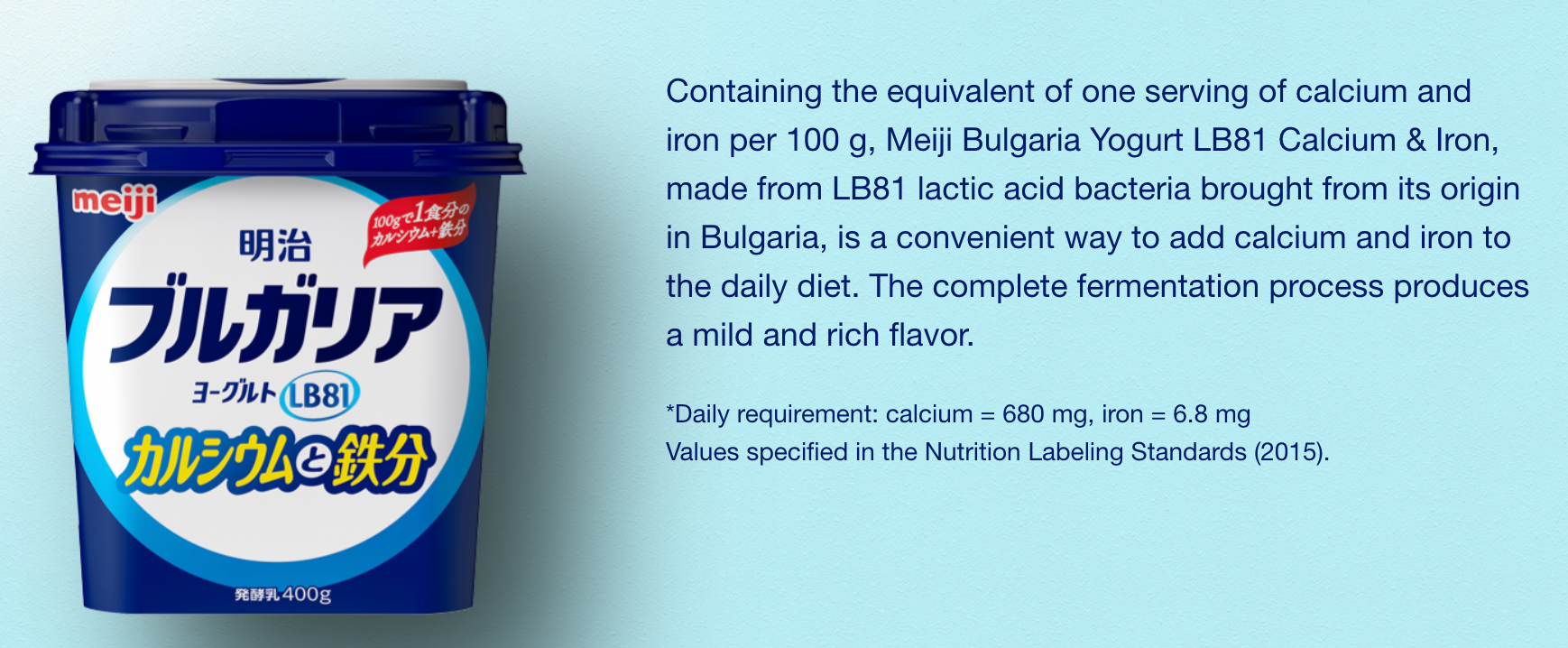
Every morning, we each consume 100g of Meiji Bulgaria Yogurt (Japanese: 明治ブルガリア) - specifically the LB81 Calcium & Iron (Japanese: LB81 カルシウムと鉄分) range - in addition to a slice of home-baked bread, cereal and the occasional fruit.
Meiji is one of Japan's most well-known dairy companies and was founded in 1917.
Why 100g, you might wonder?
A marketing gimmick? Or informational marketing?
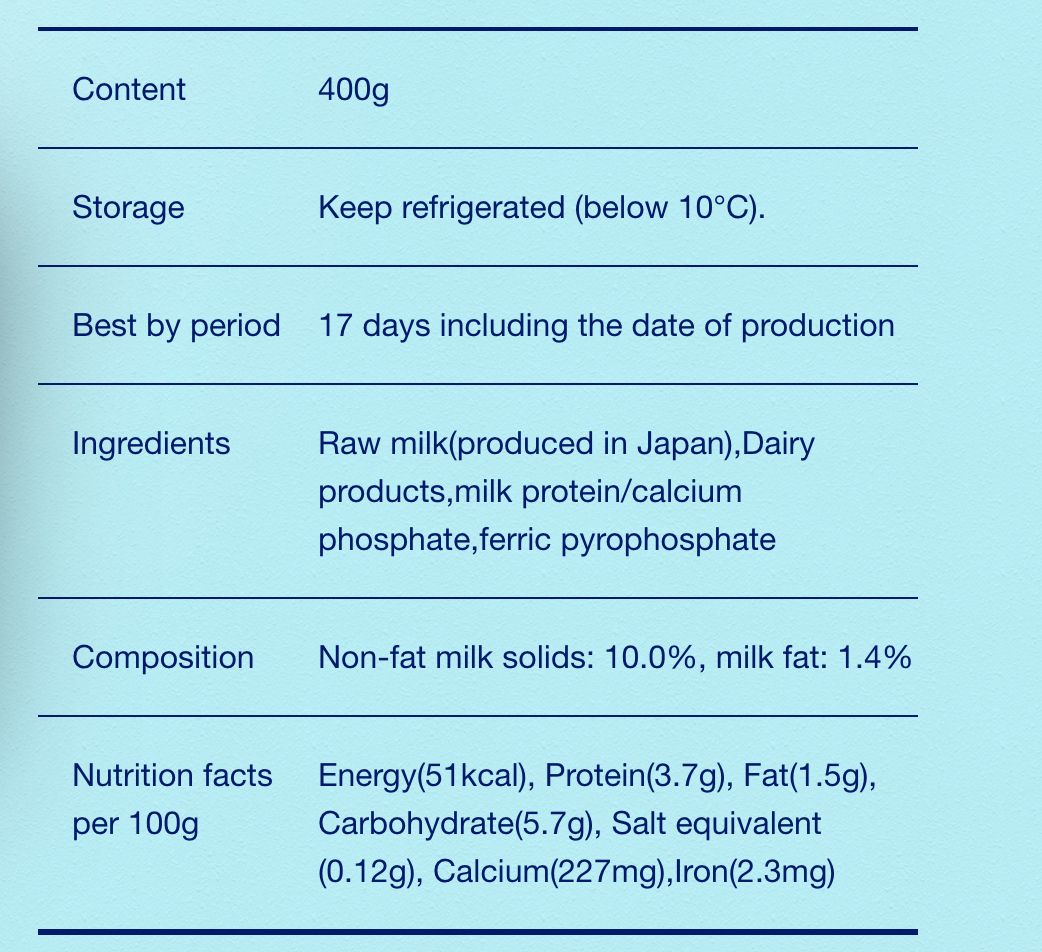
According to Meiji, 100g of LB81 Calcium & Iron yogurt contains the equivalent of one serving of Calcium (227mg) and Iron (2.3mg). I initially mis-understood this to mean 100g of the yogurt contained the daily equivalent of one's Calcium and Iron needs.
Anyway, Calcium is good for the bones and teeth while Iron is a core component of hemoglobin, a protein in red blood cells that helps transport oxygen from the lungs to the tissues. This explains why people who have iron deficiency anemia suffer from symptoms like weakness and fatigue.
A household of two like ours that eats Meiji's recommended daily amount will consume one tub of yogurt (400g) every two days. Thankfully, LB81 Calcium & Iron yogurt is not terribly expensive. It costs between JPY150 (US$0.92) - JPY200 (US$1.22) depending on where you buy it and whether there are promotions. And you cannot put a price on health.
To be clear, taking a quantitative approach to your diet is not necessary if you are in the pink of health. But if there are indeed areas of concern, applying a quantitative approach is a useful diet management tool, I feel.
Given the amount of Meiji Bulgaria Yogurt we consume, it made sense to take part in Meiji's "Natural Life" campaign, which I came across one day.
Each Meiji product, be it yogurt or milk, has a Meiji logo on its packaging. You need to collect these logos to participate in a campaign category of your choice. The prizes in the categories differ from one another.
There are 15 categories in total, with each category requiring a minimum number of tags. This minimum ranges from five to 45. You could, theoretically, enter all the categories, but this would mean collecting 275 tags (!!).
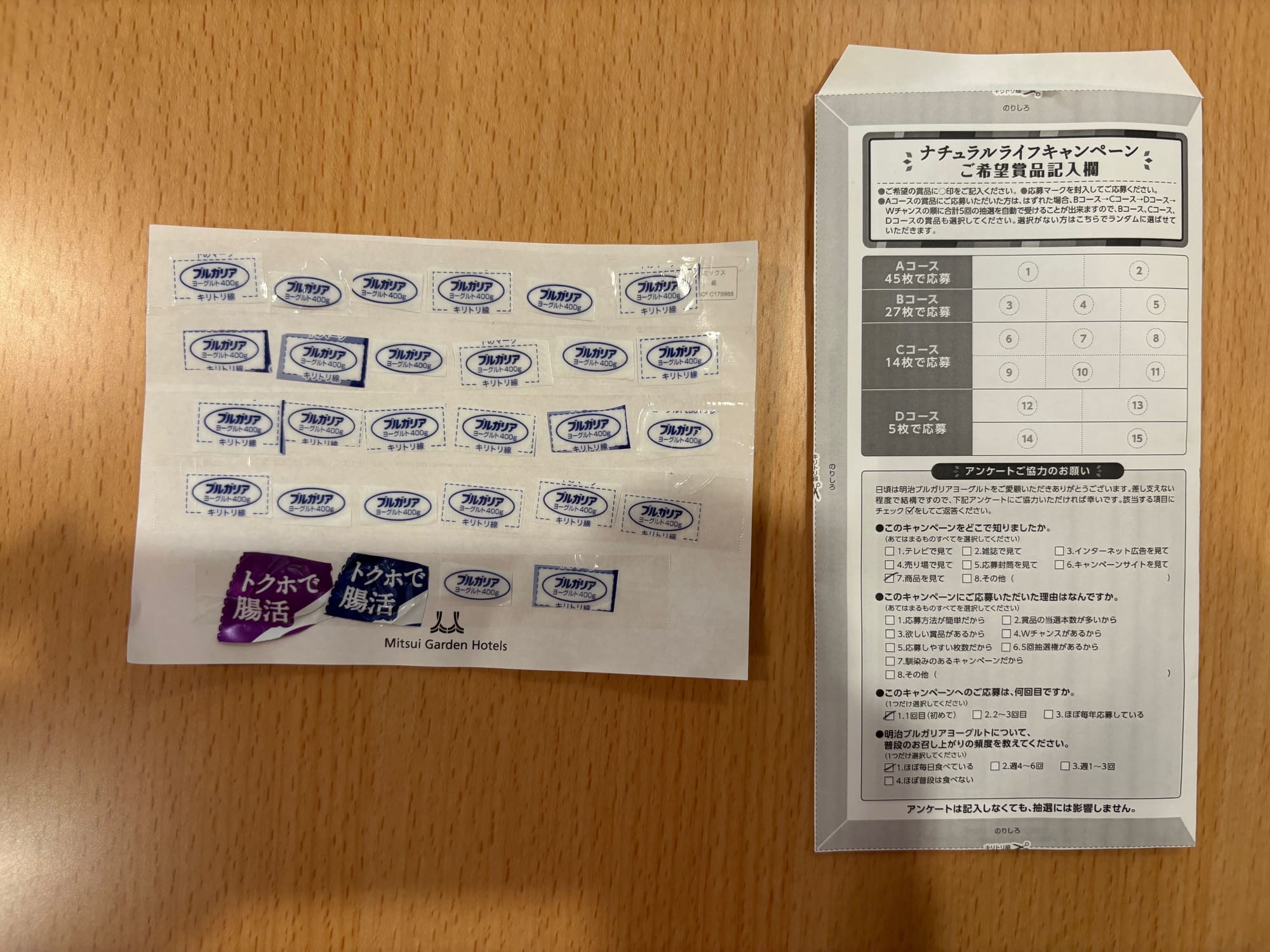
Once you collect all your tags, you send them and a printed application form to Meiji by snail mail. This sounds troublesome, but having a non-digital barrier to entry might add a layer of friction that lessens the competition.
That said, I do not discount there being extremely motivated Japanese housewives or househusbands who will go out of their way to improve their odds!
These days, everything is done digitally with the click of a button. I honestly can't remember the last time I participated in a product campaign that required collecting logos and mailing them.
Without a doubt, digital workflows reduce friction and are convenient to the masses. But in this instance, the layer of friction makes the experience all the more satisfying and enjoyable.
--Ends