WB093: Digital Roadblocks

Extending my visa's Period of Stay is one of the periodic administrative tasks I need to do. In Japan, this is not terribly difficult provided you like following checklists, filling in forms and have all your supporting documents in order.
The problem most people face is the long processing times, sometimes as long as three months, which has implications I will explain later.
You cannot really forget your visa is expiring. Surprisingly it is not Japan's Immigration Services Agency ("ISA") - the authority that vets applications - who sends you a reminder.
Three months before your period of stay expires, financial institutions will promptly send you a notice by snail mail, requesting an update of your Status of Residence (visa type) and/or Period of Stay (visa duration).
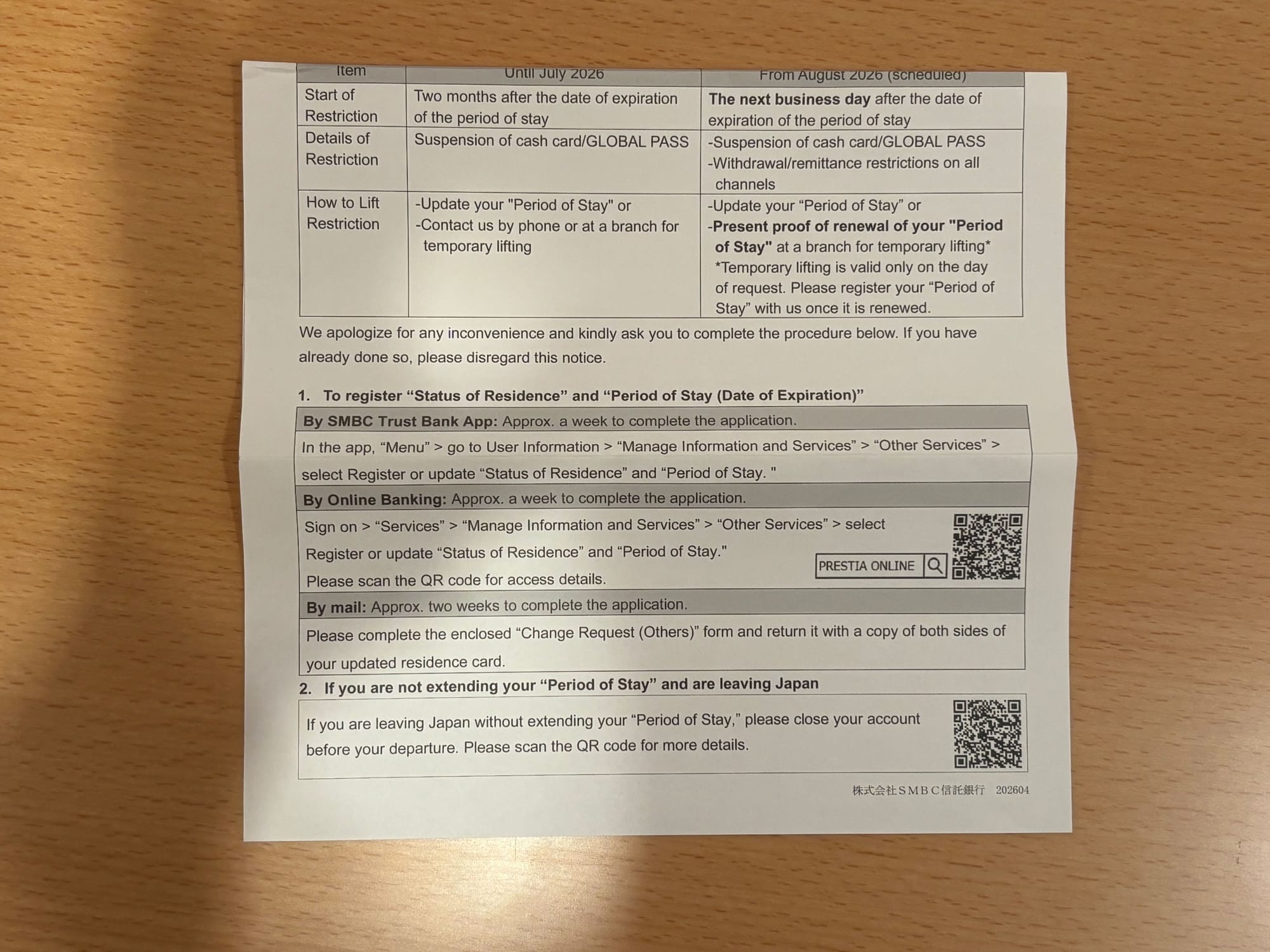
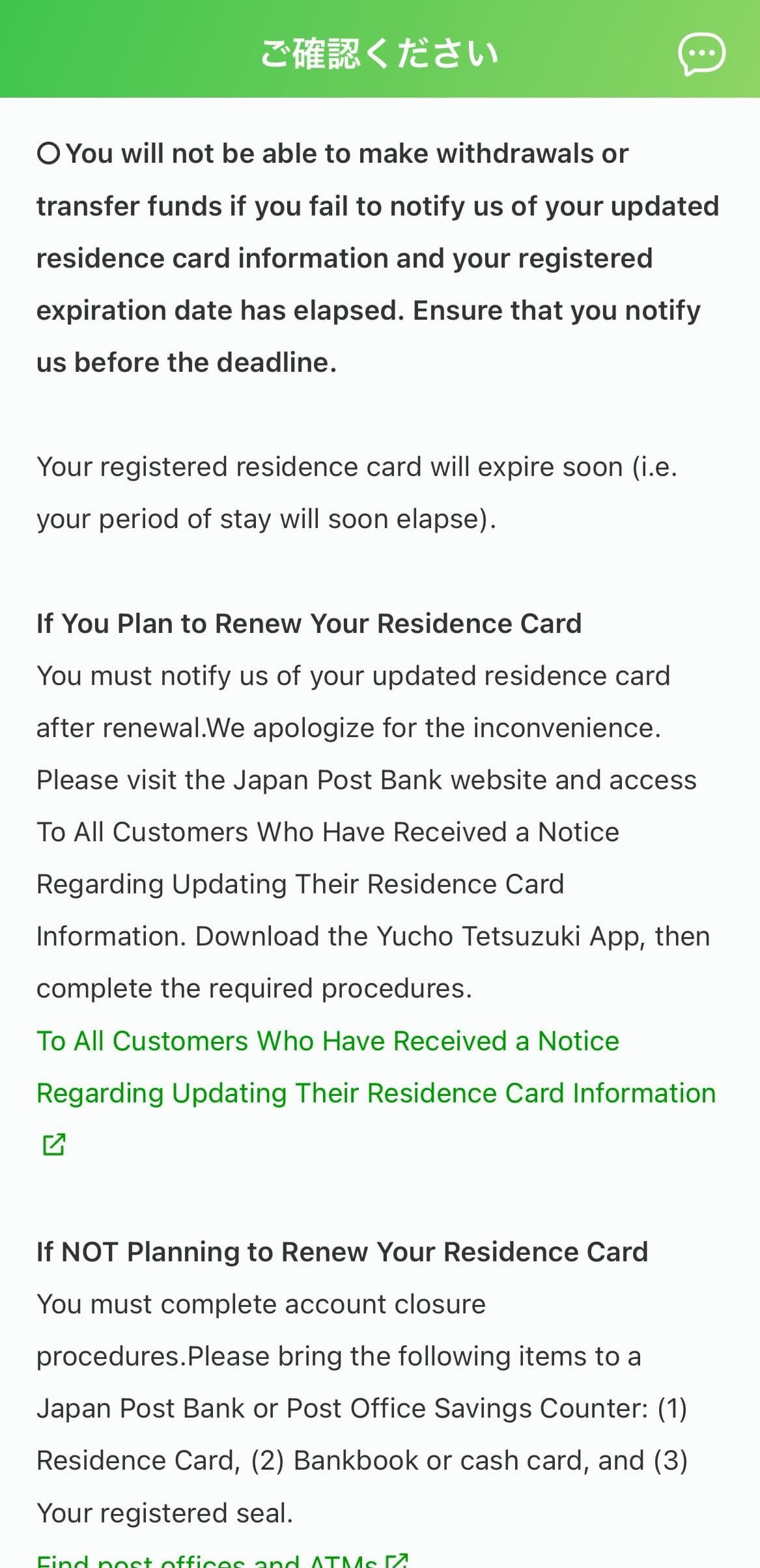
(L) SMBC Prestia's snail mail notification (R) Japan Post's mobile app notification
Strict rules on bank account holders
This notice is daunting - failure to submit an update by the time your visa expires results in restrictions on remittances and withdrawals.
At first, I found this requirement overly strict. I later found out such measures are to prevent bank accounts of departing individuals like students from being used for financial fraud and money laundering by unscrupulous individuals.
It is therefore understandable for Japanese financial institutions to be safe than sorry. Moreover, this inconvenience only applies to a minority as Japan's foreigner population is relatively small.
In the past, financial institutions would grant an automatic two-month extension from your current visa expiry date before applying restrictions. This aligns with the ISA's practise, which is done in case processing times exceed an applicant's visa expiry date.
Such moves make practical sense, as it minimises impact to the day-to-day lives of a resident whose application is being processed. Imagine being unable to make any withdrawals just because the ISA is taking a while to process your application.
Left in a bind
Unfortunately, one financial institution I bank with - SMBC Prestia - sent a notice saying the two-month grace period will cease from August 2026 onwards. Restrictions will instead automatically apply one business day from an account holder's visa expiry date.
The only way to avoid this situation is to A) Submit proof that your period of stay has been extended or B) Submit proof (at a bank branch) that your application is being processed, though you will be allowed to withdraw money only on the day you go to the branch.
This time around, my new Period of Stay was approved with barely a week left on my current visa.
Digital dead-end
With my new Residence Card in hand, I proceeded to notify both banks I use - Japan Post Bank ("Japan Post") and SMBC Prestia - of this update.
Japan's banks have thankfully started embracing digitalisation in an effort to make it easier for residents to update their Status of Residence. That said, these efforts leave much to be desired.
Japan Post, for example, has a pretty good digital banking application. Last year, it was quite a smooth experience updating my Period of Stay details. However, this year the bank's mobile application is yet to be compatible with the ISA's newly-designed Residence Cards.
SMBC Prestia, meanwhile, fared much worse. There was a painful user journey via the mobile application that ultimately ended with a dead-end: my mobile device was not supported. As to why, there was no explanation.
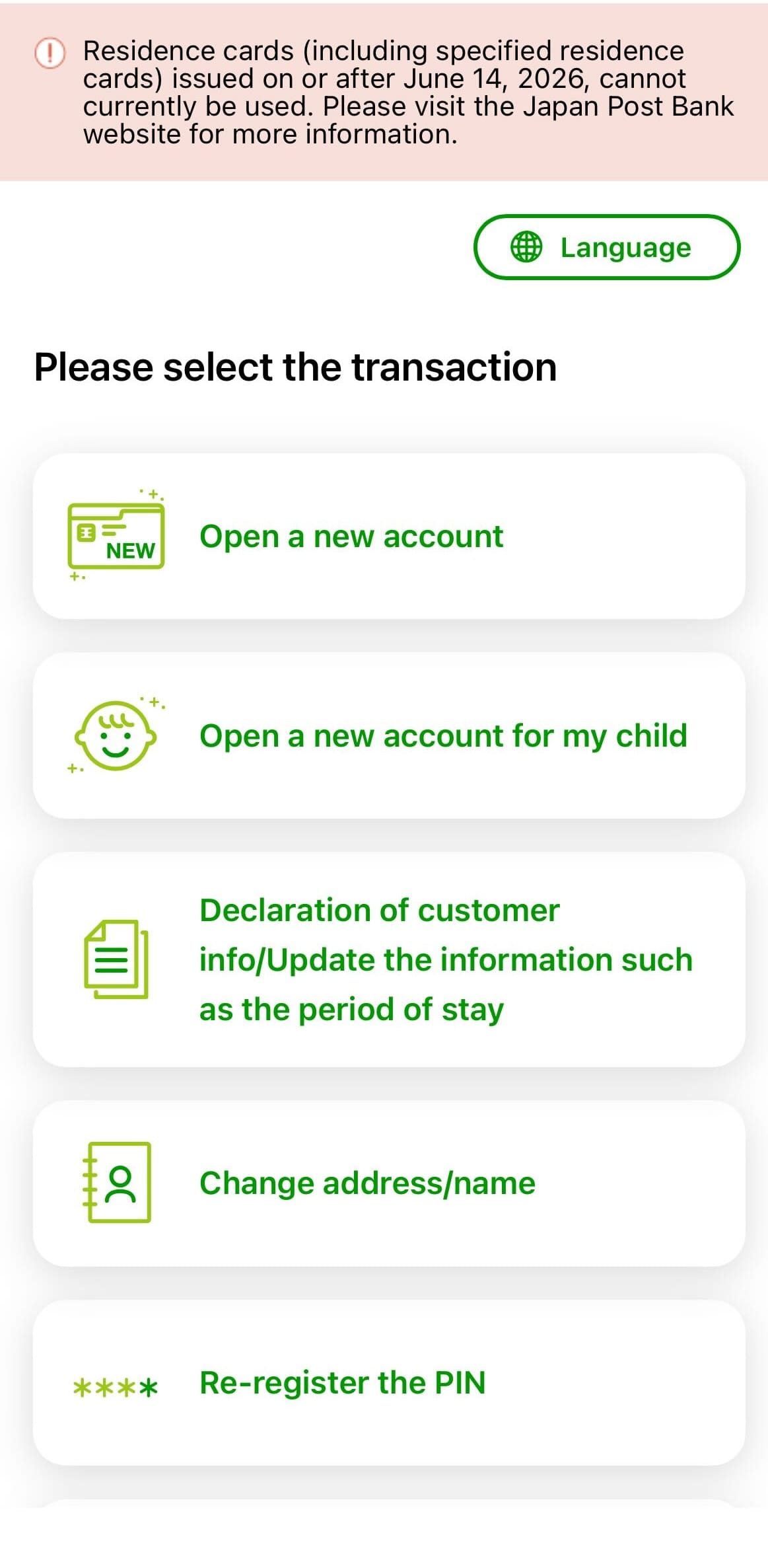
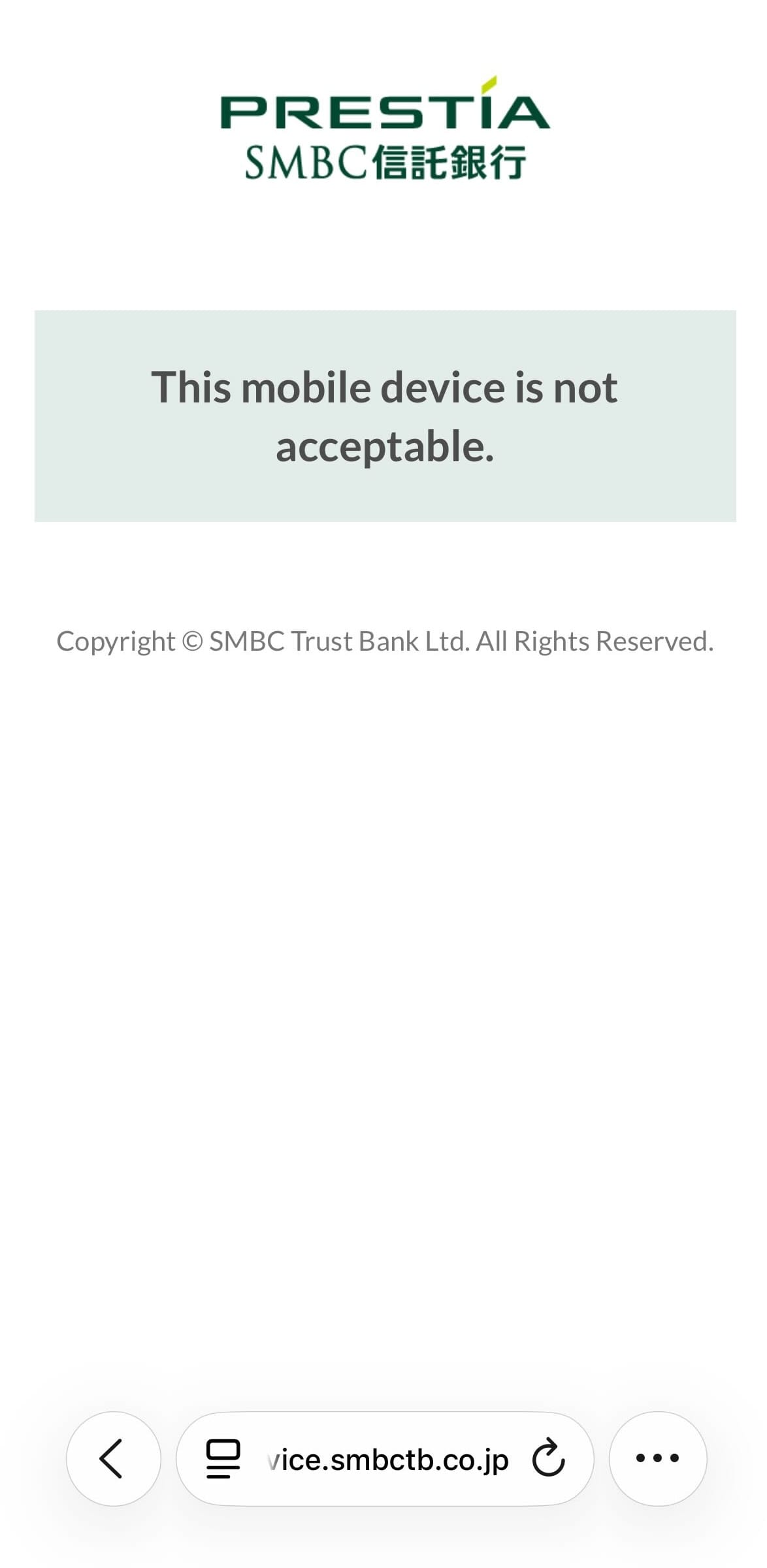
(L) Japan Post's app cannot accept the newly-designed Residence Cards (R) SMBC Prestia's feature simply did not work
With these digital roadblocks standing in my way, I ended up doing things the old-school way.
For my Japan Post account, I went to a branch and had things sorted out in about an hour or so. Soon after, my mobile application stopped displaying that annoying warning message.
For my SMBC Prestia account, I used the bank's return envelope to send a copy of my new Residence Card by snail mail.
The irony of this all is that it will take about two weeks for my application to be processed - blowing past my previous visa's expiry date.
So right now, my SMBC Prestia account has been restricted.
--Ends