WB095: Ema-gazing
When was the last time you came across another person's handwriting?
This thought arose during a visit to Dazaifu Tenmangu (Japanese: 大宰府天満宮), a shrine located in Dazaifu, Fukuoka (Japanese: 福岡).
In Japanese shrines, you can purchase small wooden plaques called ema (Japanese: 絵馬), write down your wishes and hang the ema up in a designated area. In doing so, it is believed the Japanese gods will receive your wish and hopefully grant it.
I paid close attention to two things as I looked at rows and rows of ema in Dazaifu Tenmangu.
First, the types of wishes written on the ema. And second, the worshipper's style of handwriting.
On the first point, most worshippers wished for success in their studies, in particular doing well in school or university entrance exams. It is quite easy to pick out such emas, as they have the Japanese kanji characters 合格 (Japanese: goukaku), which translates to "success".
Such wishes make a whole lot of sense. Dazaifu Tenmangu is built on the burial site of a renowned Japanese poet and scholar named Sugawara no Michizane (845-903)(Japanese: 菅原の道真) who is revered in Japan as the god of learning.
Given this fact, I found it quite amusing that some worshippers wished for non-study related success, such as scoring tickets to the Snow Man Dome Tour 2026-2027 (probably a music concert).
I cannot imagine these wishes standing a good chance of being granted.
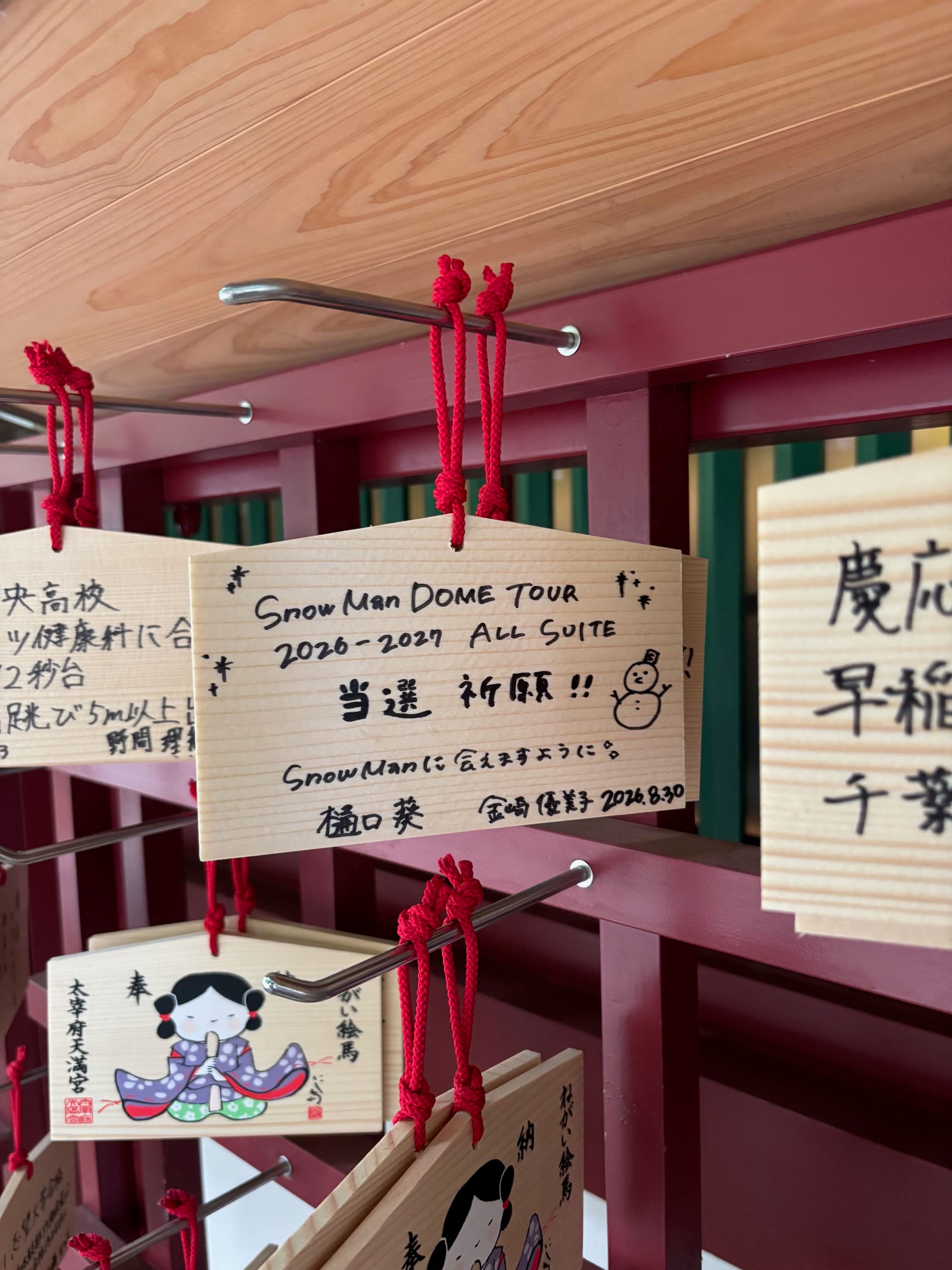
On the second point, I have always been enamoured by a person's handwriting.
I am not sure why, but maybe it is because I do not have particularly nice handwriting. Or maybe it is because a stranger's handwriting is a tangible footprint left behind that prompts you to wonder, "What kind of person is this stranger?".
Most of the ema at the shrine were written in Japanese. There were also ema written in Korean, English and Mandarin, probably the work of tourists.
Some worshippers have really beautiful handwriting that were artistic yet neat. Not easy given the space constraints. There were also worshippers whose handwriting were less pleasing to the eye. Perhaps the work of school-going kids. Or, an adult like me.
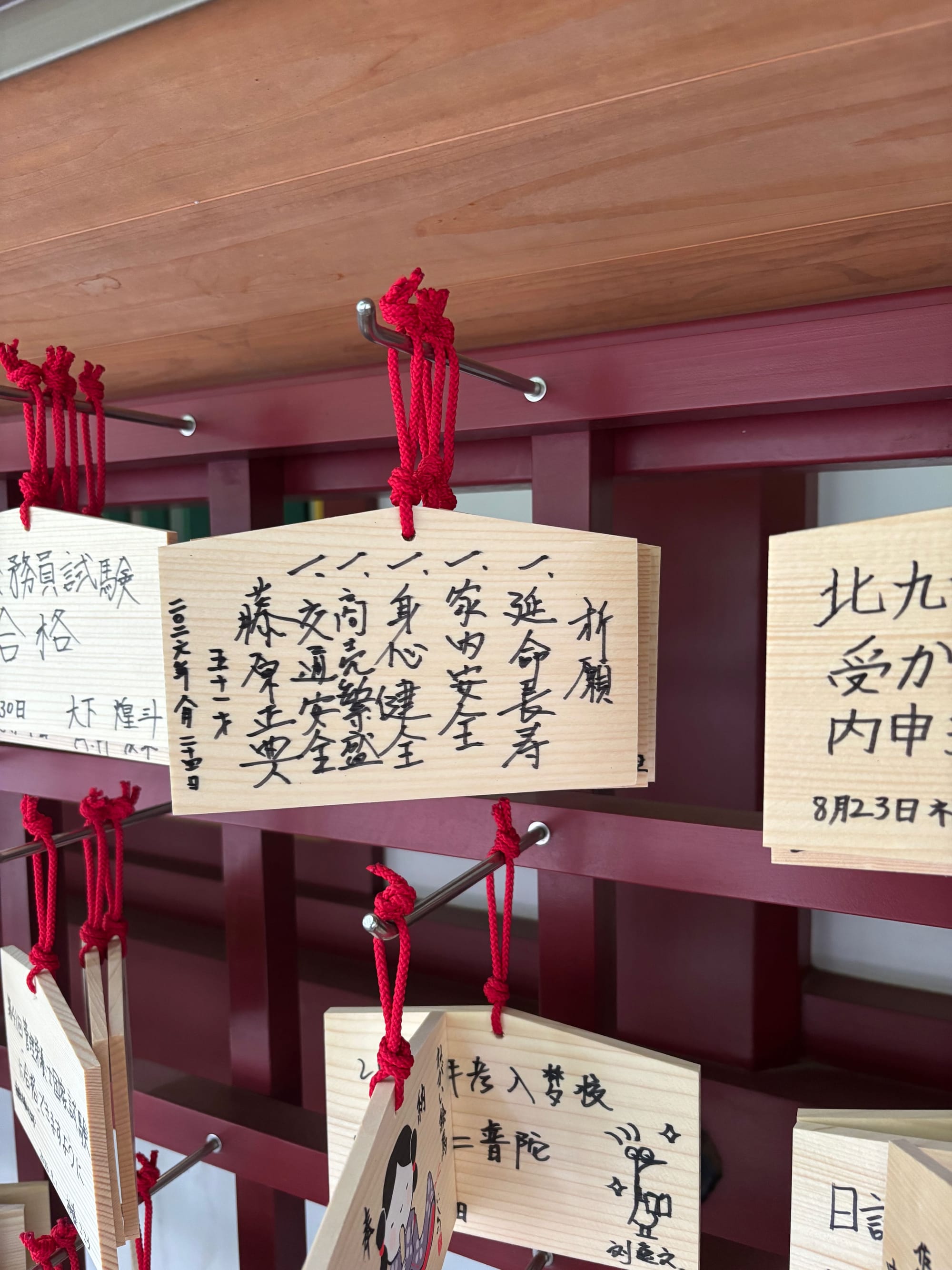
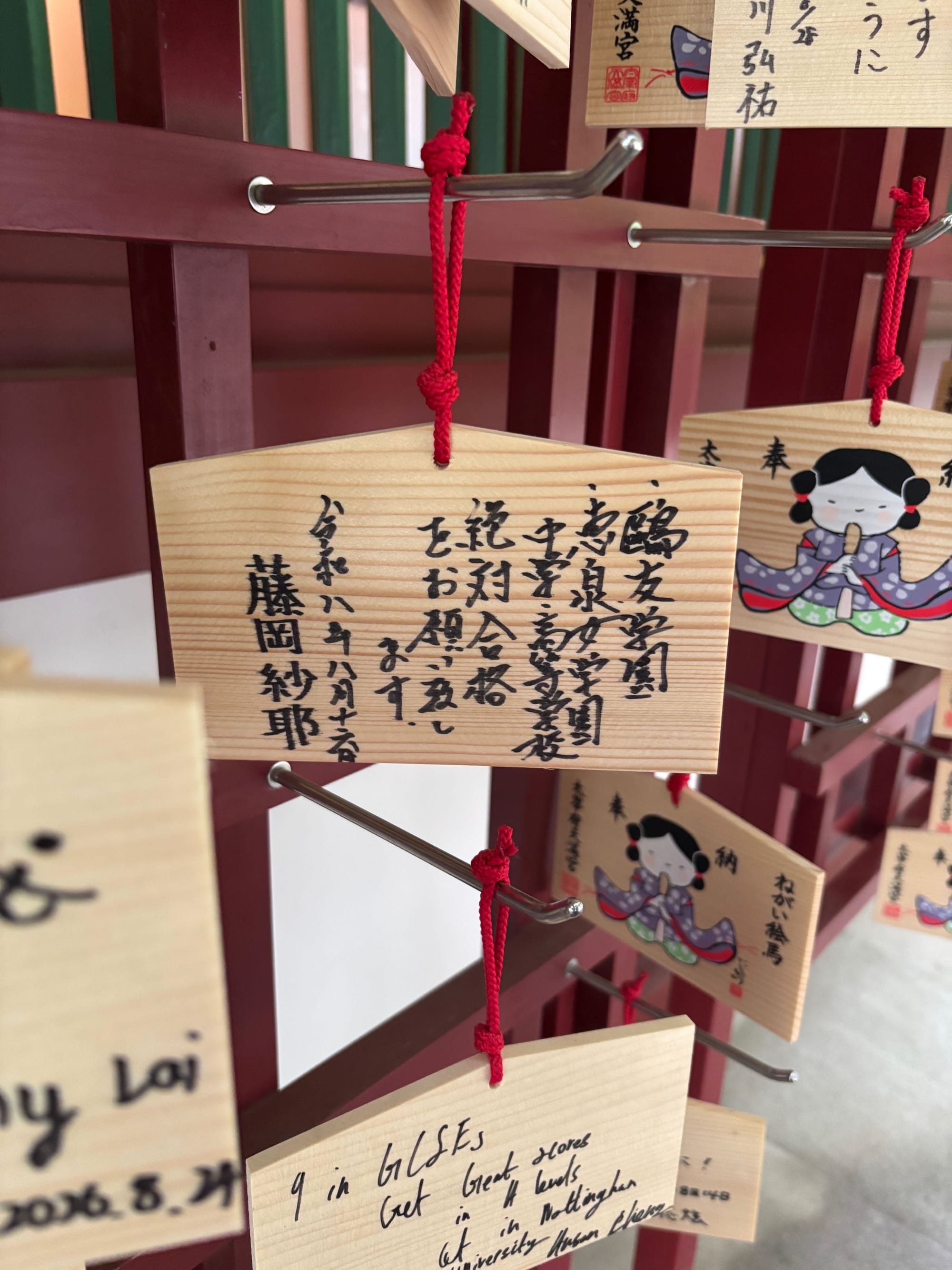
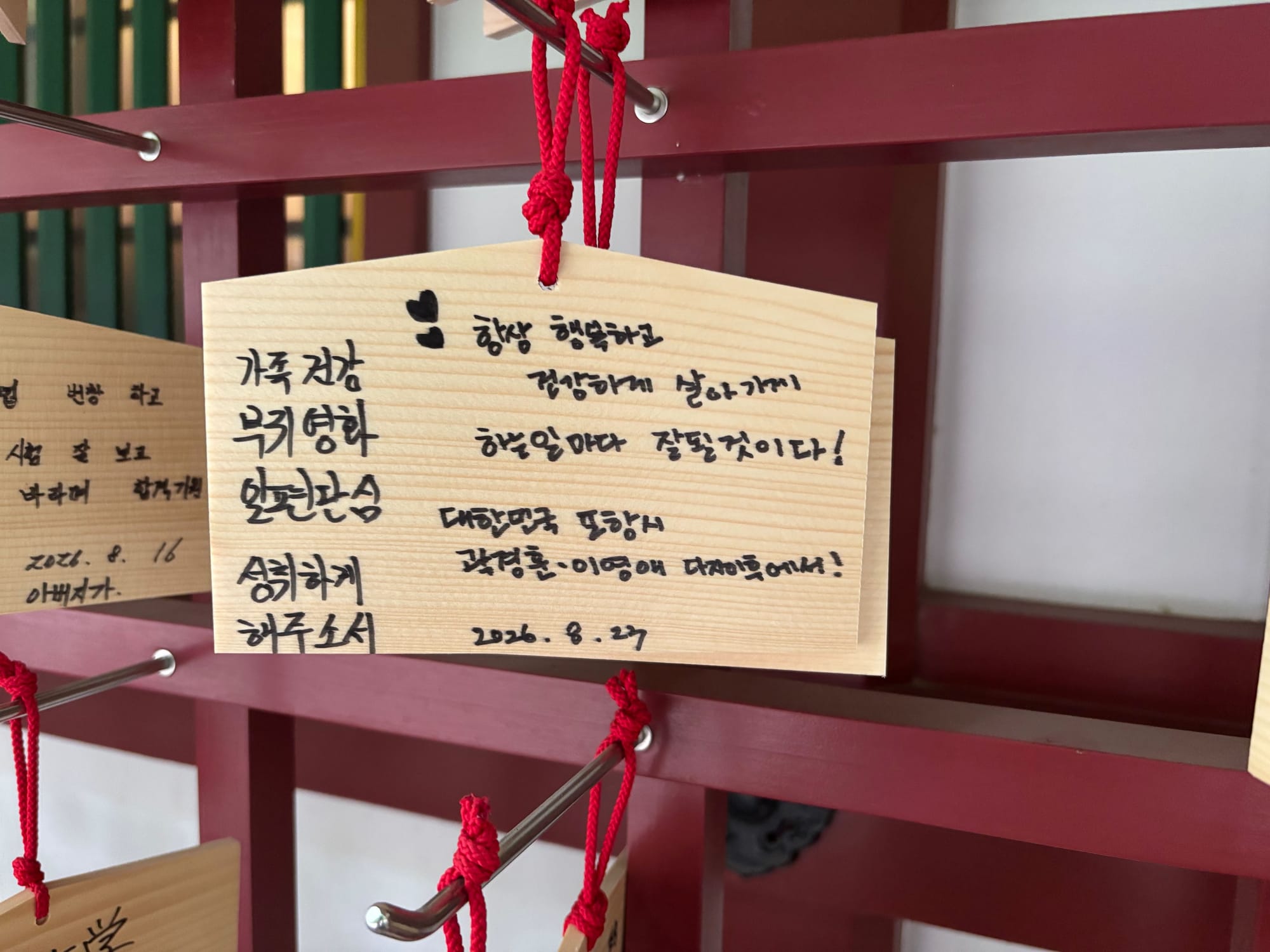
Examples of really nice handwriting in Japanese and Korean.
What I also found really cute were the little illustrations that some worshippers had gone to the trouble of drawing on their ema.
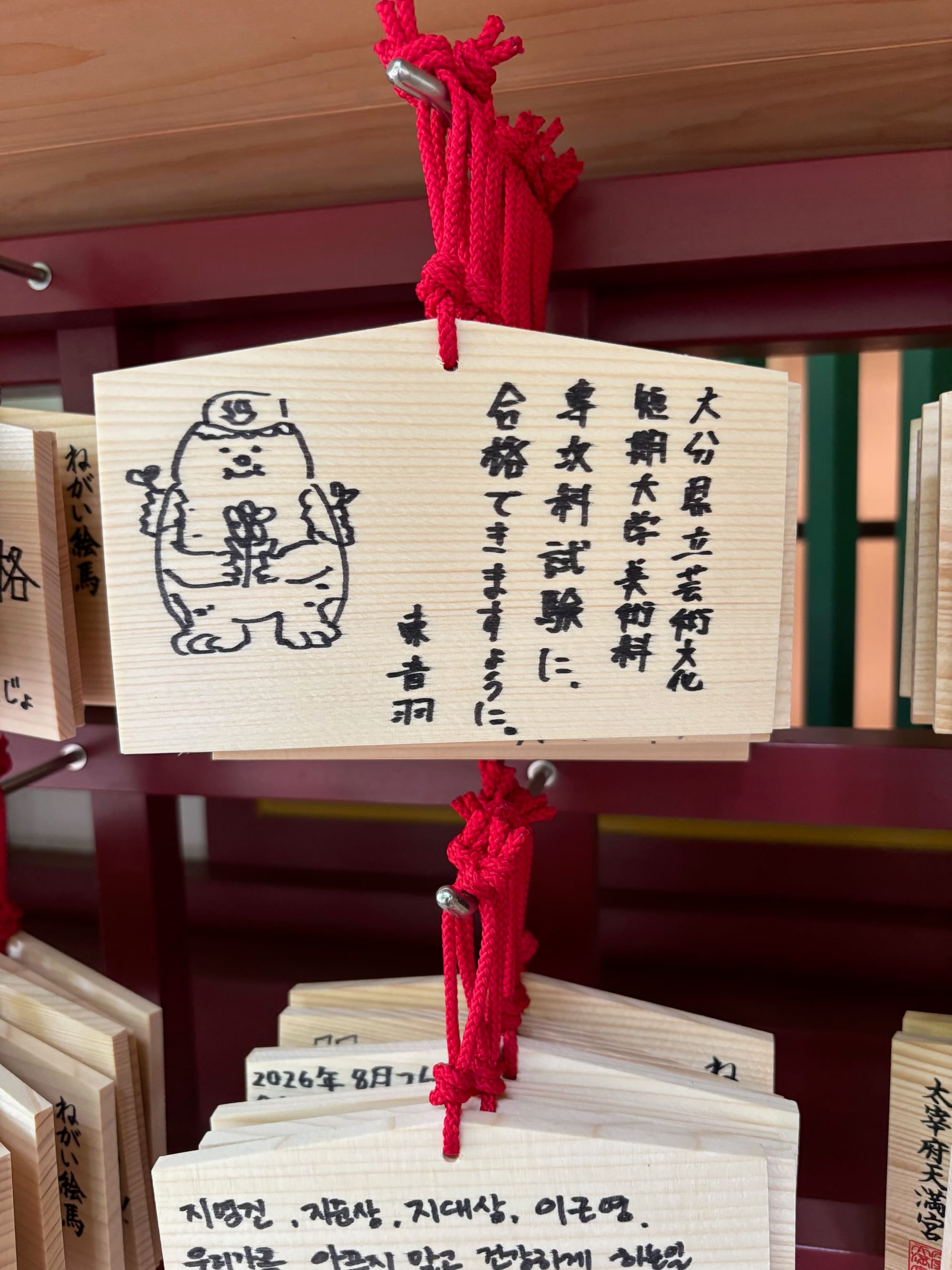
What a cute illustration!
There were two particular emas, written by the same worshipper, that stuck with me after I left the shrine. The worshipper had written the names of students from two classes from a senior high school located in Saga Prefecture (Japanese: 佐賀県).
The worshipper's block-style handwriting was not particularly elegant, yet it was neat and beautiful in its own way. Plus, the worshipper had also drawn a cute Doraemon illustration on each of the ema.
A caption on one of the ema translates to "Believe in yourself!"
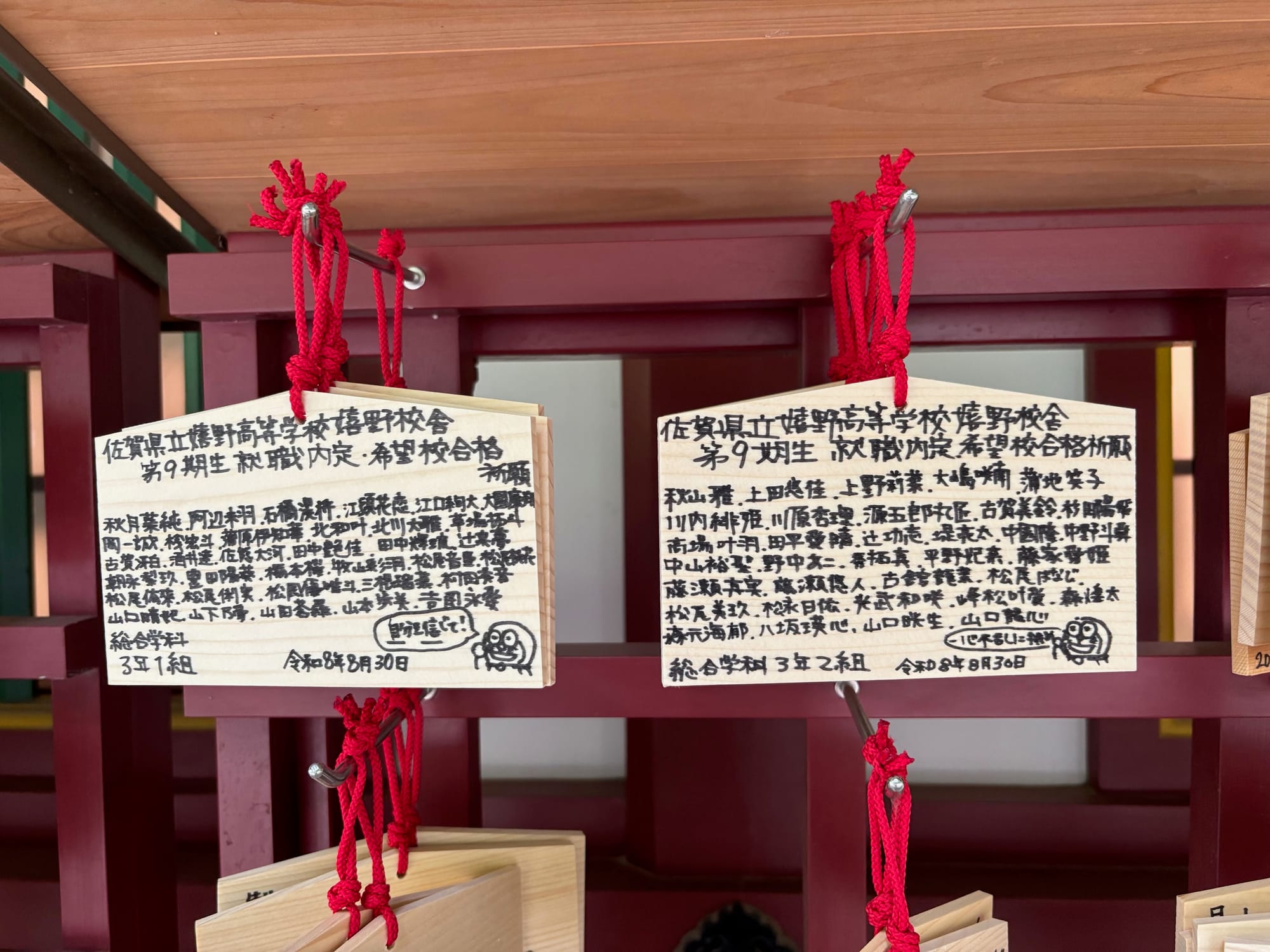
There is a saying that a person's eyes are the window to their soul. I would argue that in addition to this, a lot can be gleaned from a person's handwriting and how they use it to express their deepest, weightiest thoughts, ideas or wishes.
Perhaps the writer of these ema is the head teacher of these two classes. I imagine him/her to be a kind and inspirational teacher whom every student looks up to.
Sadly, these days the chances of coming across another person's handwriting are slim. On the off-chance this opportunity arises, take a quiet moment to gaze and ponder what kind of person the writer is.
--Ends