WB011: In Good Company
We currently live in a world where short-form content is king.
Case in point is the rise in popularity of platforms like TikTok, YouTube Shorts, Instagram Stories and Snapchat. These platforms appeal to our short attention span as they deliver an endless supply of engaging, easy-to-consume content.
I have discovered many new things through short-form content, but feel I have learned little. I liken this to how instant noodles are delicious, but not a fulfilling meal at the end of the day.
On a long bus ride back to Tokyo from Lake Yamanaka last year, I listened to three episodes from the Do More - Take Charge of Your Life podcast. Despite the heavy themes and long duration of each episode, I found the podcast enjoyable.
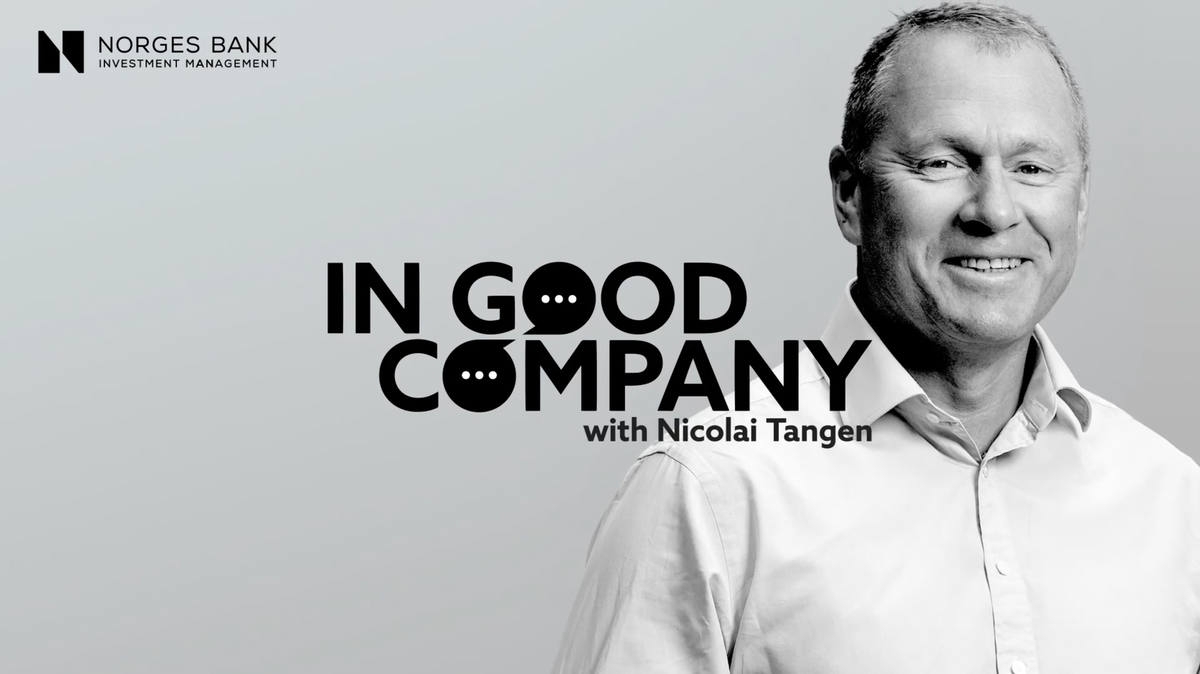
This prompted me to search for other good quality, long-form podcasts, which is how I came across In Good Company, a podcast hosted by Nicolai Tangen, the CEO of Norway's Norges Bank Investment Management ("Norges Bank").
Norges Bank manages Norway's US$1.7 trillion (as of Aug 2024) sovereign wealth fund ("SWF") called the Government Pension Fund Global ("GPFG"). GPFG's asset size equates to the Fund owning 1.5% of every listed company in the world.
There's more to write about the GPFG, but first let's see what Nicolai's podcast is all about.
Bringing you closer to titans of industry (for free!)
As CEO of such an influential fund, Nicolai Tangen has unparalleled access to many top managers of companies GPFG is invested in, leaders in their respective fields and also famous personalities such as chess grandmaster Magnus Carlsen.
Each podcast lasts between 30 minutes to an hour (or so) and is available on Spotify and YouTube. Nicolai usually starts each episode by explaining how much the GPFG has invested in a company, and the duration of the investment (usually quite long). He also ends by asking interviewees what advice they have for the many young listeners.
Here are some of my favourite episodes to date:
- Mats Rahmström, CEO of Sweden's Atlas Copco - one of the greatest companies I have never heard of
- Jane Sun, CEO of Trip.com
- Joseph Tsai, co-founder & Chairman of Alibaba Group
- Howard Marks, co-founder of Oaktree Capital Management
- John Elkann, CEO of Exor N.V.
Having listened to many episodes, I am always looking forward to the next one.
Why so?
New discoveries & insightful conversations
Firstly, I have discovered top industry leaders and companies I have never heard of, such as Mats Rahmström of Atlas Copco and Tony Xu of DoorDash (I have only used Grab Delivery and Uber for food deliveries).
Secondly, these leaders have no "air" about them, i.e. they are humble despite their successes in life. Whether scripted or not, they appear to open up honestly to Nicolai about their struggles as well. This reinforces the fact that at the end of the day, we are all human beings.
Thirdly, I like that Nicolai is not shy to ask direct questions, which I learned (from Nicolai) is a typical Scandinavian trait. Though this style appears confrontational, it is certainly not the intention. In fact, I find this style refreshing for a change because top leaders tend to get asked politically correct questions, which often result in politically correct non-answers.
Finally, I like that the podcast educates the GFPG's beneficiaries, i.e. the Norwegian people, about the companies they are indirectly invested in. I believe this builds trust between the fund and its beneficiaries - a trait not many SWFs have because they are secretive about what they do, what they invest in and how much they make (or lose).
All in, I think In Good Company is very underrated. You should take the time to listen to each episode, because you never know which snippet of the many episodes will resonate with you.
Now, more about the GPFG.
Managing Norway's wealth for future generations
Norges Bank invests GPFG's US$1.7 trillion in a mix of global equities, fixed income, real estate and infrastructure. The goal is to reduce Norway's dependence on volatile oil & gas revenues and grow the wealth of Norway's citizens by making good investments.
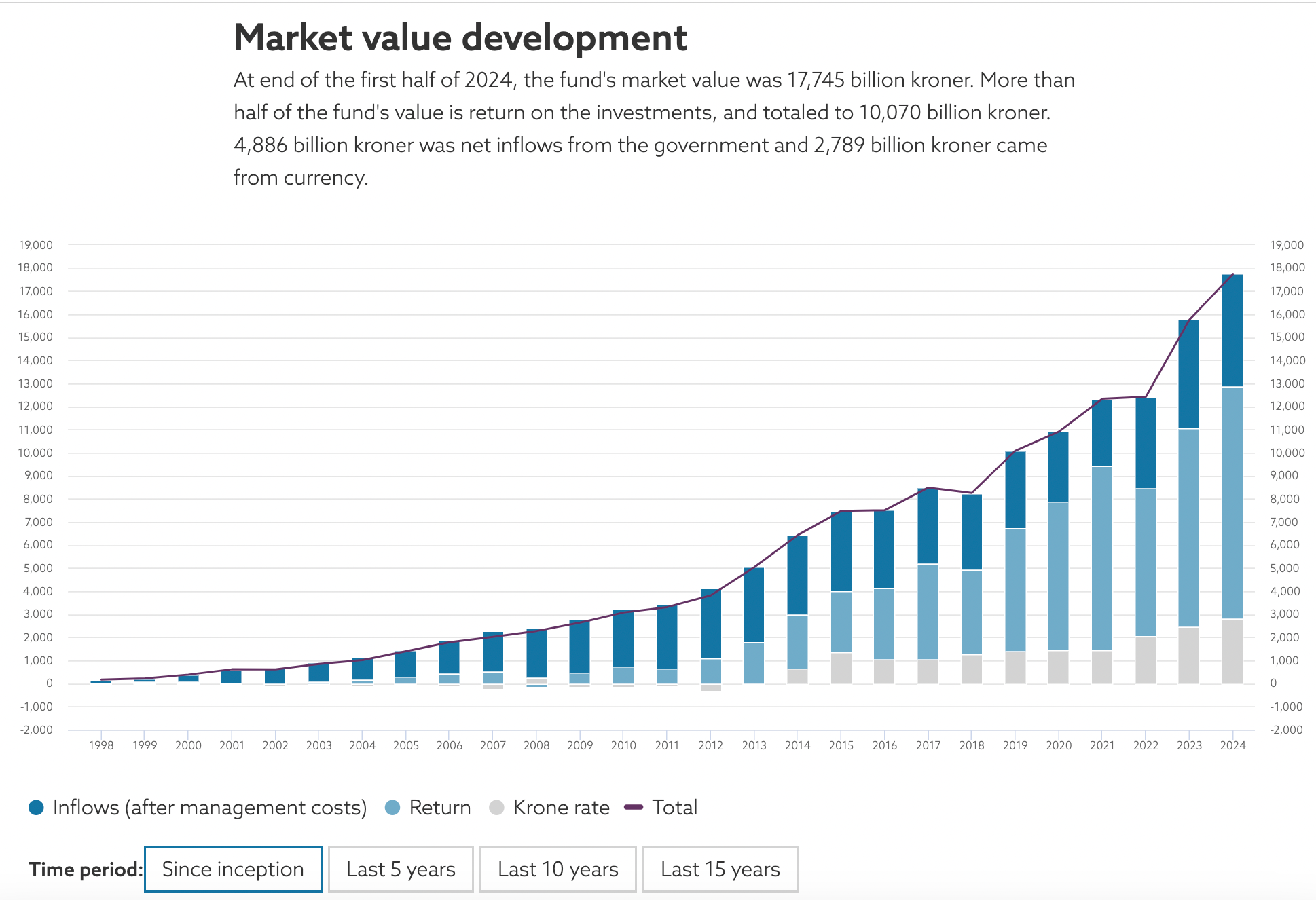
Since inception (Jan 1, 1998), GPFG has returned an annualised 6.3% in Norwegian kroner terms. This is quite a respectable long-term return for a fund of GPFG's size (as you grow bigger, it gets much, much harder to make big returns).
As a result, GPFG's investment returns now form the bulk of the fund's assets today (based on the chart below).
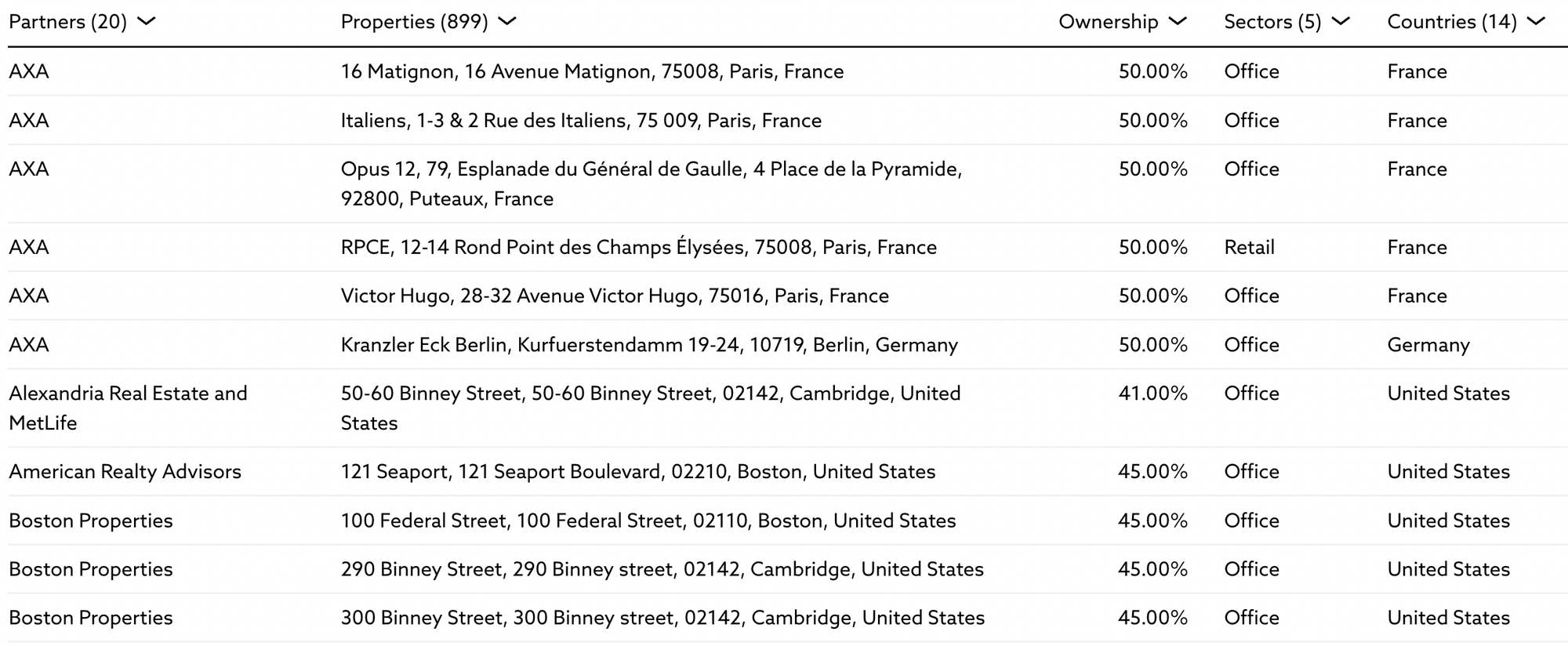
Transparency is a key trait of the GPFG and differentiates it from other SWFs. Case in point, you can view all of the GPFG's holdings here, a big contrast to some SWFs that don't even tell you their fund size.
From the GPFG's website, I was able to obtain the fund's real estate investments, disclosed to the address level.
I think Norway's wealth is in good hands. Based on Norway's population of around 5.5 million people, each citizen owns about US$310,000 of the GPFG.
Definitely good enough for a rainy day.
--Ends