WB016: Daio Wasabi Farm
Wasabi (Japanese: わさび) - Japanese horseradish - is a popular condiment in Japanese cuisine known for giving a sharp, shooting sensation up your nose.
In Japanese restaurants, wasabi paste is added (in small quantities) to sushi (Japanese: 寿司), or mixed with shoyu (English: Japanese soy sauce)(Japanese: 醤油) and eaten with sashimi (Japanese: 刺身). The leaves and stem of wasabi are also used to make other food products.
Most consumers will be familiar with tubed wasabi, commonly sold in supermarkets. Tubed wasabi was first invented by S&B Foods Inc. (TYO: 2805)(Japanese: エスビー食品株式会社), a listed foodstuff manufacturer that has a market capitalisation of about JPY64billion (~USD420 million).
If you've only ever eaten chicken in the form of a McDonald's chicken nugget or chicken patty your whole life, you can't be faulted for not knowing what a real chicken looks like.
Same logic applies to wasabi - I don't think many people know what fresh wasabi looks like and how it's cultivated. If you fall in this bucket, please read on.
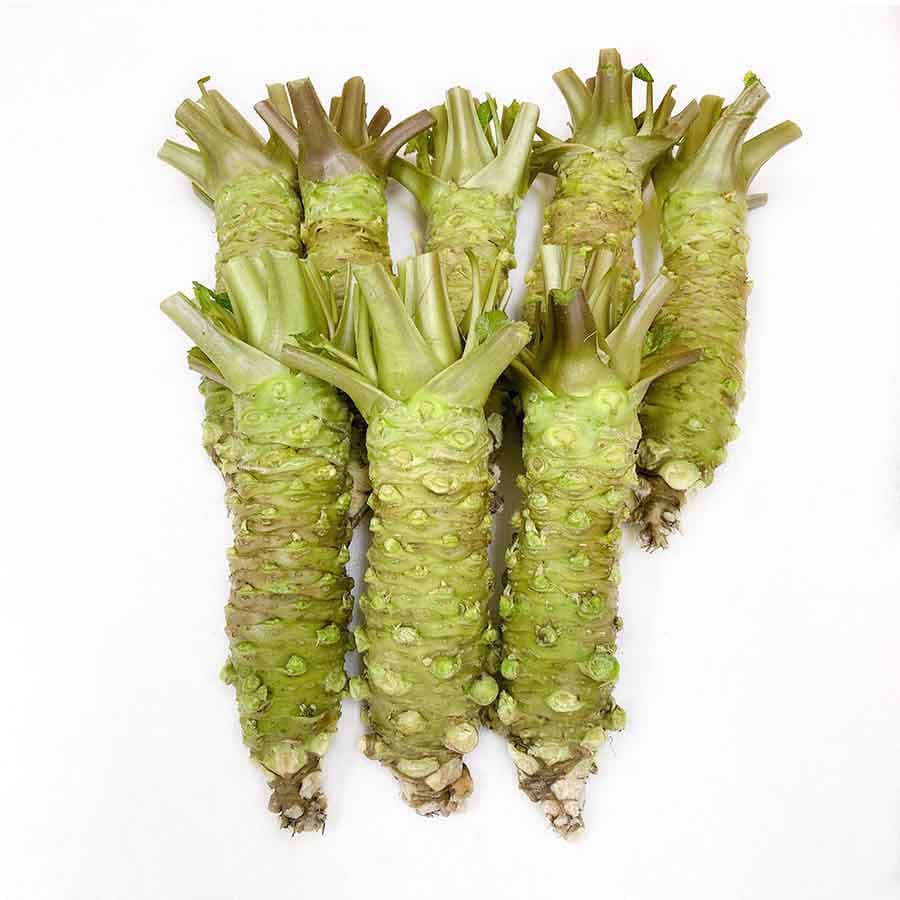
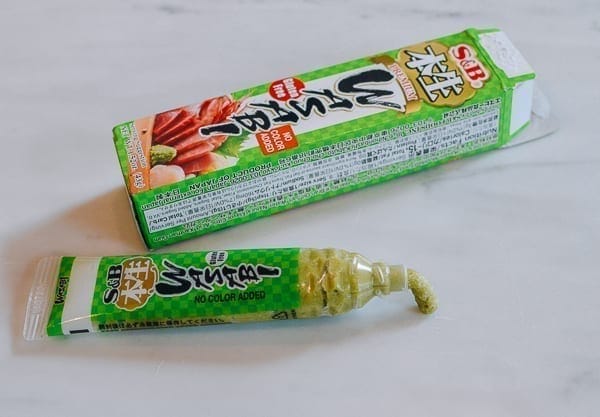
Fresh wasabi (just the root) (L) vs. tubed wasabi (R)
Visiting Japan's largest wasabi farm
We recently visited the Daio Wasabi Farm ("Daio Farm")(Japanese: 大王わさび農場), one of Japan's largest wasabi farms.
Daio Farm is located in Azumino (Japanese: 安曇野) city, part of Nagano Prefecture1 (Japanese: 長野県). Azumino is about a half hour drive from the historic city of Matsumoto (Japanese: 松本), with the latter being a 2.5 hour train ride from Tokyo.
Izu (Japanese: 伊豆) Peninsula, part of Shizuoka Prefecture (Japanese: 静岡県), is another location famous for wasabi farming. I learned a lot about Izu's wasabi from this NHK World video (fast forward to the around the 8min 50sec mark).
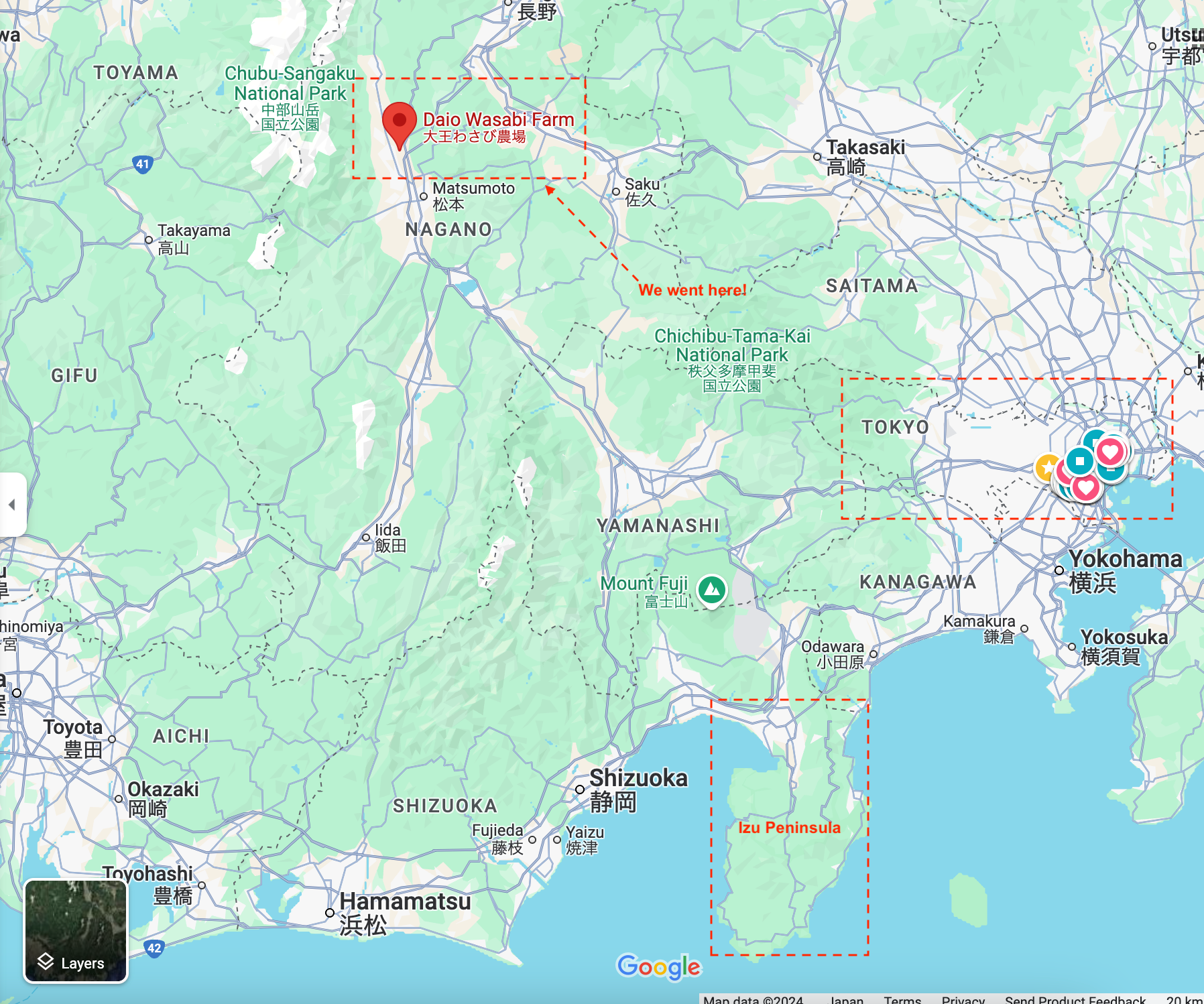
One reason why Izu and Azumino are good locations for wasabi farming is the availability of good mountain water. Daio Farm draws water from the Northern Alps, while farms in Izu draw water from Mount Amagi (Japanese: 天城山).
I learned that in Japan, where there's good water, vegetable, fruit and rice farms will be in abundance. And where there are rice farms, there are going to be sake (Japanese: お酒) breweries nearby.
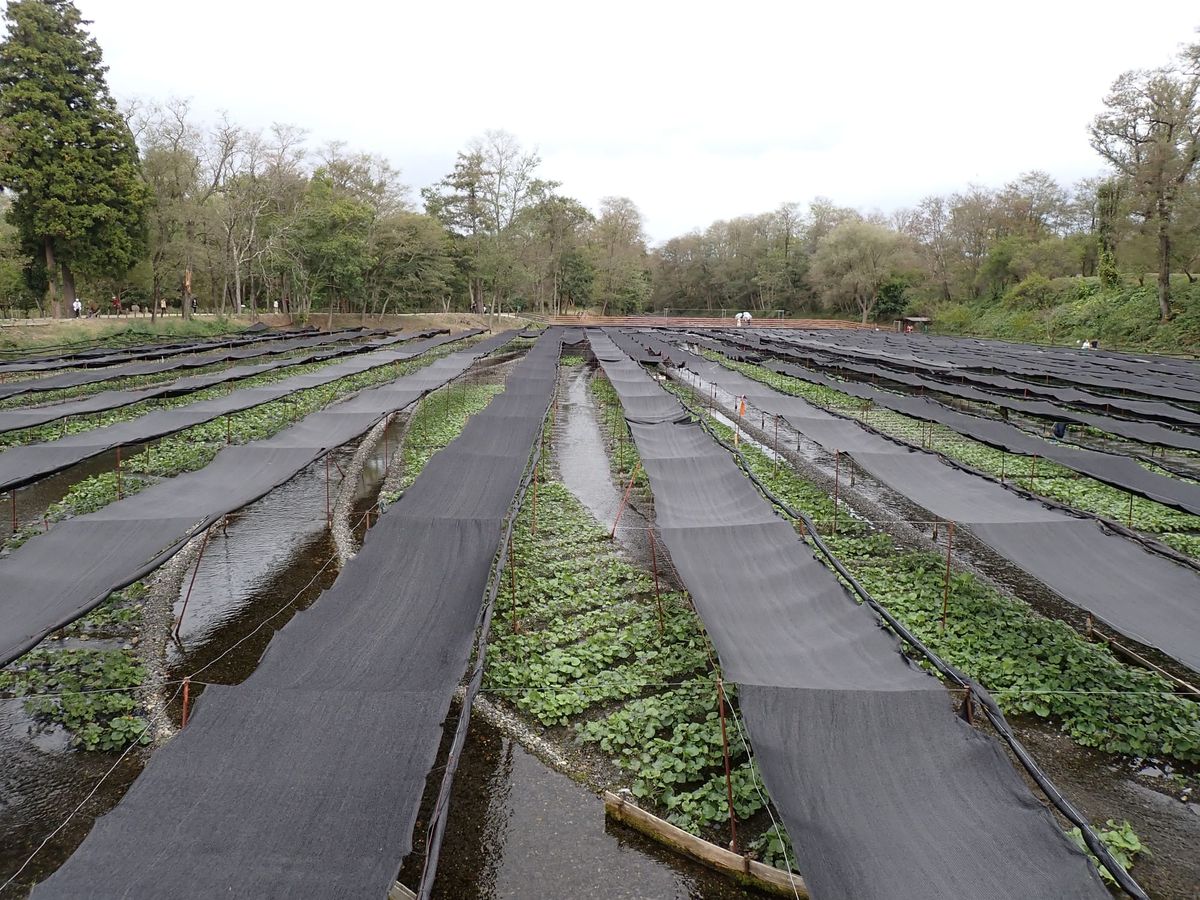
Wasabi is planted in small rocky beds and kept constantly wet by flowing water. As wasabi does not fare well under direct sunlight, it is cultivated under a black shade called kanrei-sha (Japanese: 寒冷紗).
This shade protects the plant's roots & stem, and ensures the running water stays below 15°C - especially important during the hot Japanese summer months (May to early October).
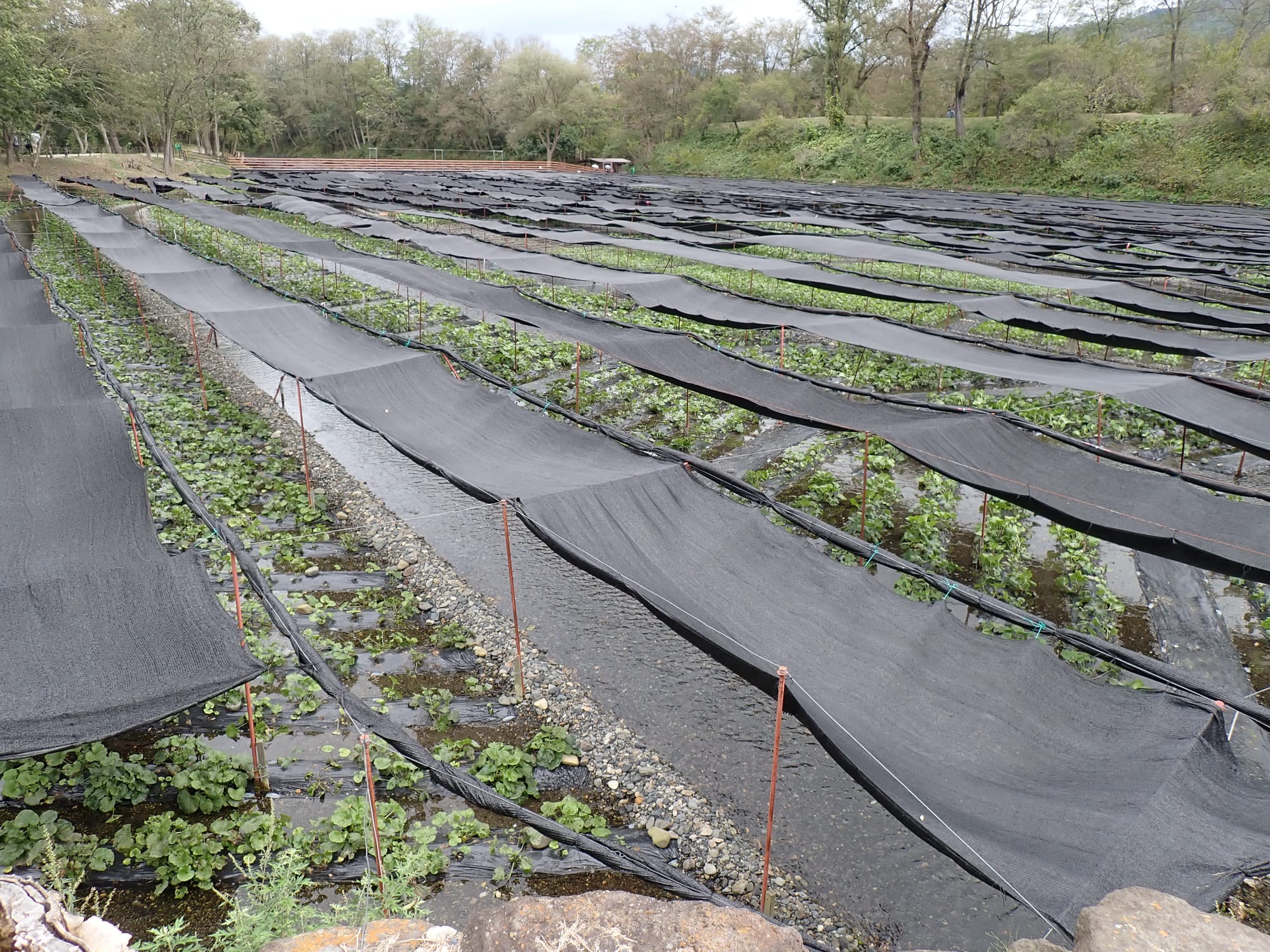
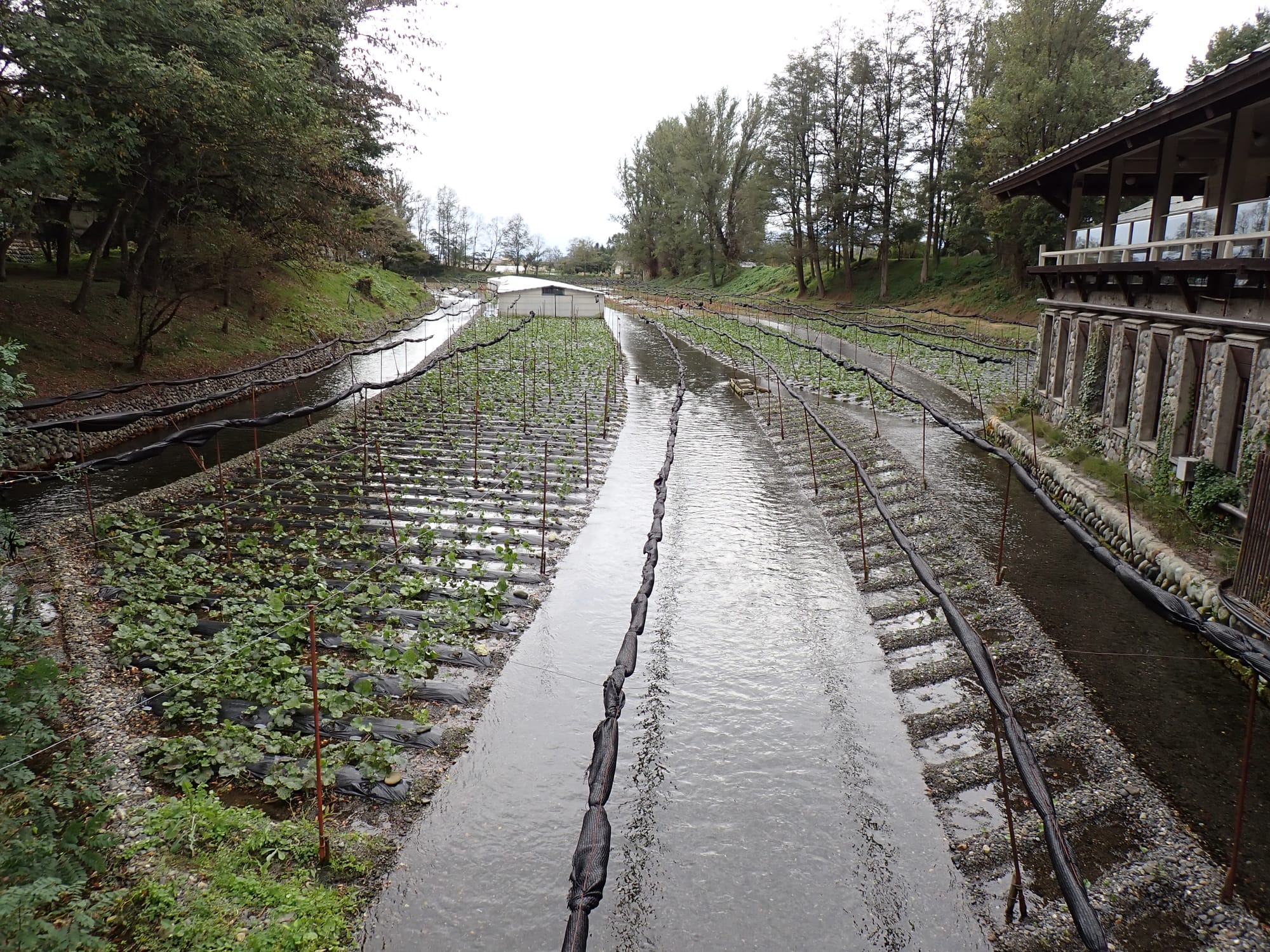
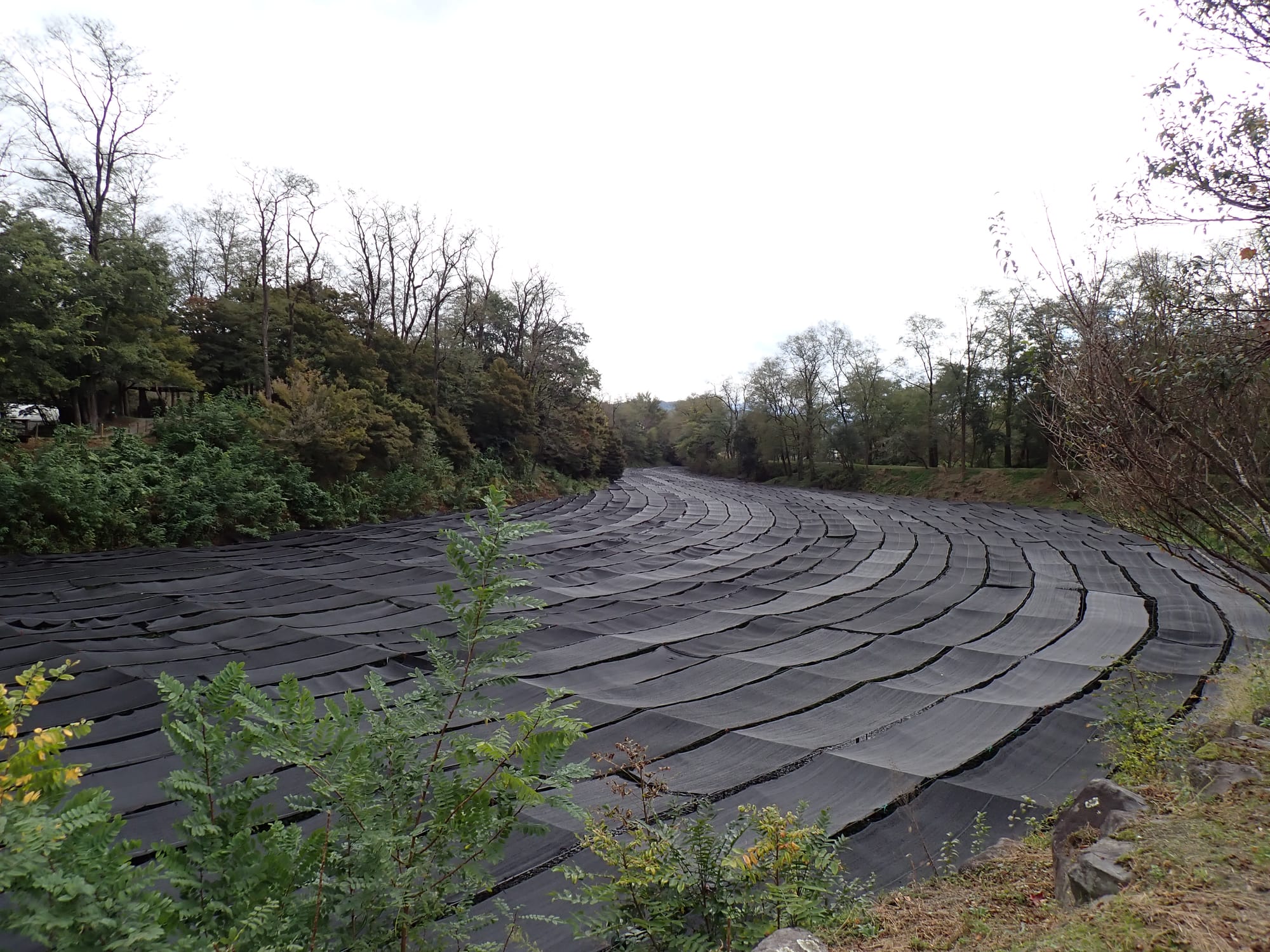
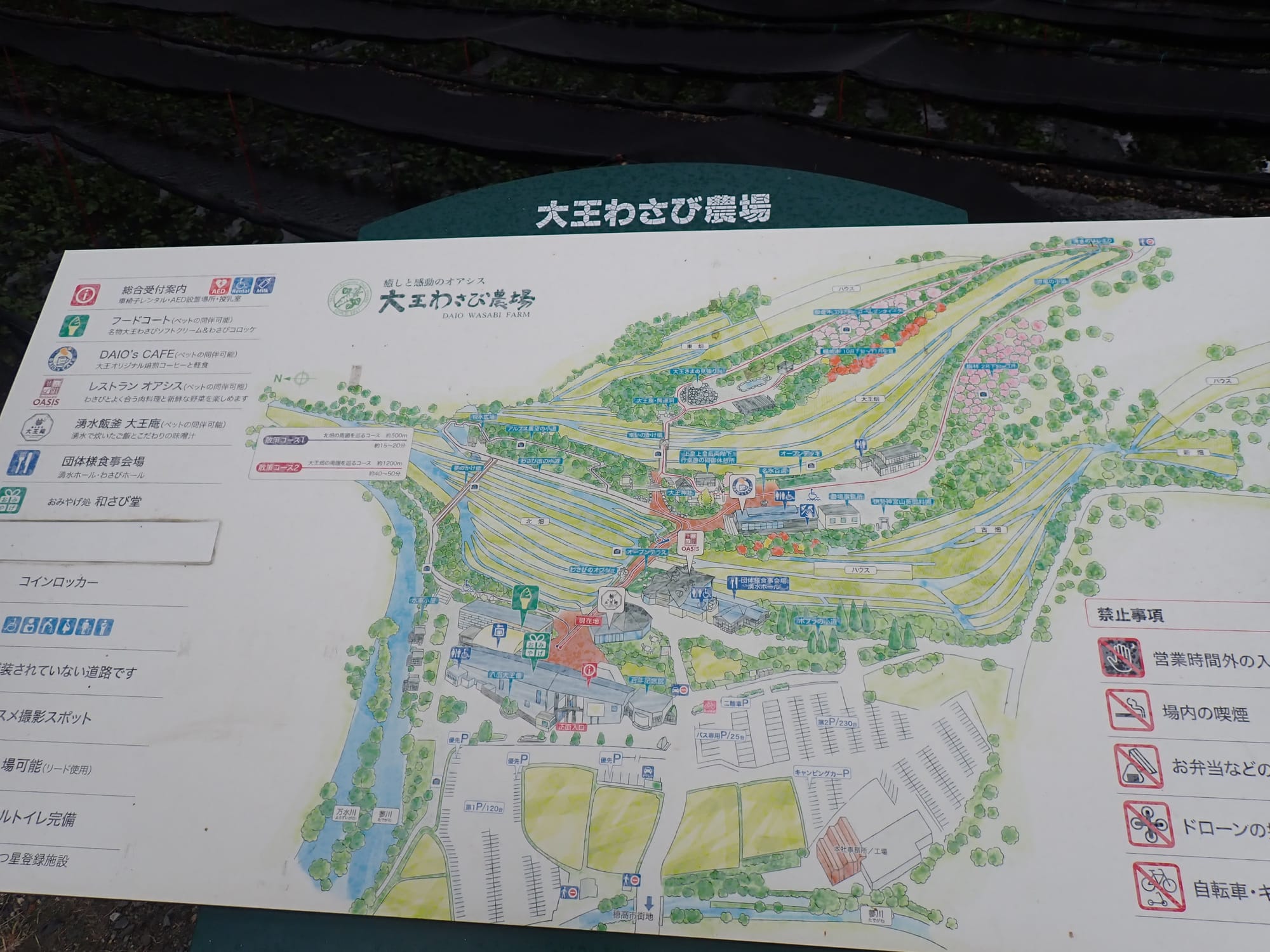
Daio Wasabi Farm
Visitors are allowed to walk around Daio Farm for free, though walking into the farm itself is prohibited. I was quite taken aback at the farm's scale during our walk. This video below hopefully gives you some perspective.
Based on my observations, a lot of manual work goes into cultivating wasabi: from adjusting the kanrei-sha to harvesting the plant itself. I think you tend to be more appreciative of food products once you spend time understanding how they are grown.
How to enjoy wasabi
I reckon freshly-grated wasabi is best enjoyed as a condiment with sushi or sashimi.
To grate wasabi, you use a Japanese grater called oroshiki (Japanese: おろし器). A traditional wasabi oroshiki's is made out of sharkskin. Today, metal-based oroshiki's are also available.
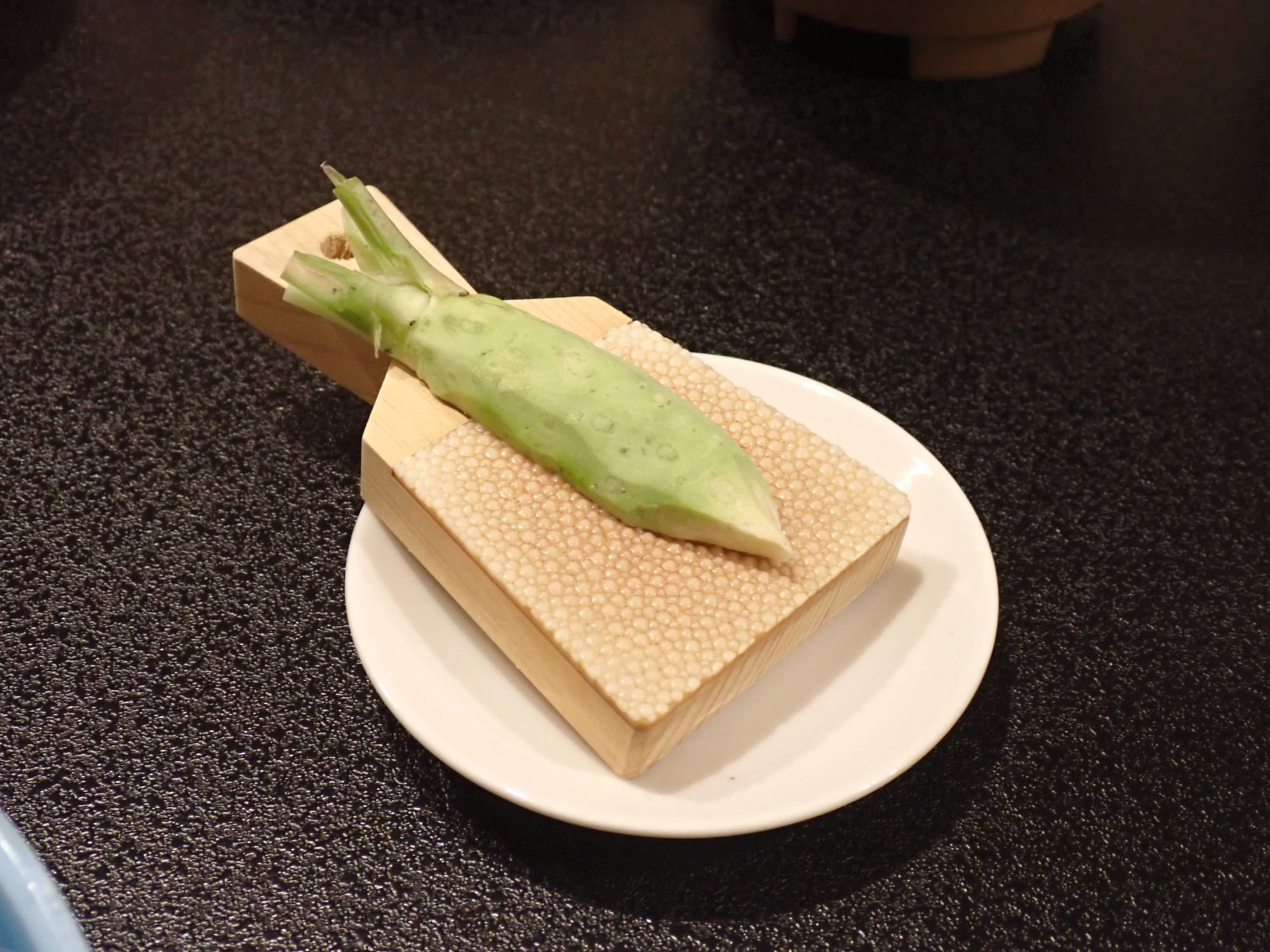
It is quite a unique experience grating wasabi. And I believe the texture and taste of the resulting paste is very different from that of tubed wasabi. That said, as is the case with grinding coffee beans by hand, grating wasabi by hand takes a bit of effort.
Due to the higher cost, not many establishments serve fresh wasabi, let alone will let you grate your own wasabi. So if you do get the opportunity, seize the moment!
Wasabi has also been incorporated into all forms of downstream products. There is shichimi (Japanese: 七味), a Japanese spice mixture, wasabi ice cream (have yet to find a nice-tasting one), wasabi chips, wasabi-flavoured soup powder.....the list really goes on and on!
Suffice to day, I think we have had our fair share of wasabi products for the year.
--Ends
1 Not to be confused with Nagano City, which is the capital of Nagano Prefecture