WB024: My first medical checkup in Japan
Last month, I went for a medical examination organised by the district I live in. The district organises medical checkups for the early detection of lifestyle-related diseases. Residents are recommended to do a checkup once a year.
The only way to make an appointment is via the internet - quite surprising given Japanese administrative processes are predominantly non-digital.
As a resident, the cost was a very reasonable JPY500 (~US$3.20). It included a basic medical consult with a general practitioner, body & blood pressure measurements, urine test and blood test. The results are sent by snail mail to residents.
And as to why the checkup is cheap, I suppose it is partly subsidised by the annual Resident's Tax the district collects. This is typically a flat 10% of a resident's total income. Pricing the checkup reasonably also encourages higher participation.
Pre-checkup documentation, pee tube 101
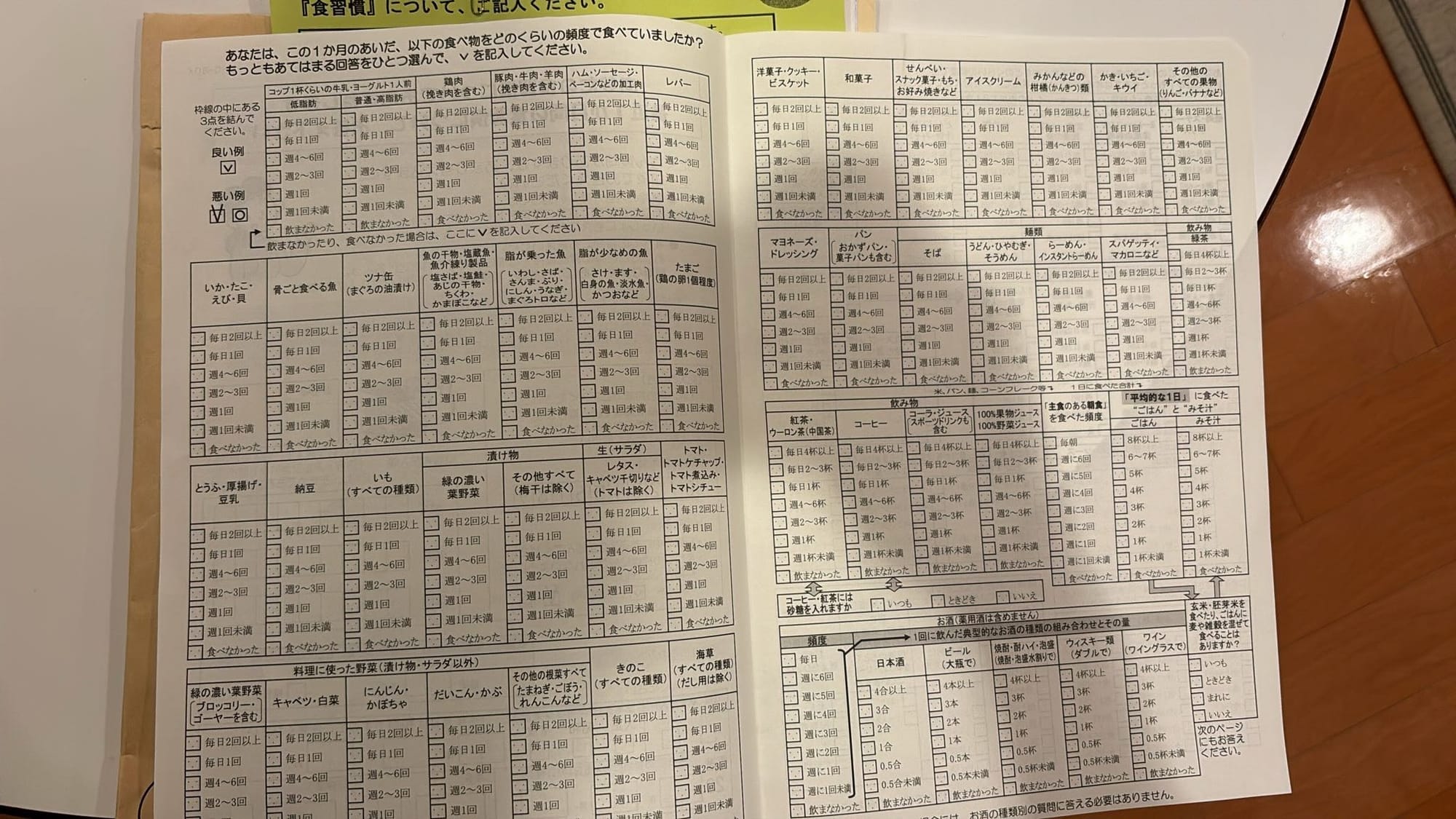
Prior to the checkup, a thick envelope containing several documents that needed to be filled up was mailed to me. Among them was a questionnaire on my daily habits - the frequency and amount of what I eat, what I drink and how often I exercise.
The envelope also contained the equipment for my urine test: a small tube to deposit my urine in and an origami paper cone.
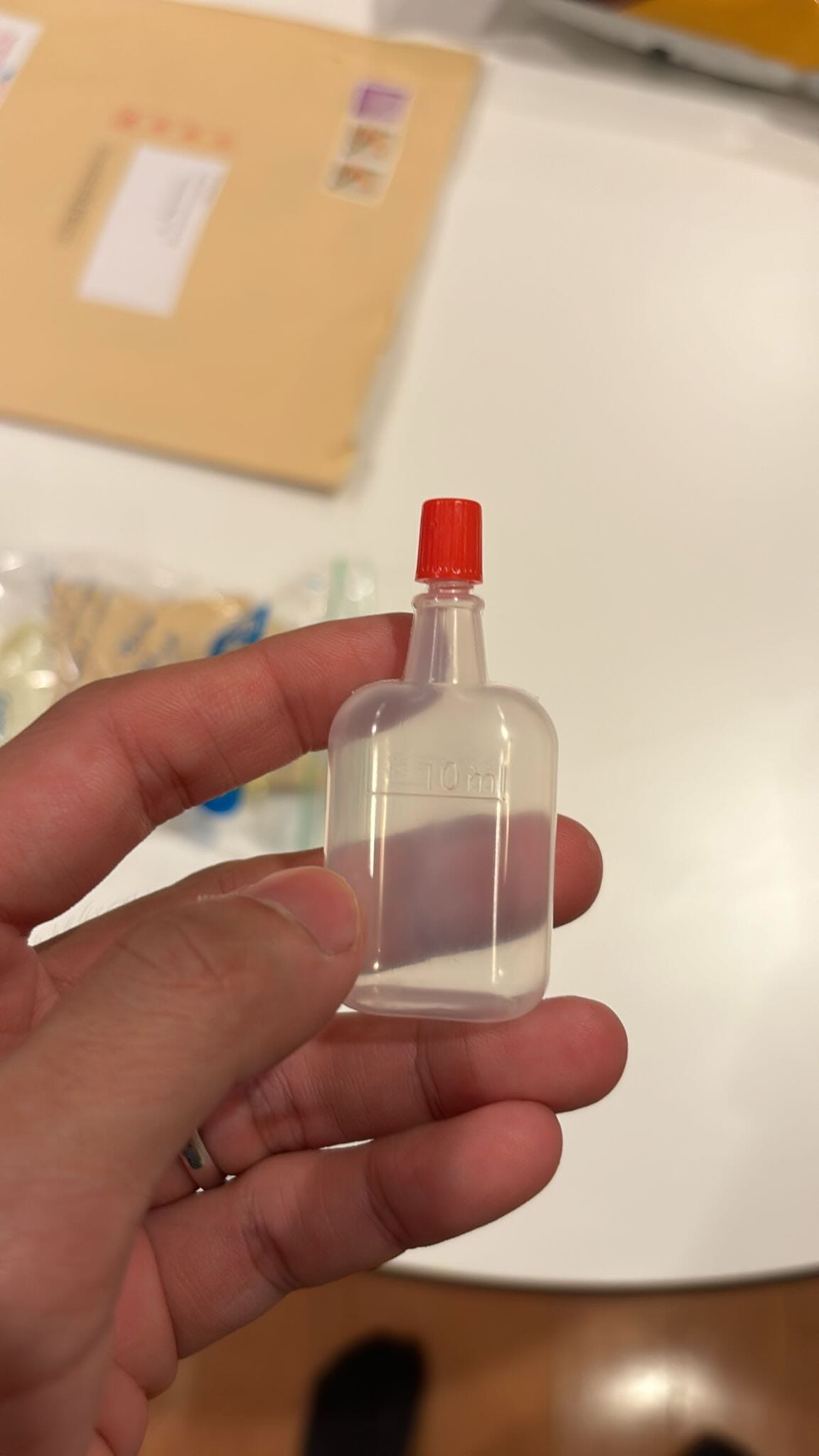
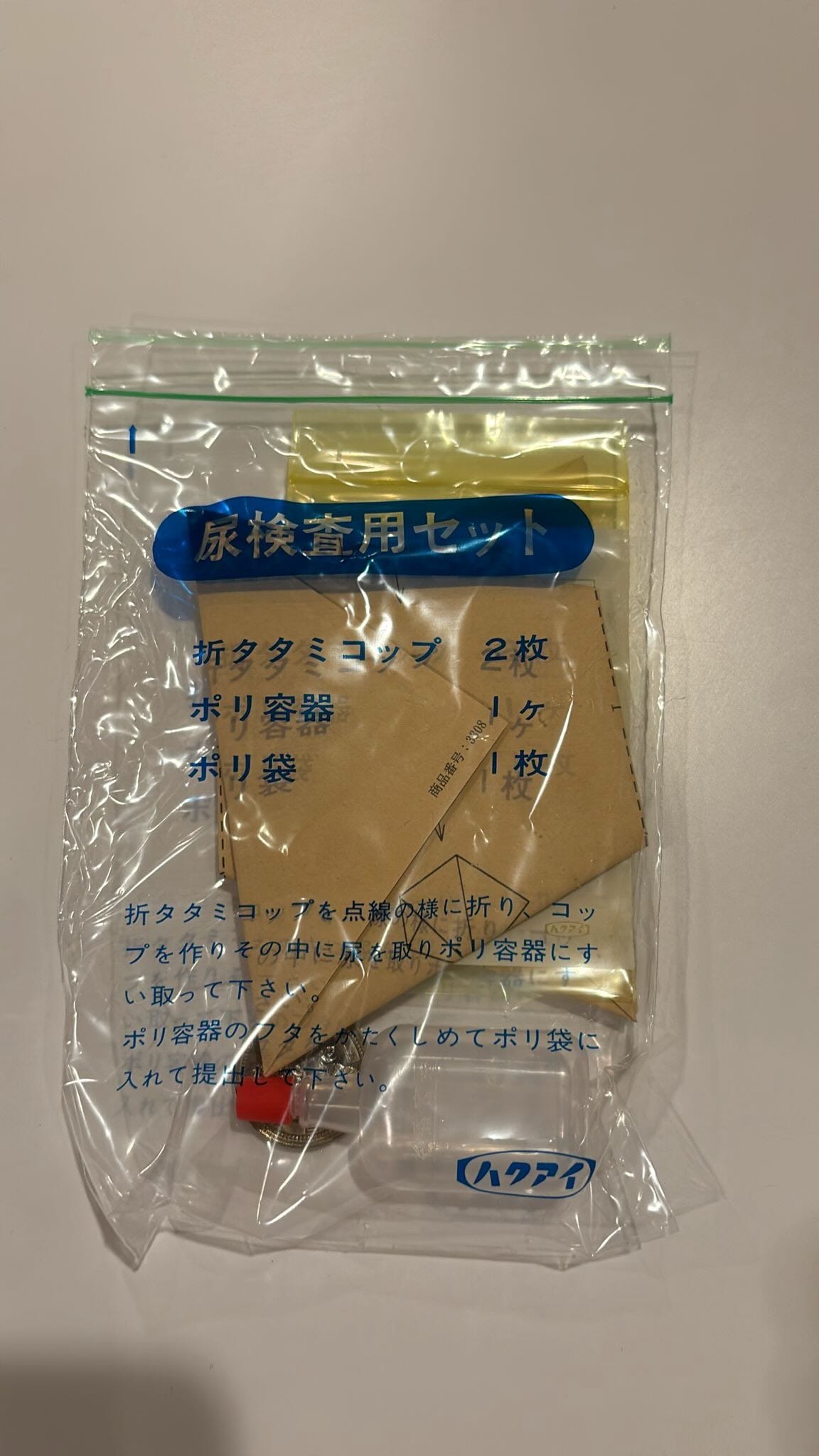
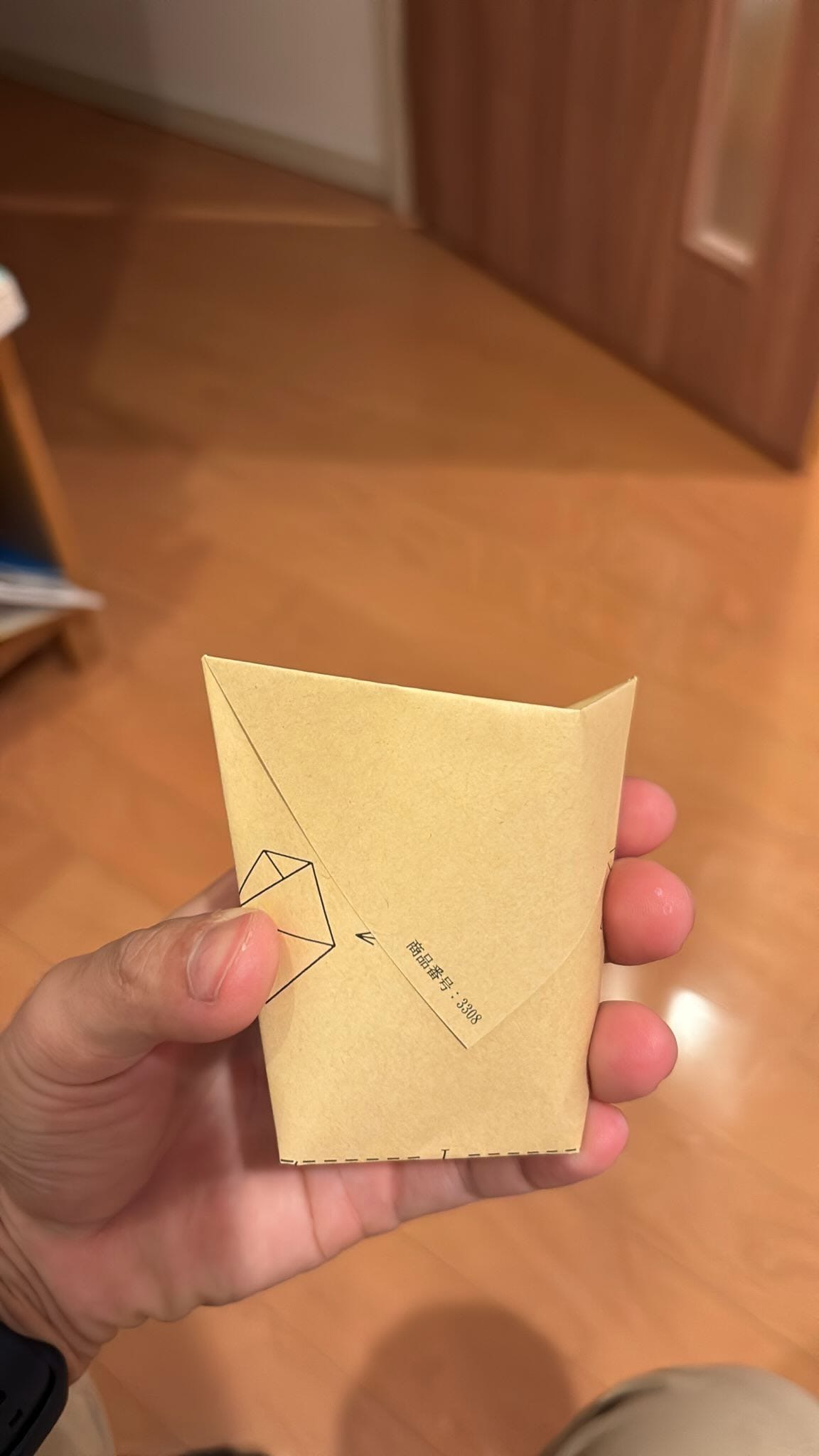
(L) Pee tube (Middle, Right) Origami pee cup
The tube reminded me of the soy sauce tubes that accompany your takeaway sushi. Being more accustomed to peeing in large, screw-cap cup, I was unsure how to pour the pee from the paper cone into the tube.
Turns out, I was to first pee into the origami paper cone, then squeeze the air out of the tube and insert its opening into the pee and finally un-squeeze the tube to suck up the pee. So smart!
The medical checkup was held at one of the district's medical centres, located in the same building as the library I frequent. Everything was well organised and I saw many young and old residents alike getting their health checkup done.
Post-checkup wake-up call
About three weeks later, I received the results in yet another thick envelope. It contained my medical results and brochures with tips on how to stay healthy. For example, a guide on incorporating walking as an exercise had a map of Setagaya's greenways. The Setagaya greenway is where I regularly run.
As my low-density lipoprotein ("LDL") cholesterol was on the high side, I was given pamphlets (all in Japanese) on what LDL is, factors contributing to high LDL and risks related to high LDL (heart disease and stroke).
I was also given a list of recommended preventive measures to be taken, such as reducing alcohol intake, increasing vegetable intake and regularly exercising.
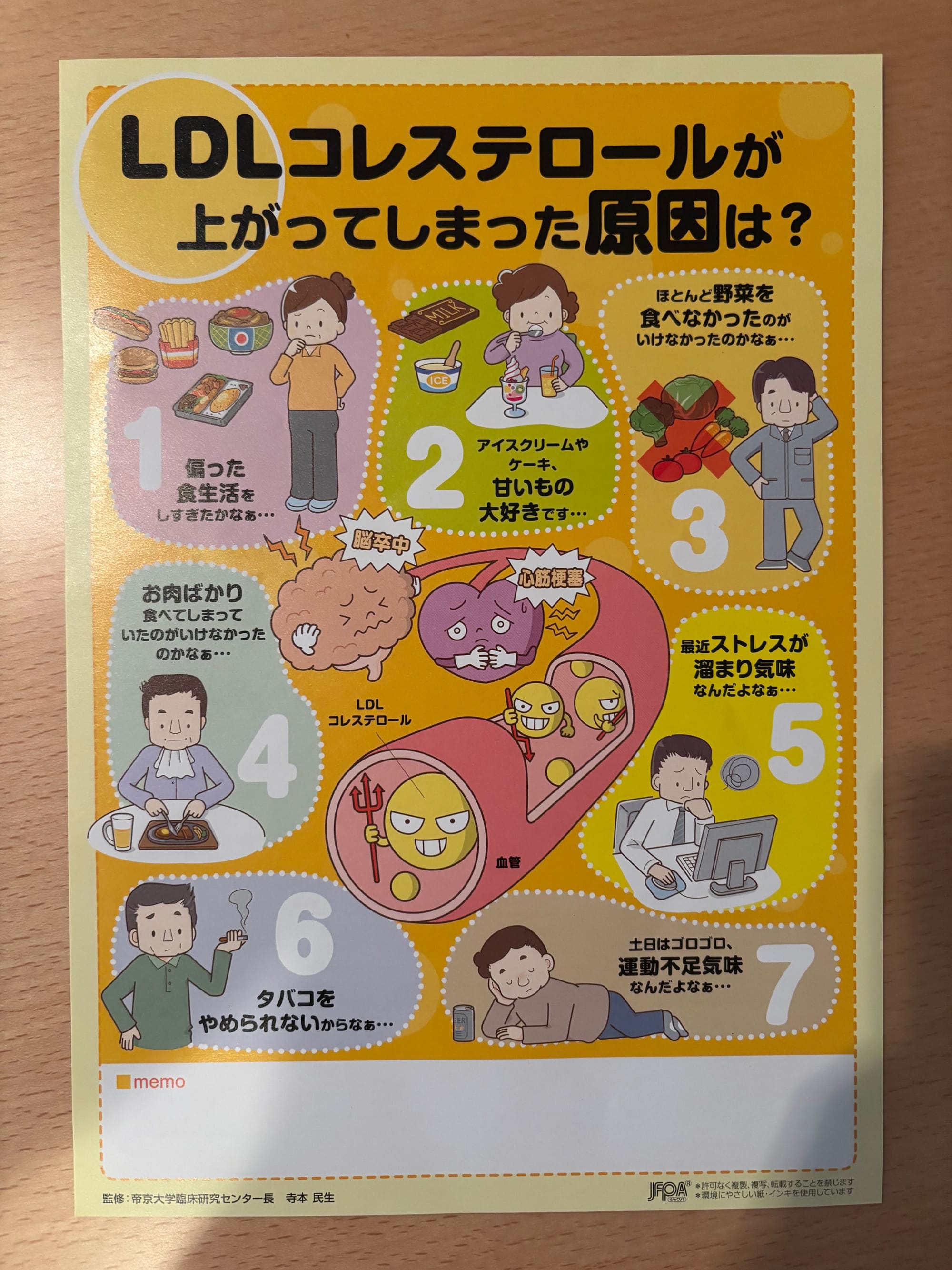
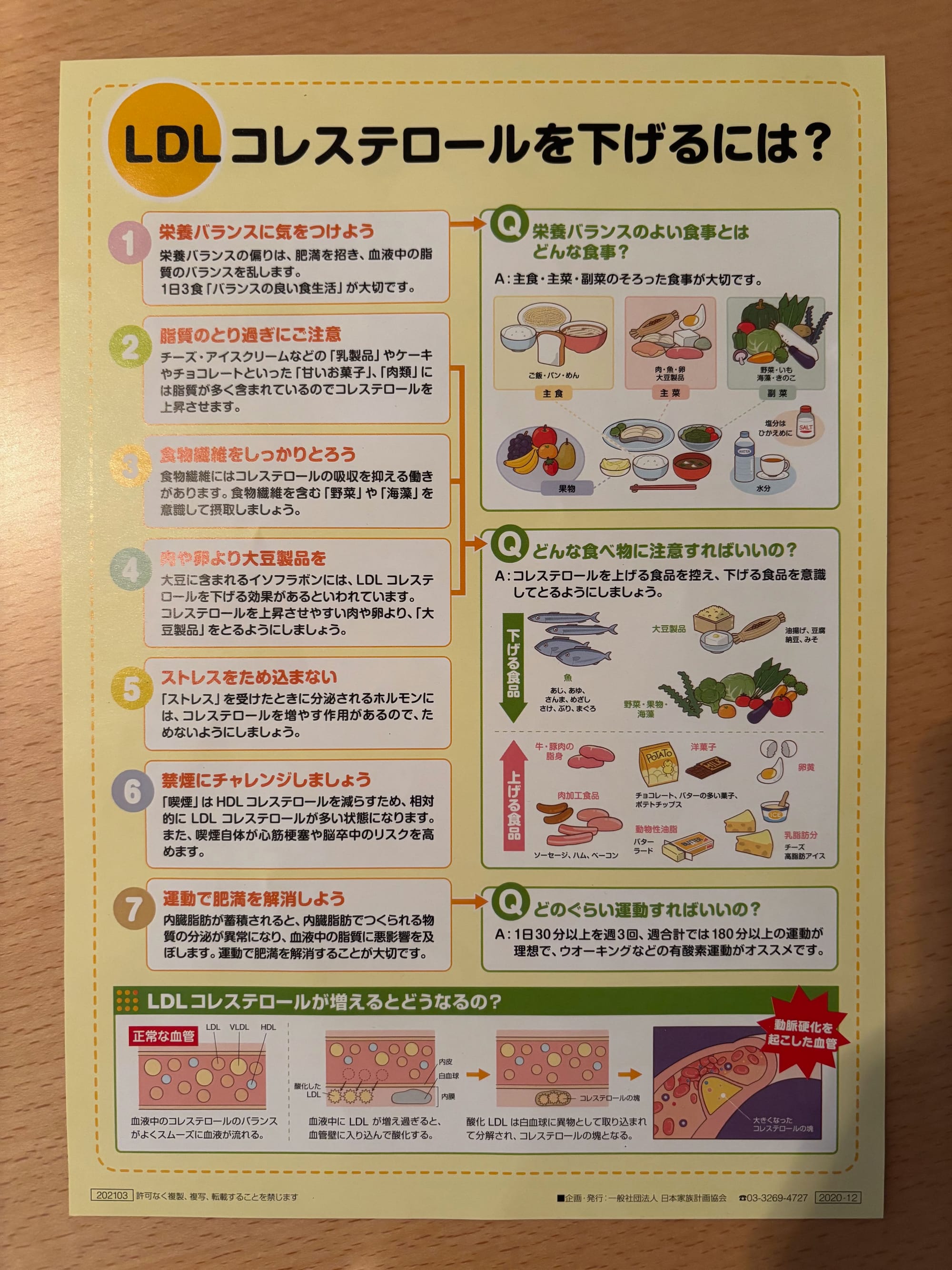
Tips on managing LDL.
My knowledge on the human body and basic nutrition is admittedly quite poor, as I did not like studying Biology growing up. Is the liver the organ that can regenerate? Do we have one or two kidneys? I can never remember these facts.
If there's a silver lining from this less-than-satisfactory medical report, I now know more about the human body and the proactive steps I need to take to stay healthy.
After all, health is wealth and prevention is better than the cure.
While I have always regularly exercised, I am now more conscious about eating less red meat & eggs, and actively ensuring I eat the daily recommended 350g (!) of vegetables. I also restrict myself to having five alcohol-free days per week.
Time will tell whether these measures are successful!
--Ends