WB025: Kentucky Fried Christmas
Kentucky Fried Chicken ("KFC") first came to Japan in 1970, around the same time as McDonald's. The KFC Holdings Japan Ltd. ("KFC Holdings Japan") company owns and operates the country's KFC business ("KFC Japan").
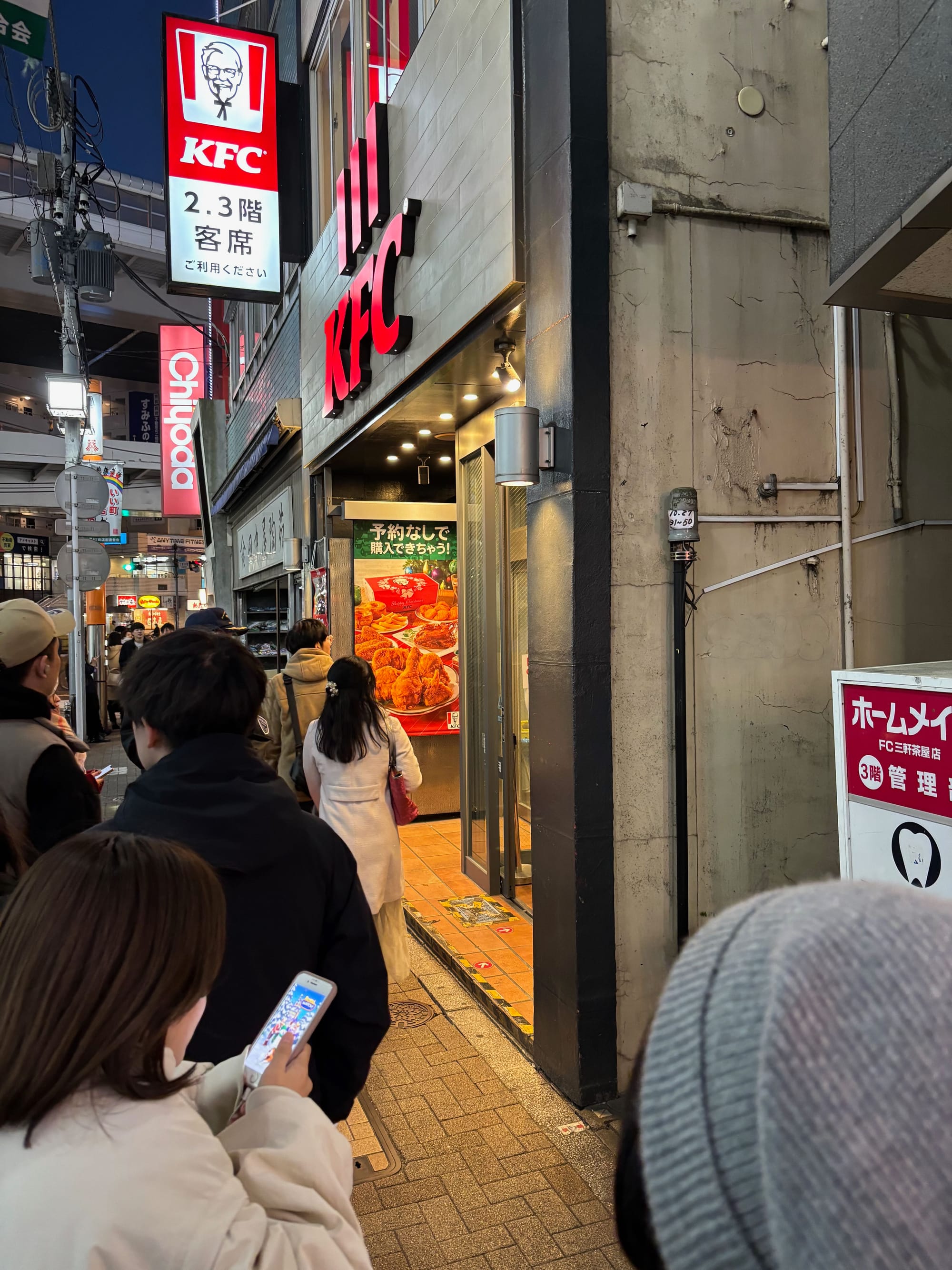
KFC Japan launched its Kentucky for Christmas marketing campaign 50 years ago in 1974. The campaign was a roaring success - since then KFC Japan's Christmas meal has become an annual tradition. According to KFC, Christmas eve is KFC Japan's busiest day of the year - 10 times busier than its annual average.
I find this phenomenon quite quirky, given Christmas is not a religious celebration in Japan. In fact, Dec 25th isn't even a public holiday. And isn't turkey a more Christmas-y bird than chicken?
Anyway, rather than question the wisdom of the crowds, this year I was excited to jump on KFC Japan's Christmas bandwagon.
A corporate entity with a personal touch
KFC Japan starts its Christmas advertising push in late October.
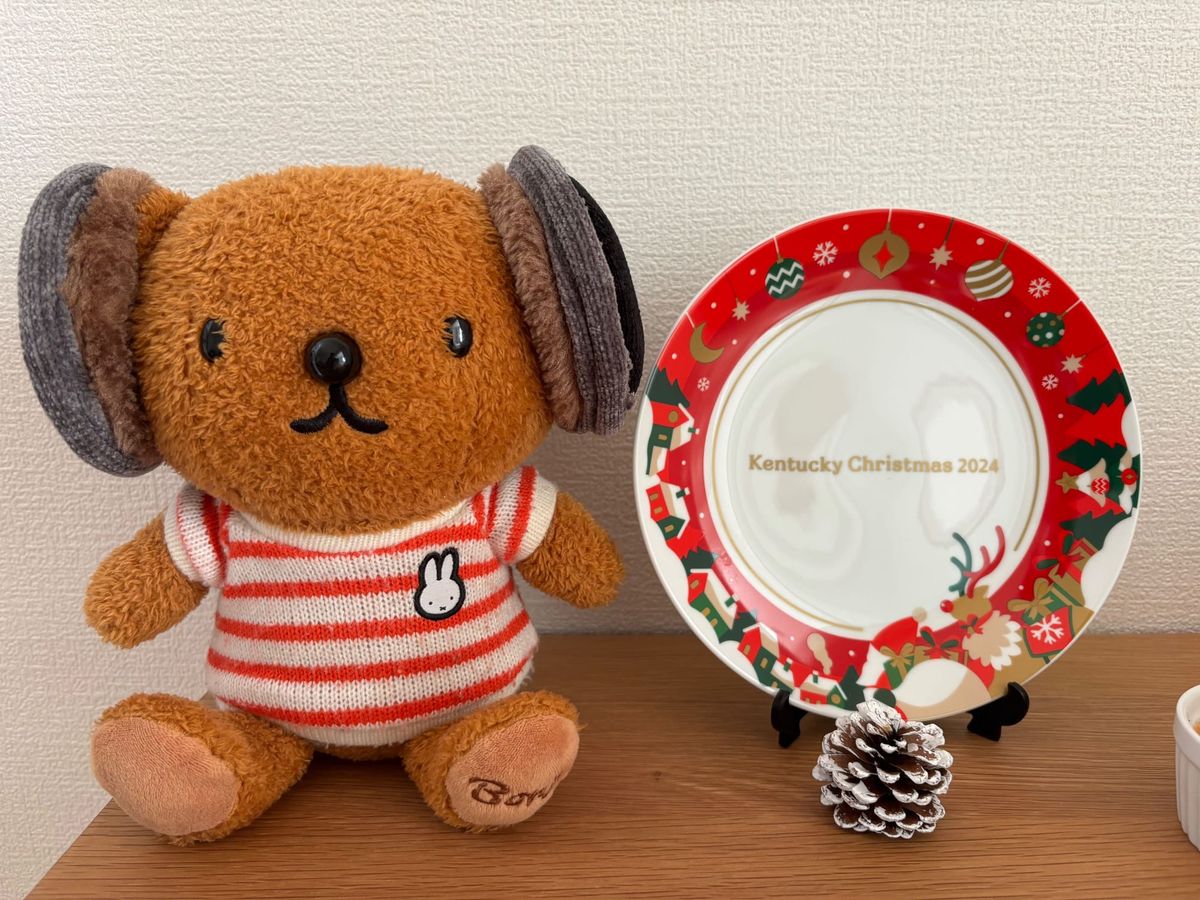
Among the various meal packages on offer, we made an online reservation for the famous Christmas party bucket. This year's bucket had a new design and contained 7 pieces of chicken, lasagna and a customary commemorative plate.
We also ordered two a-la-carte items: the KFC biscuit, which you eat with maple syrup, and a tiramisu (for dessert).
As a global business, KFC must have a localisation strategy when it comes to product offerings. Case in point, the KFC biscuit is not available in Singapore and Malaysia, while KFC Japan does not sell KFC's famous mash potato and gravy. The latter is a side dish I have always associated KFC with while growing up.
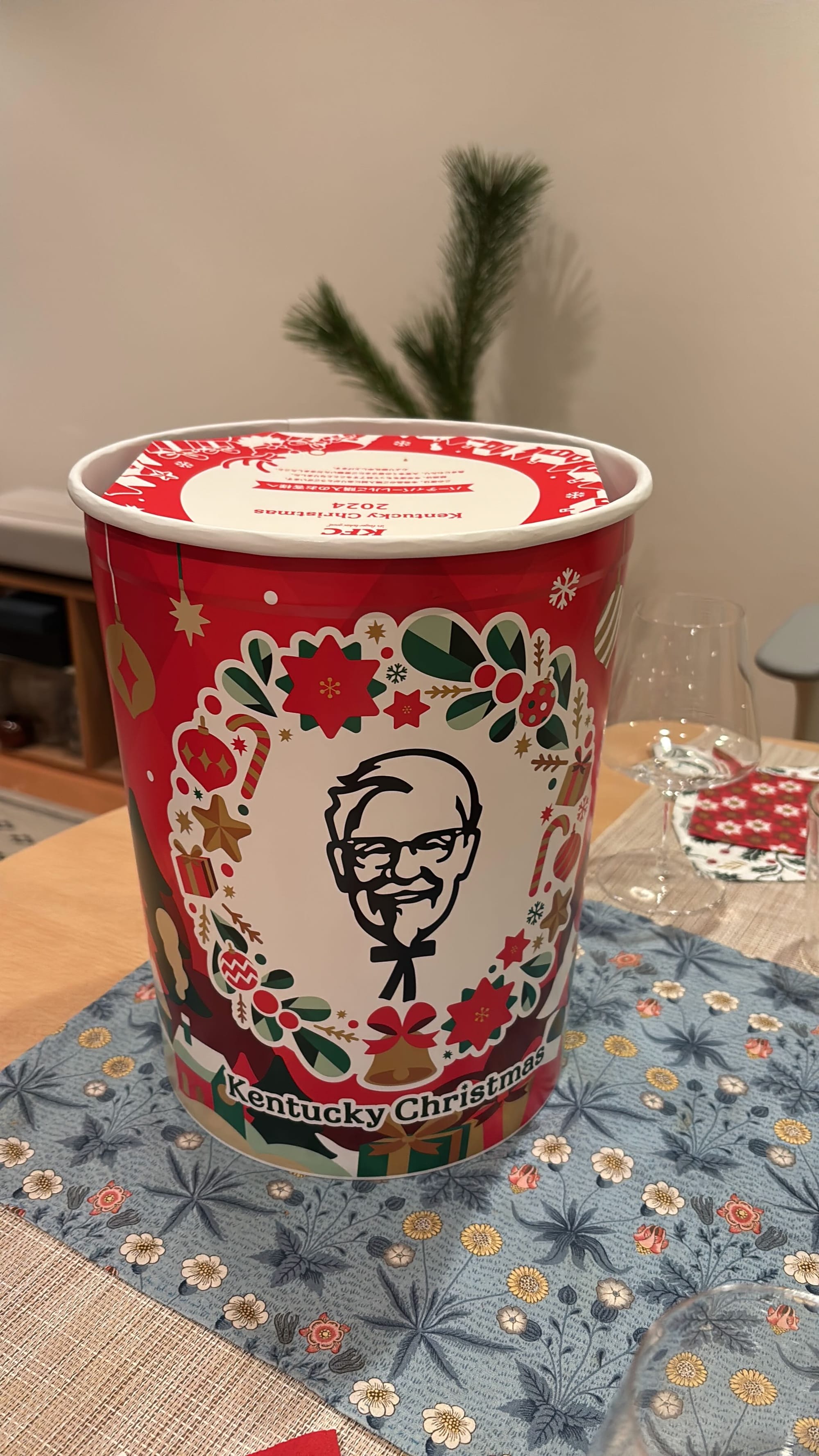
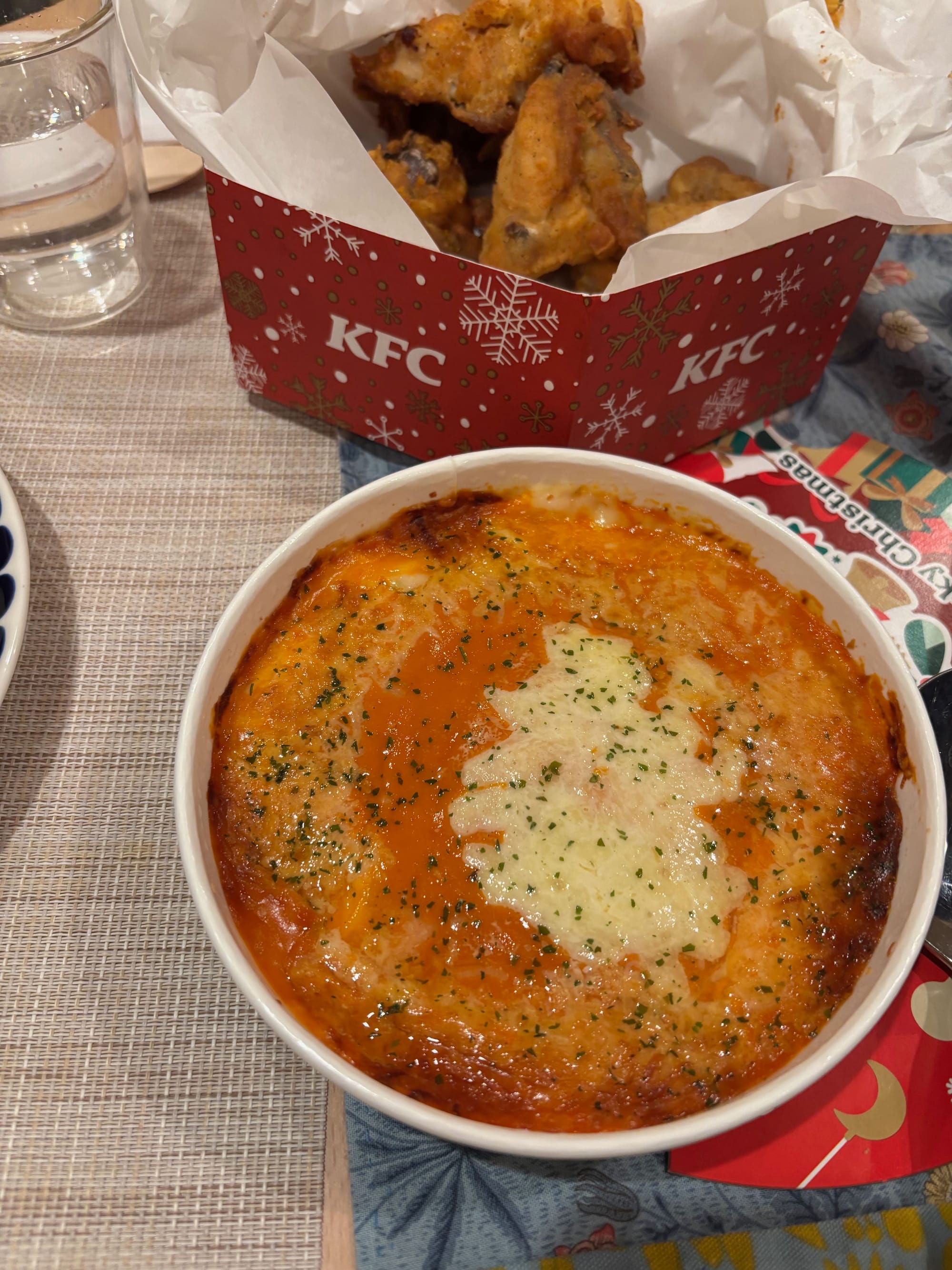
The meal was quite yummy, made better by the good company and festive feel.
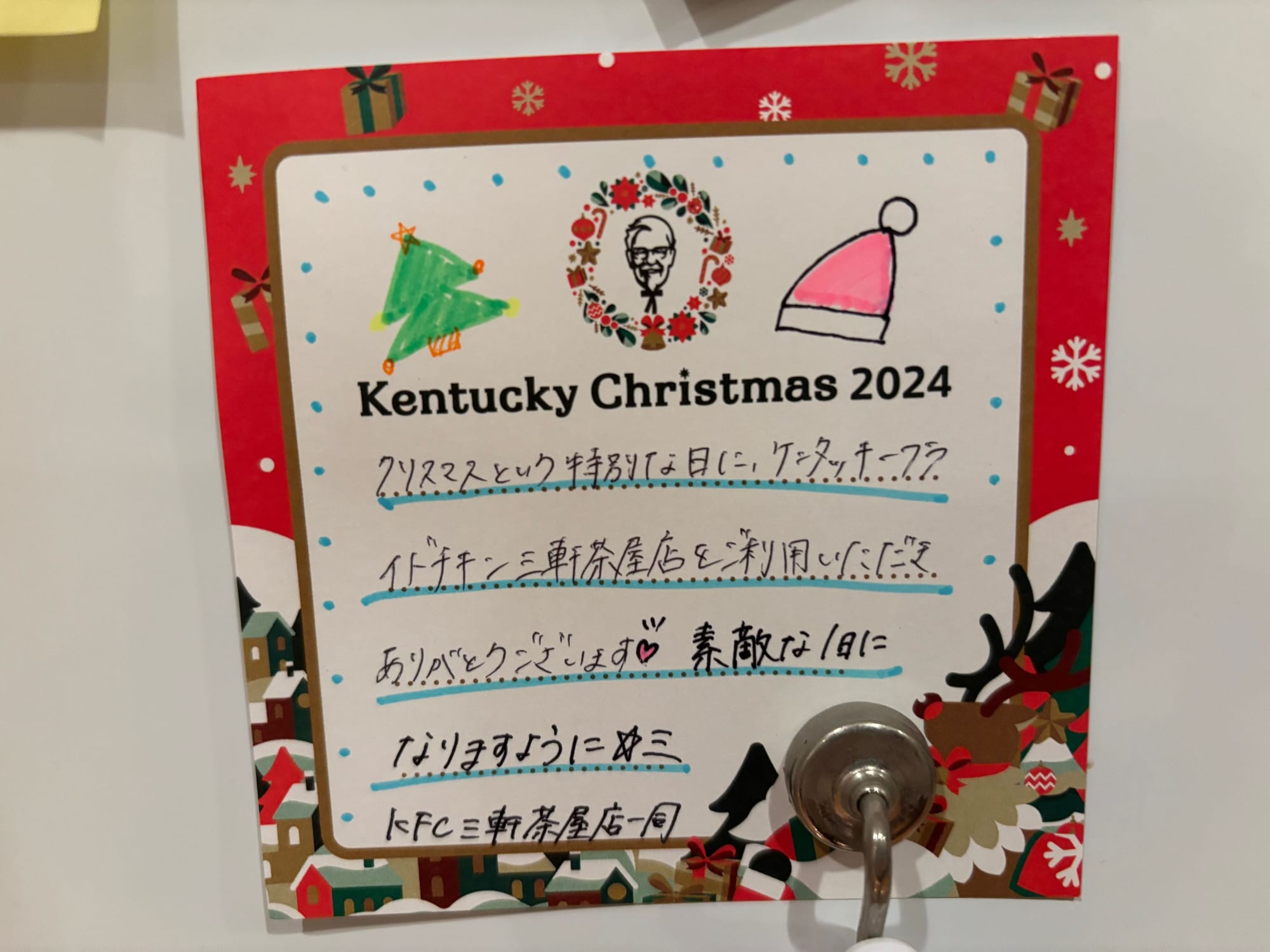
Adding to the "feel good" factor was a hand-written "Thank You" note from the branch staff tucked into the bucket.
I was quite touched by this simple gesture, considering the time and effort the staff would've had to spend writing notes for all the Christmas buckets.
I also did not expect this personal touch from a corporate entity like KFC. Sometimes, small gestures like this are just as valuable to the overall customer experience as the product and service on offer.
Will KFC Japan change under its new owners?
KFC Holdings Japan was established in 1970, with ownership split equally between trading house Mitsubishi Corp. ("Mitsubishi") and KFC Corp. of the United States.
This year, KFC Holdings Japan was privatised by US-based private equity company The Carlyle Group Inc. ("Carlyle"), ending the former's 34-year existence as a Tokyo Stock Exchange ("TSE")-listed entity.
The privatisation process involved two parts.
KFC Holdings Japan first did a tender offer for its own shares from shareholders (excluding Mitsubishi). Carlyle then bought out Mitsubishi's 35% stake for JPY 40 billion (~US$257 million), giving Carlyle 100% ownership.
I found Mitsubishi's original investment of KFC Japan interesting, given the lack of obvious synergy between the food industry and the company's core businesses (materials, minerals and heavy industries).
That said, this diversification strategy (in search of growth) does not seem to be out of the norm for Japanese corporates. For example, Ajinomoto Co., Inc. ("Ajinomoto") - famous for its monosodium glutamete ("MSG") seasoning - is the dominant supplier of Ajinomoto Build-up Film ("ABF"), a specialised material used for semiconductors.
And Kirin Holdings Co. Ltd ("Kirin"), famous for its "Kirin"-branded beer, owns Australian supplements company Blackmores Limited. Perhaps there are more synergies than meets the eye.
KFC Japan's chicken products taste quite good, and this is because good quality, locally-sourced chicken is used. Since news of the privatisation came to light, there have been concerns that KFC Japan will opt for cheaper, imported chicken. Private equity companies are, after all, driven by the bottom line.
One can only hope that this does not happen, and that KFC Japan maintains its unique identity and quality product offerings.
--Ends