WB032: Making Miso!
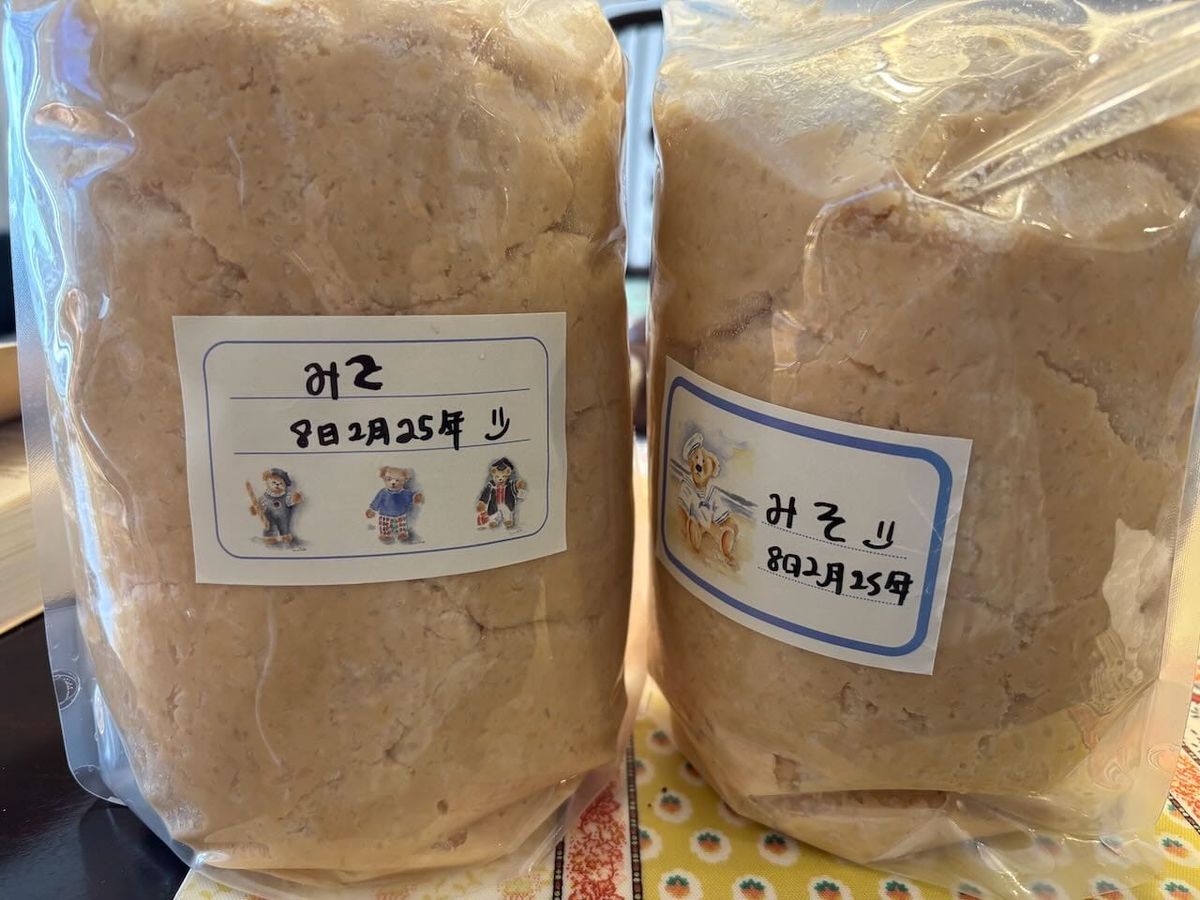
Miso (Japanese: 味噌) is Japanese for fermented soybean paste. It is commonly-used in Japanese cooking, for example in miso soup. Given its strong umami (Japanese: 旨味), miso can also be used in other ways, such as to make pasta sauce or to marinate fish.
The ingredients to make miso are quite simple: water, kōji (Japanese: 麹), soybean and salt. You also need sealable plastic bags to ferment the miso. I think any storage device can be used, so long as the air can be expelled prior to fermentation.
Kōji is a fungus that interacts with the other miso ingredients to cause fermentation. Its role is similar to red yeast rice in the foochow (Chinese: 福州) rice wine fermentation process.
Every February, my mother-in-law makes miso. My wife and I make it a point to give her a helping hand. In return, we get to pick up the previous year's batch, which is ready for consumption. Despite not being a good cook, I really enjoy learning how to make foods from different cultures.
Miso 101
The difficulty in making miso is not in the steps, but its labour-intensive nature. You need to make a large-enough batch (around 1.5kg of soybeans) to make it worth your while.
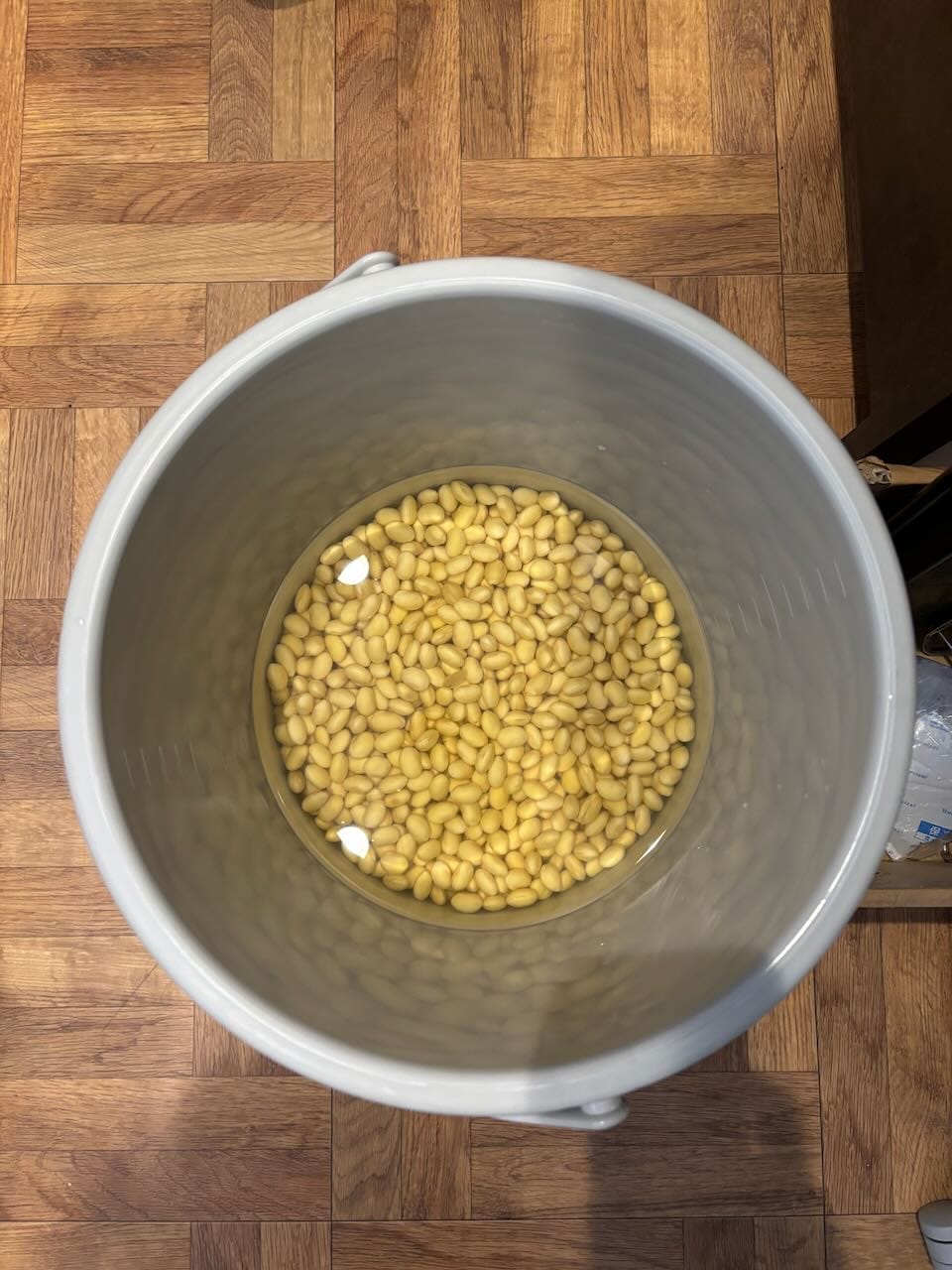
Prior to starting, you soak the soybeans in a pail of water overnight. You can also take this time to mix the kōji and salt.
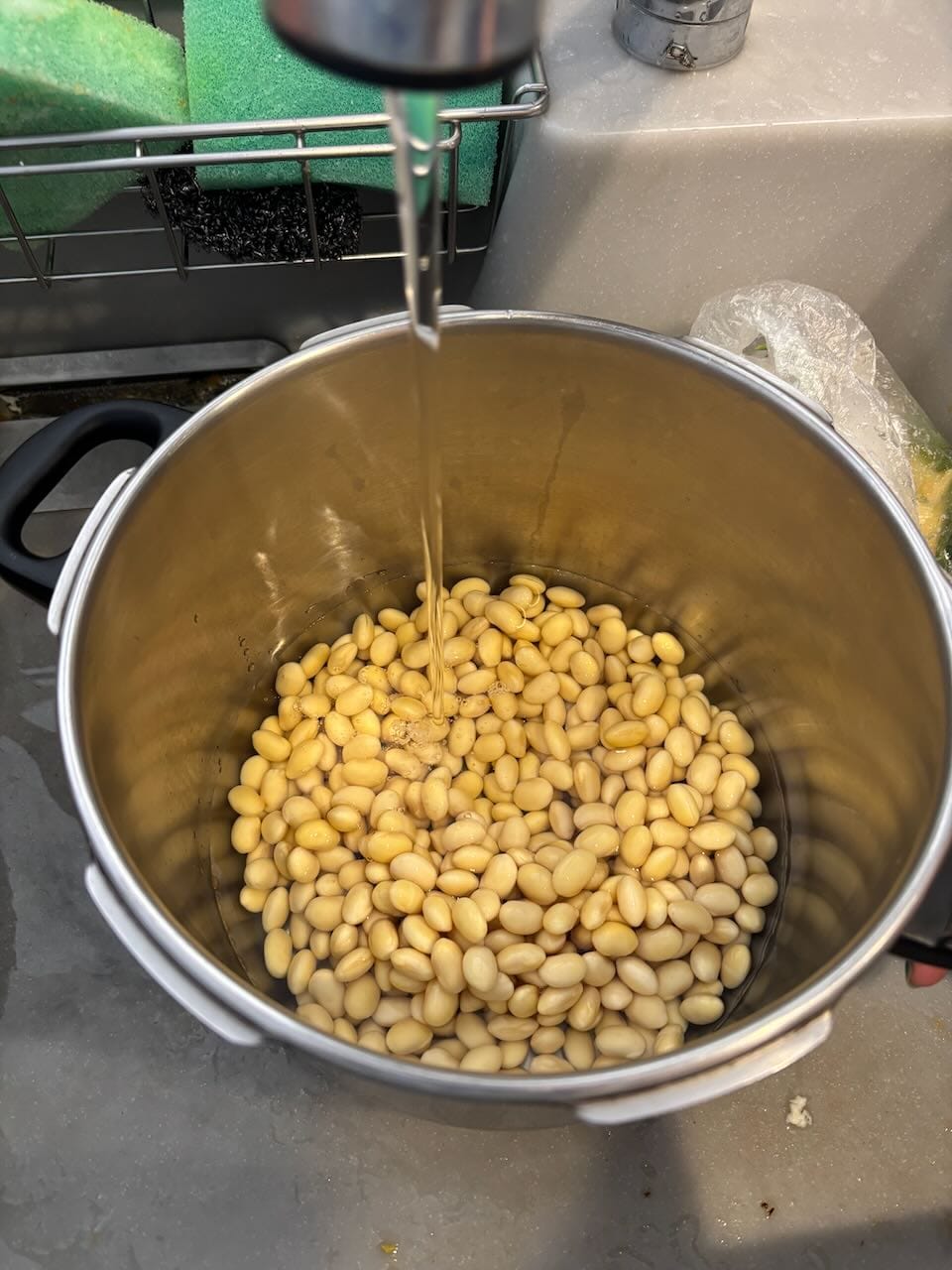
Step 1: In small batches, cover the soybeans with water and boil until they are soft. It is more efficient to use a pressure cooker
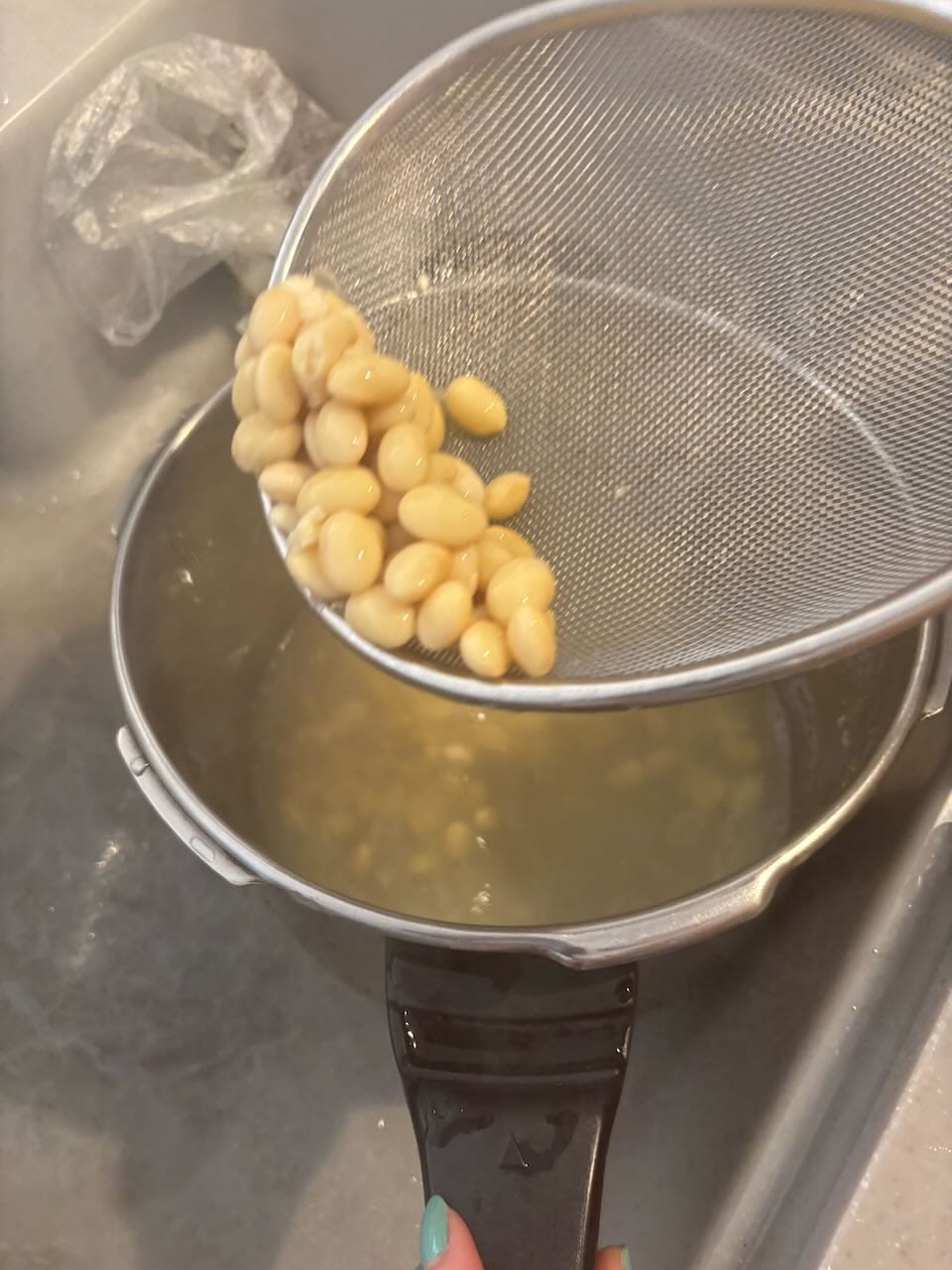
Step 2: Once boiled, separate the soybeans from the water and blend it into a paste. You can use an electric blender. Retain the leftover water and use it to boil subsequent batches of soybean. Repeat this step until all the soybeans are boiled and blended
Step 3: Mix the soybean paste well with the kōji & salt and roll them into balls ("soybean balls")
Step 4: Sanitise the inside of the miso bag by spraying shochu (Japanese: 焼酎), a Japanese potato- or barley-based spirit
Step 5: Place the soybean balls into the miso bag. Once the bag is 3/4 full, cover the top with a sheet of glad wrap and sanitise the area around it with more shochu.
Step 6: Squeeze the air out from the bag, then seal it
Step 7: Let the miso ferment in a cool and dark area - we usually do this for nearly a year
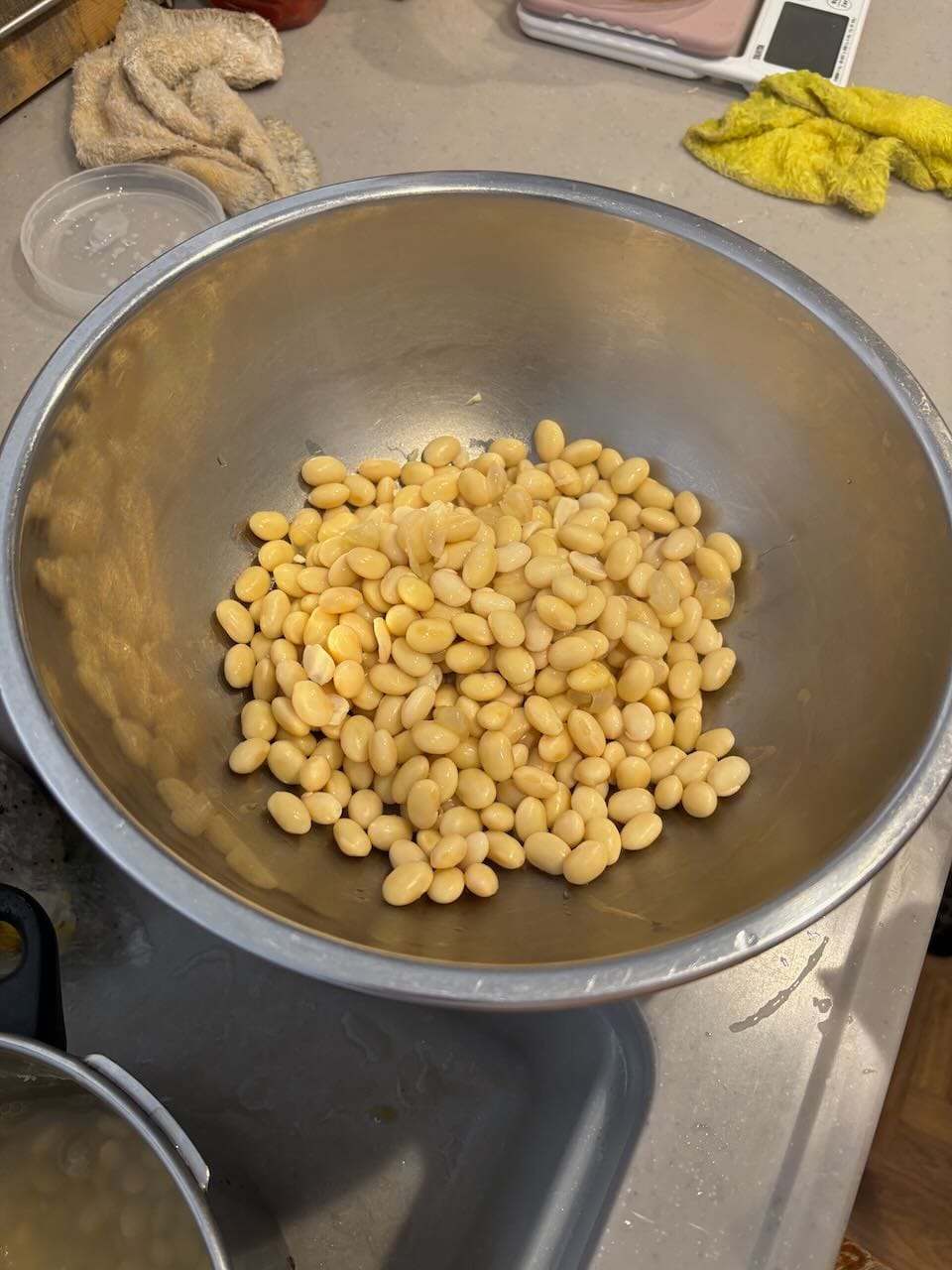
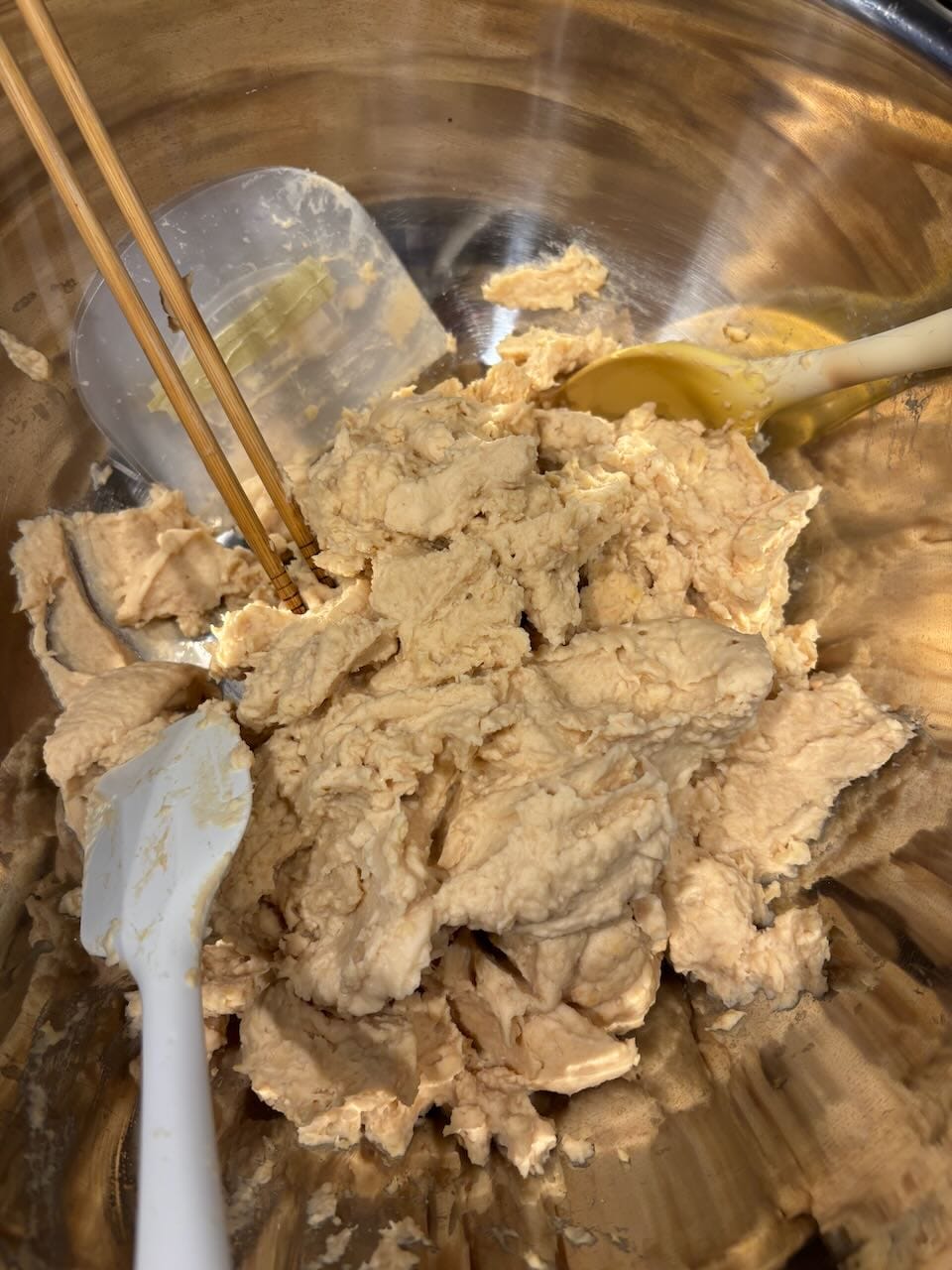
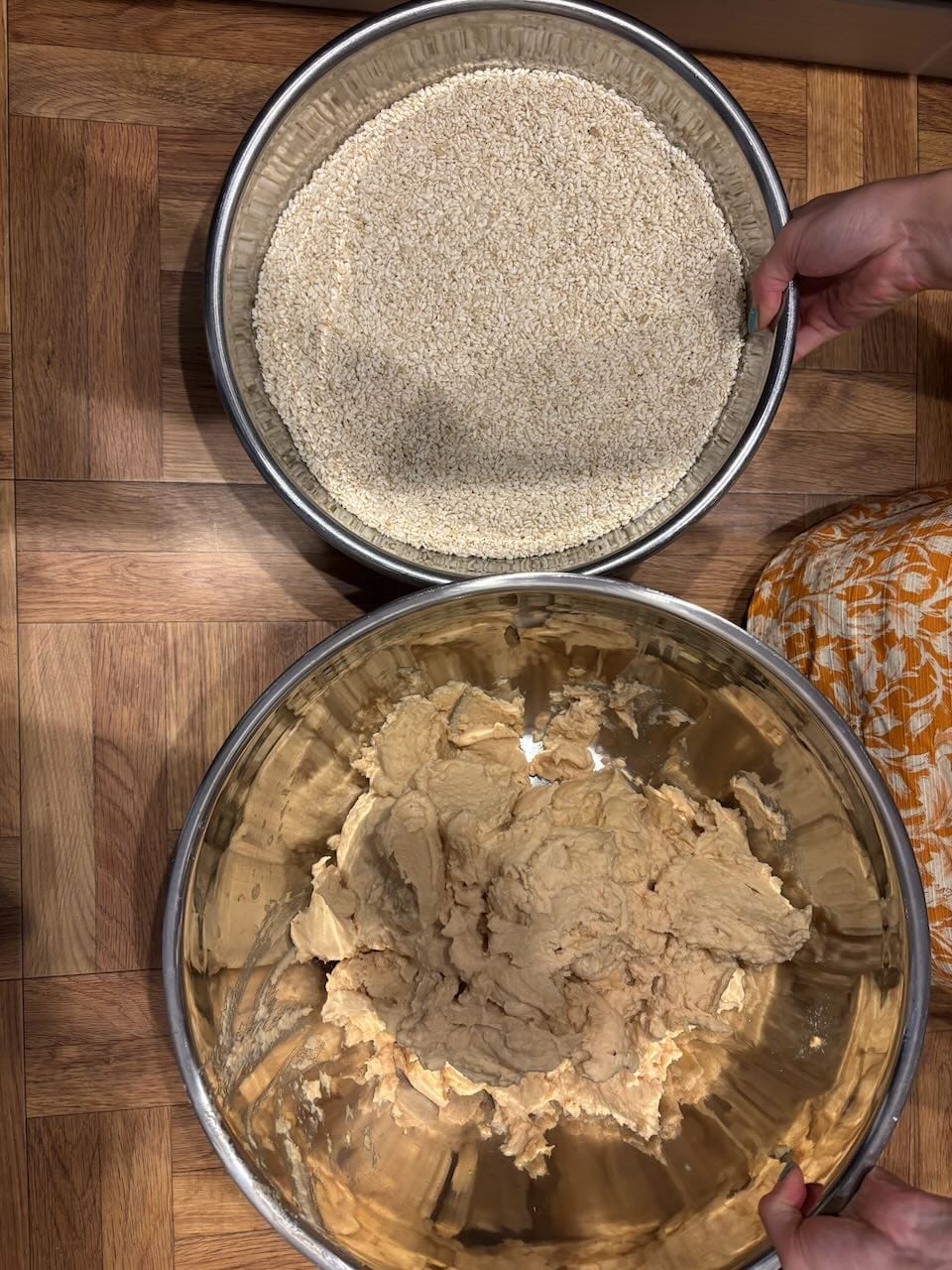
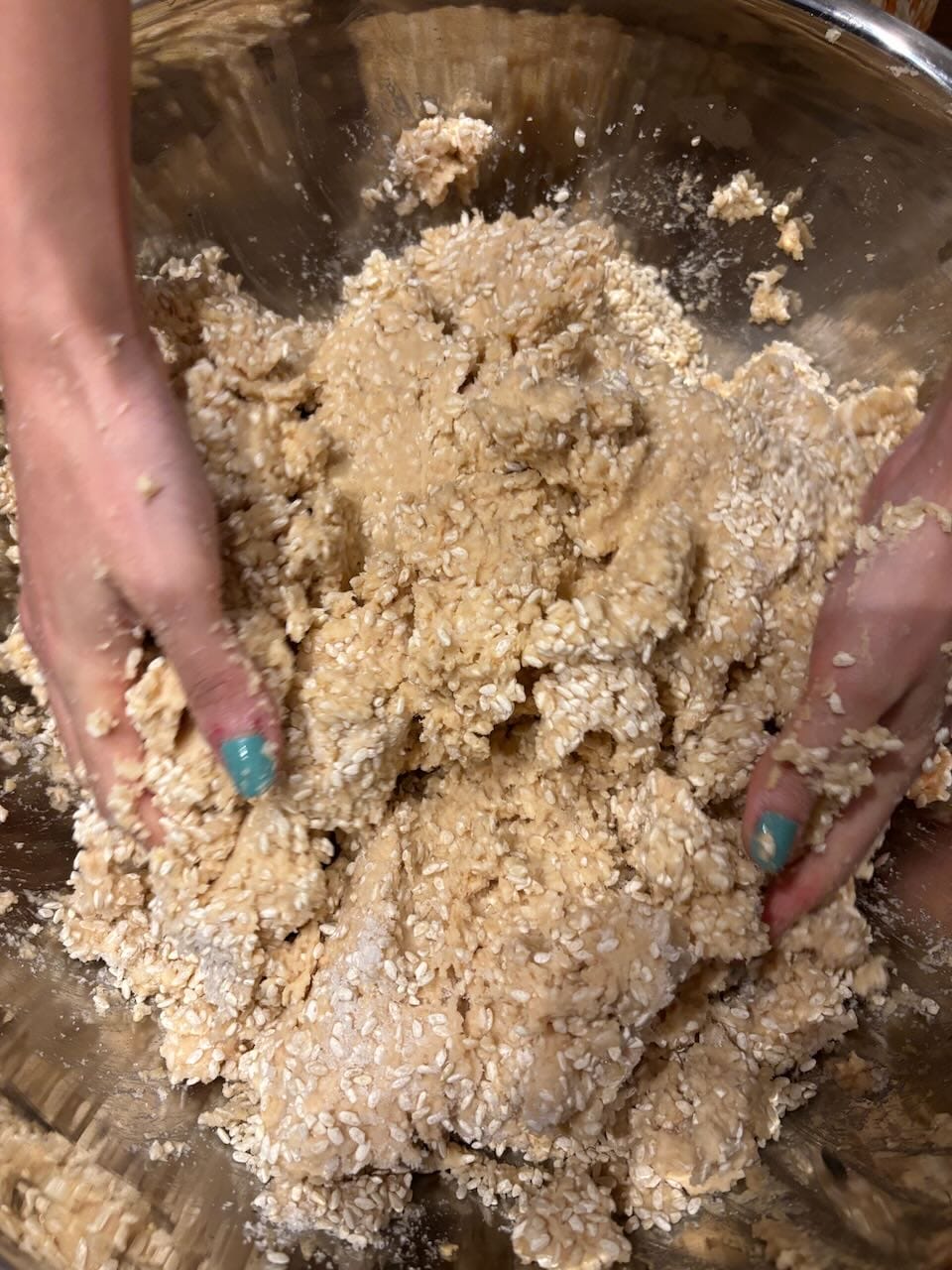
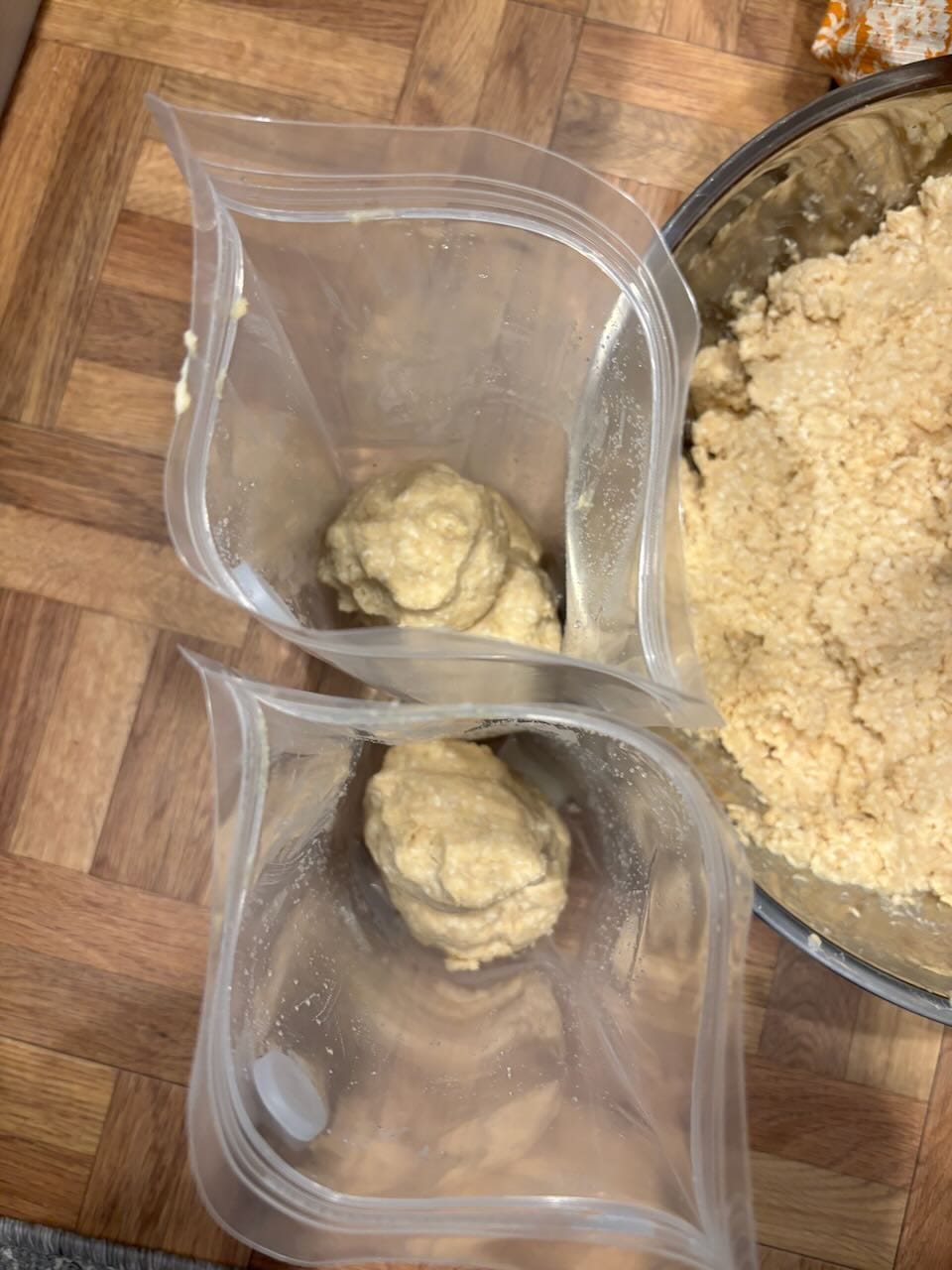
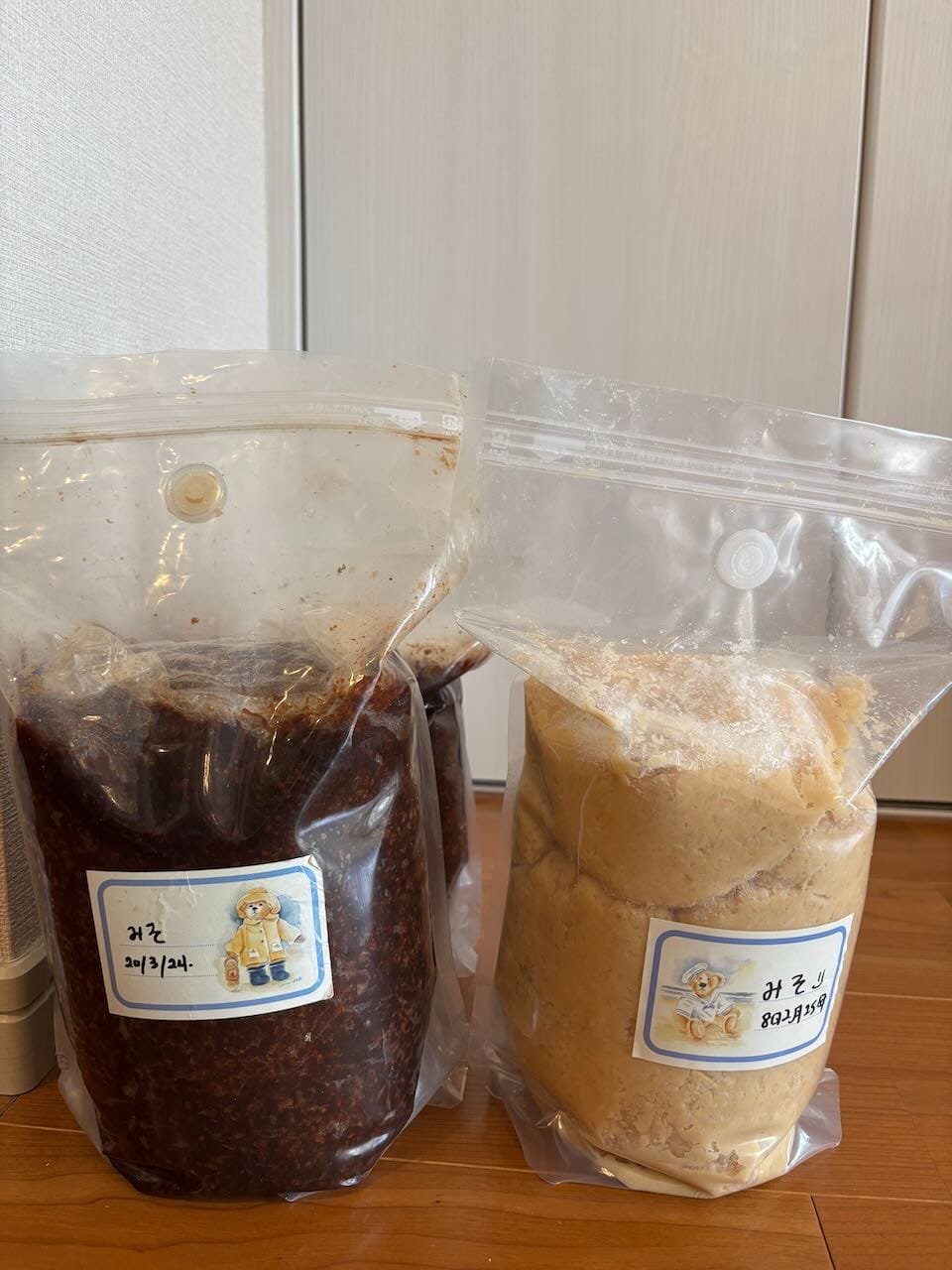
Preserving recipes for the next generation
Miso is rarely made at home these days, largely because it is labour intensive and more convenient to purchase at a local supermarket or miso specialty store.
I think homemade foods are priceless, especially fermented foods like miso where you can only taste the fruits of your labour after a year or so. The period of uncertainty - whether it was properly made - only adds to the value of the final product.
I feel it is important for at least one person from each generation to learn his/her family's recipes so they can be passed on.
Food, after all, is the tie that binds everyone together, regardless where everyone is. One example was a virtual foochow rice wine-making session my aunty held during Covid with family members from all over the world - a happy memory I will not forget.
--Ends