WB034: A Novel Onsen Experience
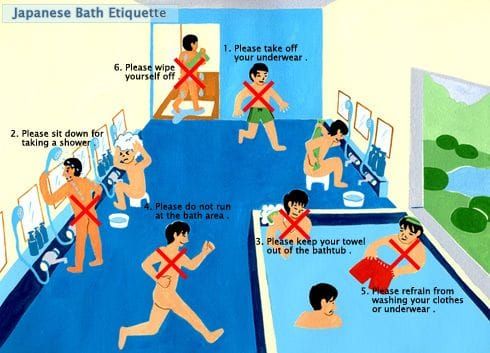
According to my trusty Frommer's Japan guide, a not-to-be-missed travel experience in Japan is taking a bath in a communal onsen (Japanese: 温泉, English: hot spring).
This experience is daunting for most non-Japanese like me, as it involves bathing butt naked with a bunch of strangers. This is, however, a cultural norm for the Japanese, who love home and communal soaking.
Public bathing originated in the sixth century in Japan, with neighbourhood bath houses becoming popular during the Edo (Japanese: 江戸) period (1603 - 1868). This was largely due to practical reasons - most homes back then did not have private baths.
Bathing in a communal space has since remained a cultural cornerstone, and public baths are now mostly gender-segregated. It is not uncommon for friends, colleagues and family members to go to a public bath, get naked and have a soak together. This is a concept I admittedly (still) find quite alien. It brings "getting to know one another" to a whole new level.
While travelling in Japan, I try to stay in hotels or ryokans (Japanese: 旅館, English: traditional Japanese inn) that have an onsen. In winter, nothing beats a nice, hot soak before breakfast and dinner at these accommodations. These onsens, though public, are usually not crowded. And if you're lucky, you can have the whole onsen to yourself.
When in Rome, do as the Romans do
Last week, we did a two-night stay in Nasu (Japanese: 那須) , a town located in the Tochigi Prefecture (Japanese: 栃木県) which is north of Tokyo. Nasu has many onsen hotels, and is known for the Nasu Imperial Villa. It usually snows in winter, which was one of the motivations for the trip.
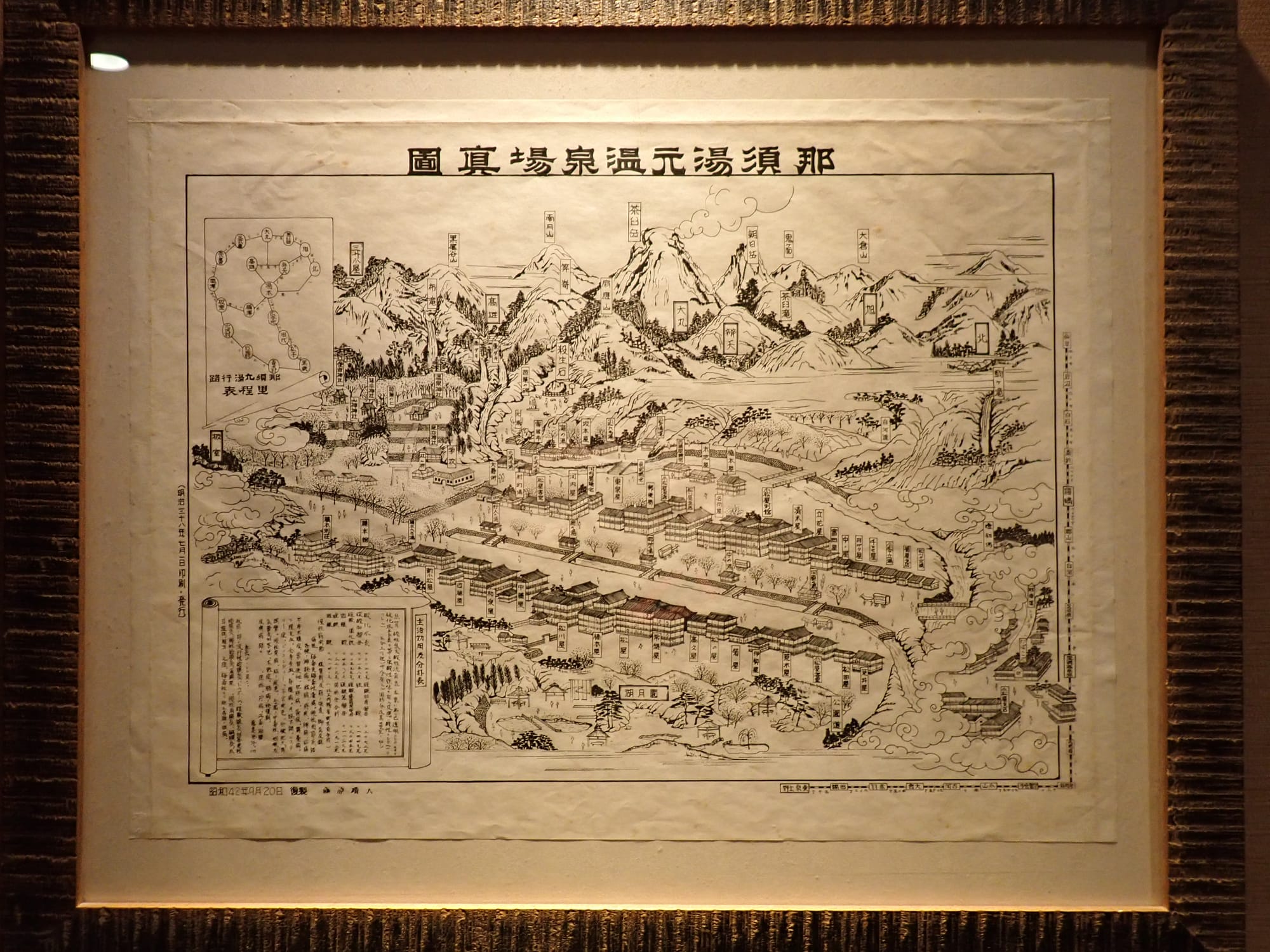
One of the excursions we did was to go for a soak in Shikanoyu (Japanese: 鹿の湯), a public onsen said to have been discovered way back in the second half of the 7th century. The entrance fee is a reasonable JPY500 (~US$3.30) and you have to bring your own towels.
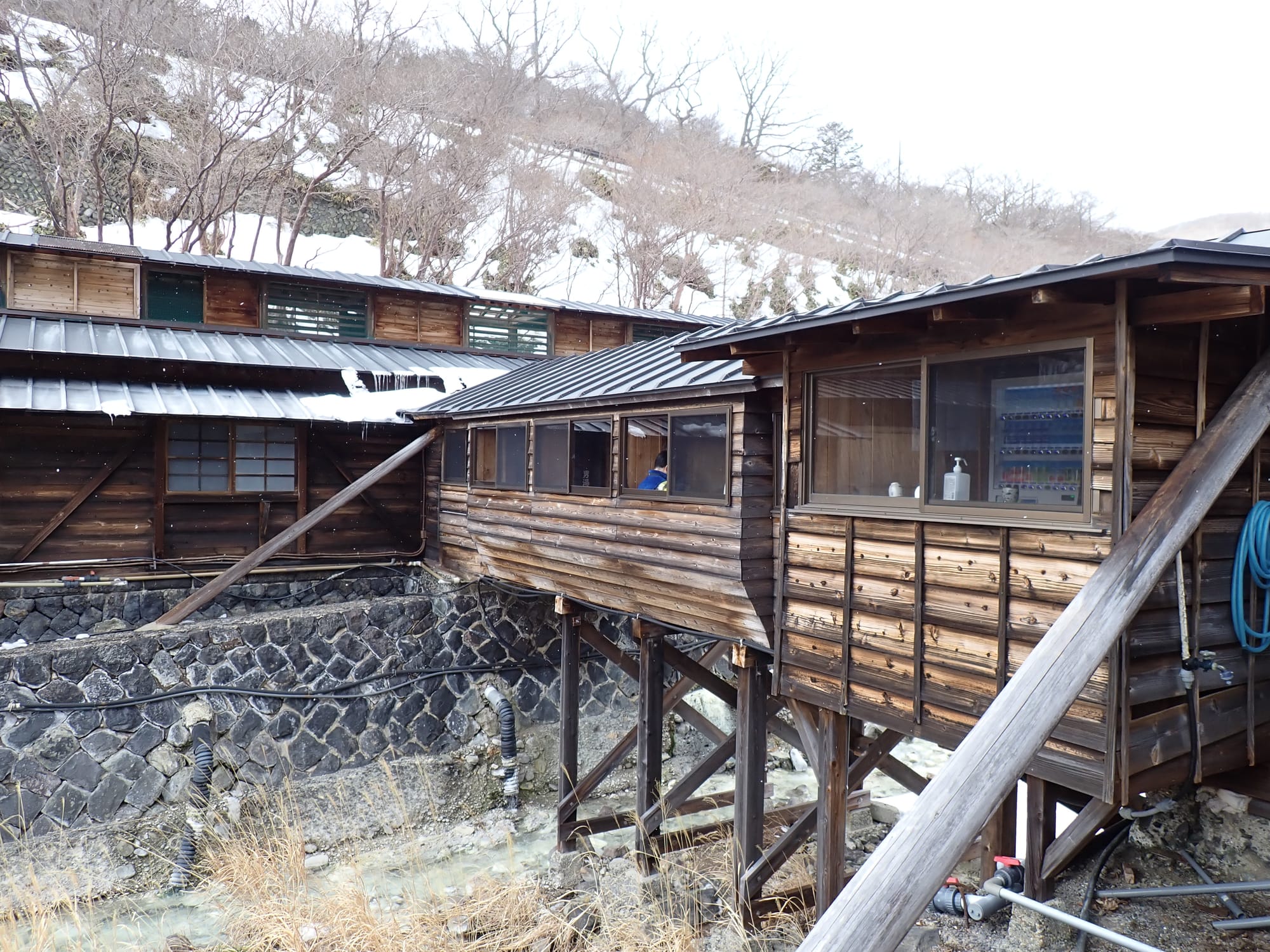
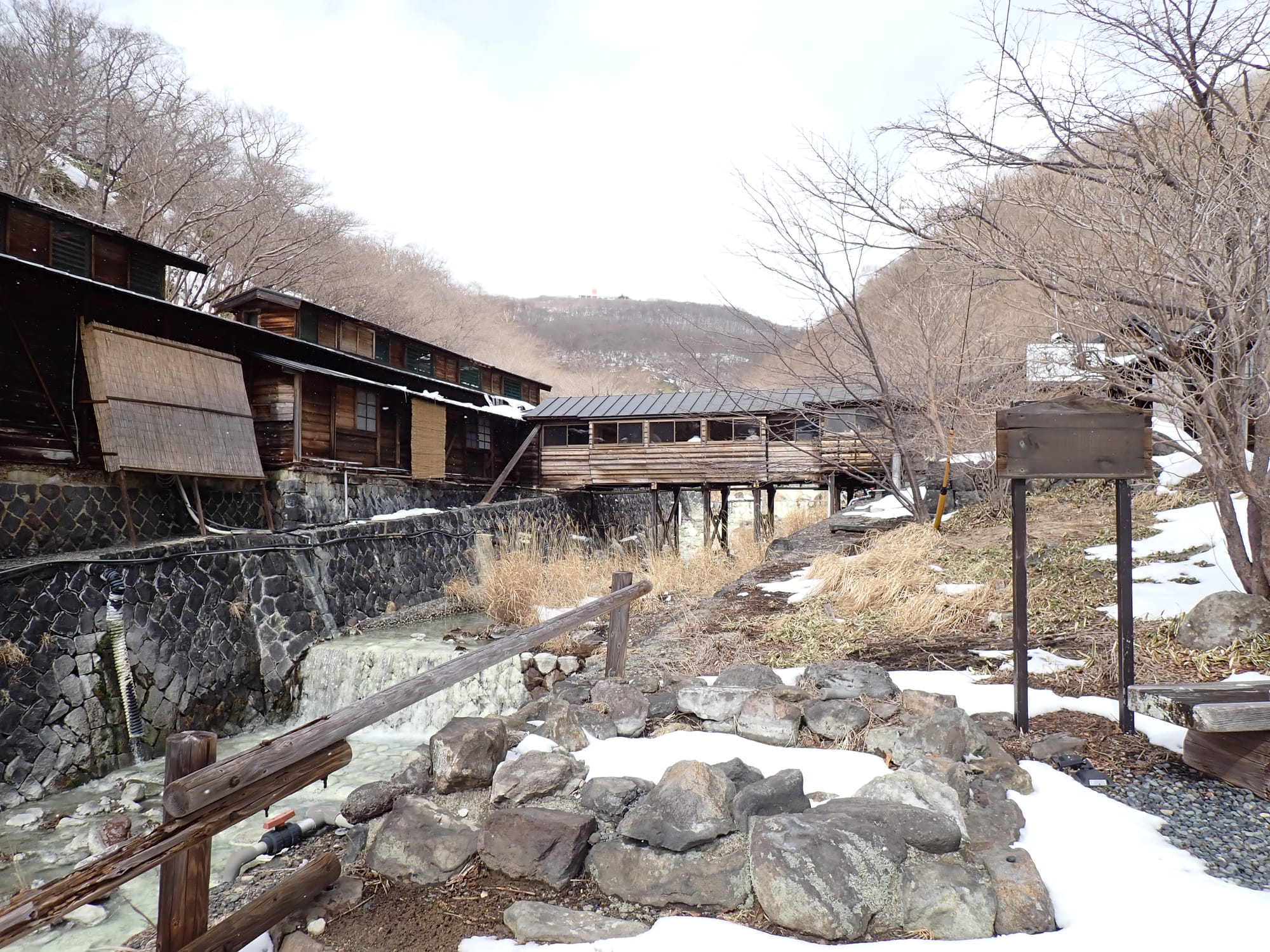
Shikanoyu onsen
The experience was a vast difference to what I was used to: Upon stepping into the male onsen, I was taken aback at how crowded the bathing area was with naked guys of all ages. Some were in baths, while some were sitting on the wooden floors taking a breather in between soaks. The onsen water - which contains sulphur - also emanated a strong sulphuric smell.
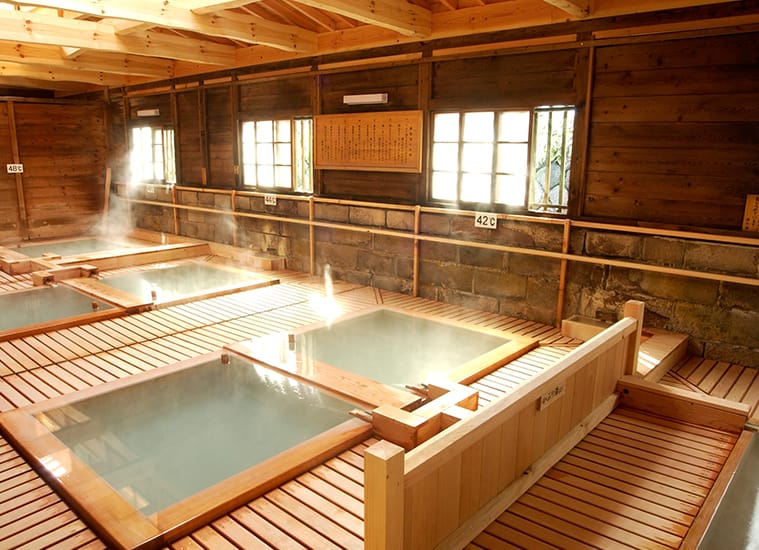
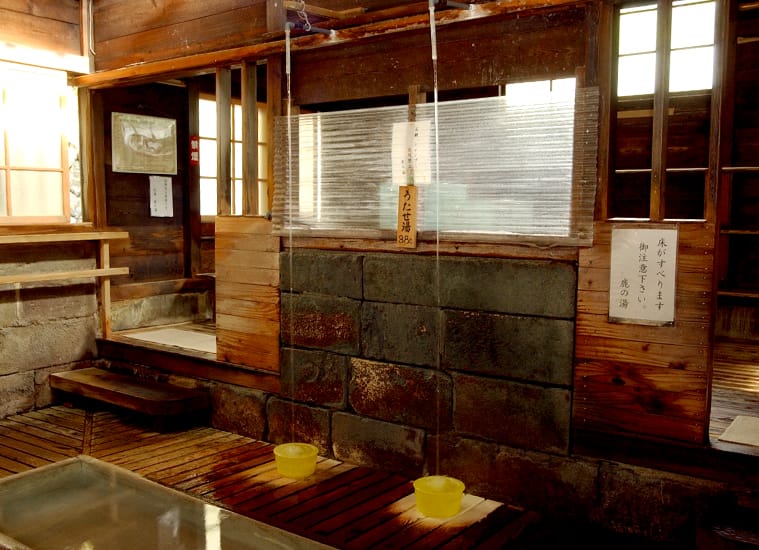
The male onsen (L) and rinsing (R) area. Source: Shikanoyu's website.
Despite having first-time jitters, I got naked and made my way to the bathing area. After all, when in Rome, you do as the Romans do. I first rinsed my body, which is what you do at a public onsen, and then entered one of the less-crowded baths.
The male onsen has six baths (41°C, 42°C, 43°C, 44°C, 46°C & 48°C), while the female onsen doesn't have the 48°C bath.
To do a proper soak at Shikanoyu, you're recommended to repeat this process: 1 minute up to the waist, 1 minute up to the chest and 1 minute up to the neck. The total soak time should not be more than 15 minutes. In between soaks, I stood by the open window to take in the crisp and fresh wintery air, which felt great.
I made it a point to try kaburi-yu (Japanese: かぶり湯) - the act of repeatedly pouring a ladle of onsen water over your head. This is said to prevent hot flushes and nausea. That said, I couldn't do it the recommended 200 (!!) times, as the water was too hot.
All in, this was the highlight of my Nasu trip and one of my most memorable experiences in Japan so far.
The History of Shikanoyu
Shika means "deer" in Japanese. In the first half of the 7th century, a man named Kano Saburo Yukihiro went on a mountain hunt. He chased a fleeing deer he had shot into the mountains, which healed itself in the hot springs now known as Skikanoyu.
Shikanoyu was last renovated in 1941 and has retained this form ever since. You get the sense you're walking back in time upon entering the building, which looks beautiful when cast against the snowy backdrop of Mount Nasu (Japanese: 那須岳).
In the area surrounding Shikanoyu, there is a trail that leads to the Killing Stone (Japanese: 殺生石) and the Nasu Yuzen Jinja (Japanese:那須湯泉神社).
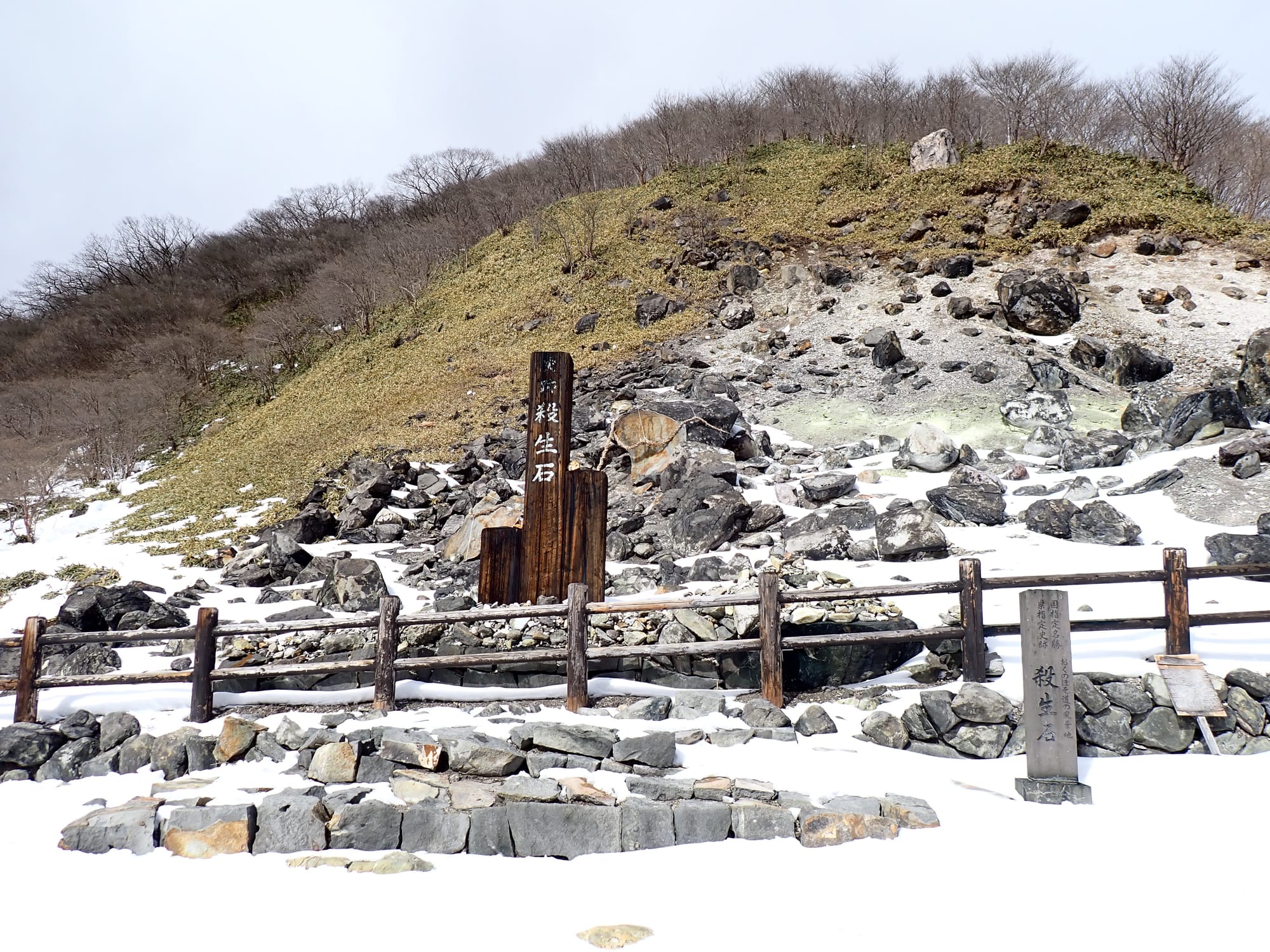
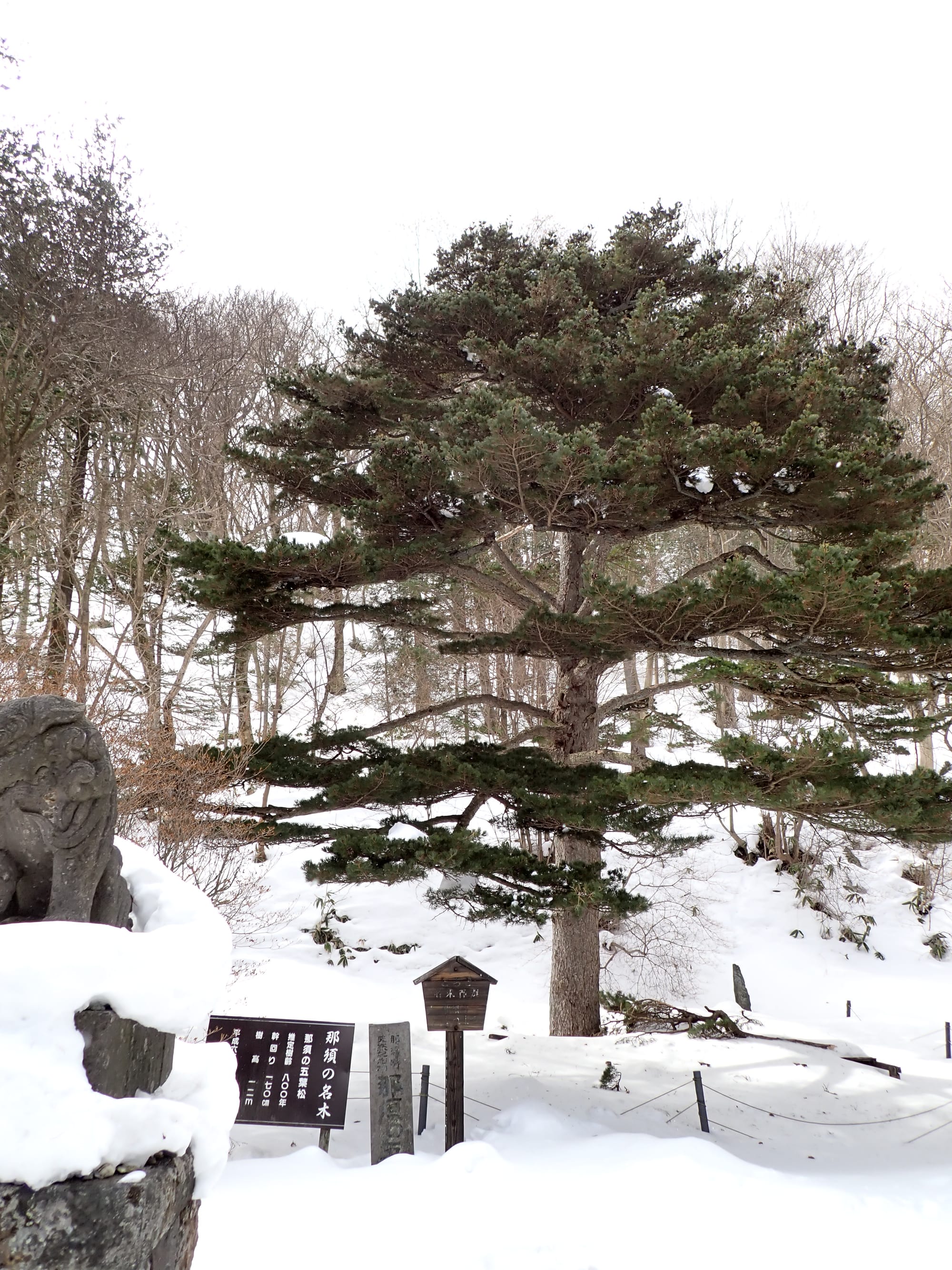
(L) The Killing Stone and (R) the Nasu Yuzen Jinja's 800-year old bonsai
--Ends