WB037: Muji's DIY Nukazuke Kit
Muji is a Japanese retailer that sells many household and consumer goods, from furniture to clothes to cosmetics. The company is well-known for its minimalist products that are practical and look good.
Going into Muji is like walking into a stationary store - there's always something really interesting you see and end up buying.
The other day, we came across a Muji product called hakkounukadoko (Japanese:発酵ぬかどこ, English: Fermented rice bran bed), which is essentially a DIY nukazuke (Japanese: ぬかずけ, English: rice bran pickle) kit. Nukazuke is a Japanese pickling method using fermented rice bran.
Japanese pickles, in general, are called tsukemono (Japanese: 漬物). They are a common side dish in a Japanese meal, whether you're in a high-end restaurant or chain restaurant.
Apart from nukazuke, there are other types of tsukemono such as shiozuke (Japanese: 塩漬け, English: salt pickle), kasuzuke (Japanese: 粕漬け, English: sake lees pickle) and shoyuzuke (Japanese: 醤油漬け, English: soy sauce pickle).
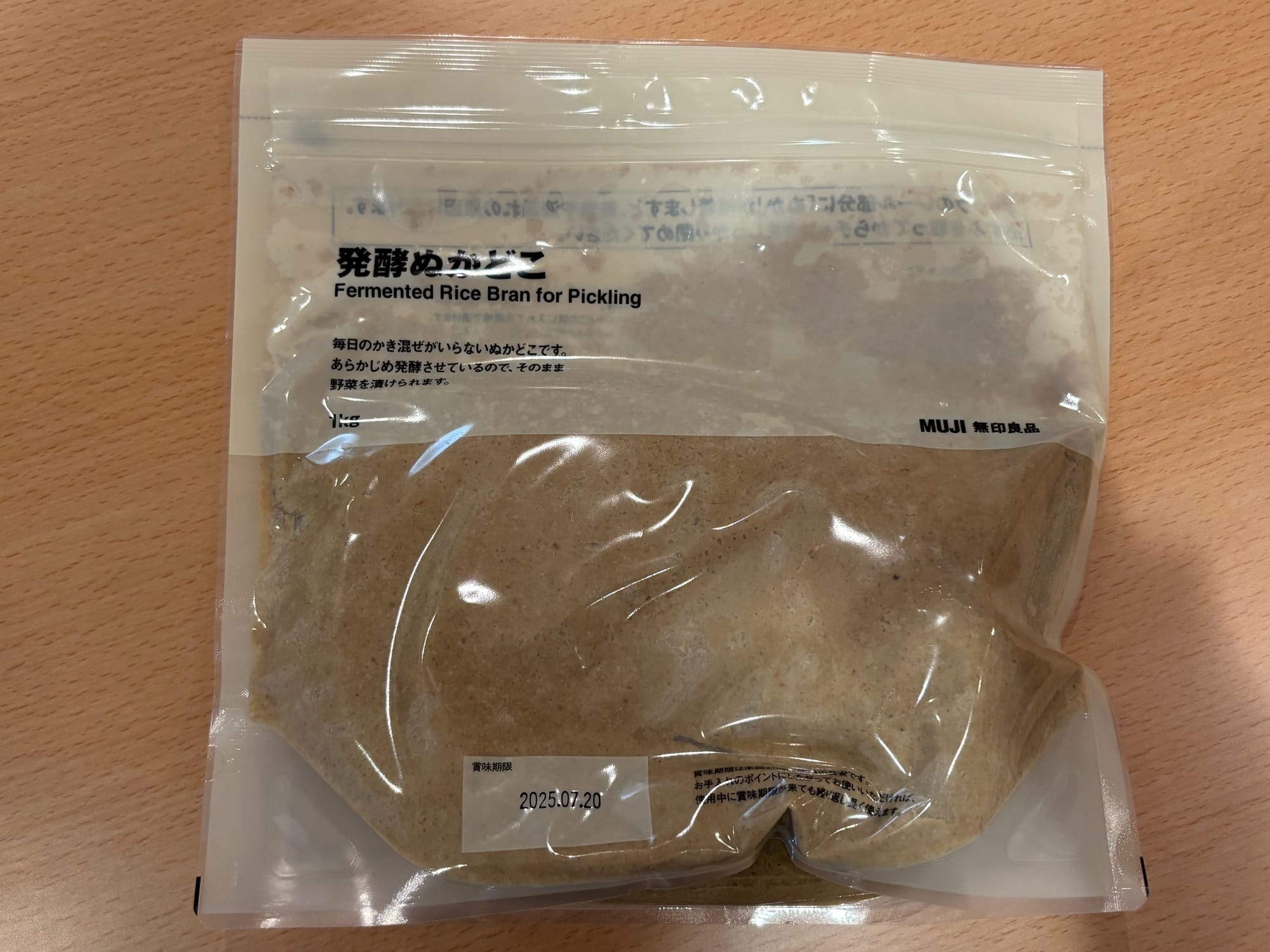
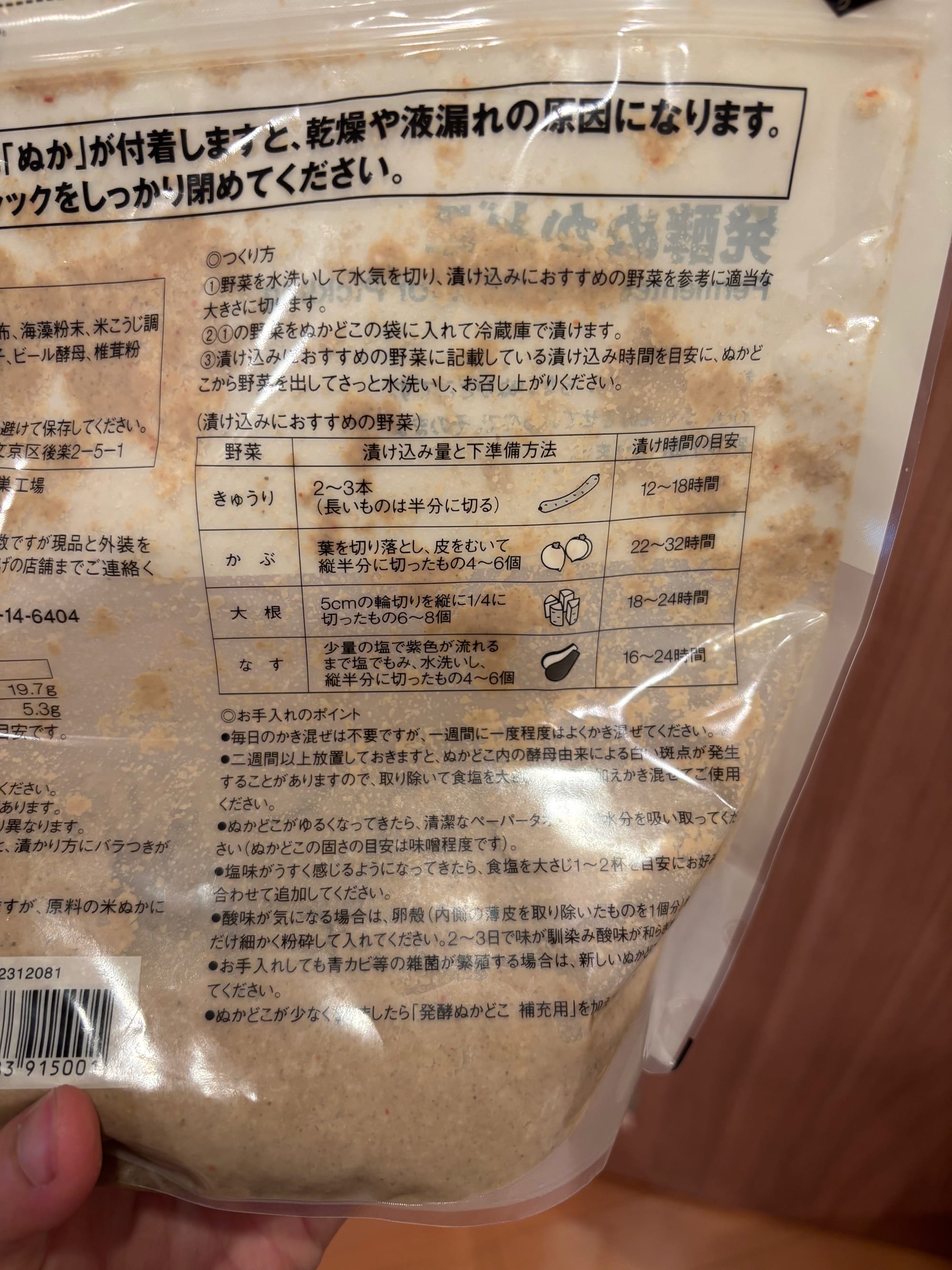
Getting my hands dirty
The pickling kit cost JPY890 (~US$6.00), which I found very reasonable considering the nukadoko can be reused for as long as it's kept alive and well (like sourdough starter, it's a living organism). Muji also sells refills in case you need to top up the nukadoko.
Making the nukazuke is quite straightforward - you select a vegetable, cut it up into smaller pieces and add it to the nukazuke bag. You then bury the vegetable in the nukadoko and place the bag in the refrigerator.
Pickling time depends on the vegetable: cucumber takes 12 - 18 hours while daikon (Japanese: 大根) takes 18 - 24 hours. The longer you pickle, the stronger the taste. You can also pickle different vegetables at the same time so there's some variety in the final product.
Once the pickling time is complete, you take out the vegetable, wash off the nuka paste and it's ready to be eaten!
So far, we've made cucumber and daikon nukazuke. The nukazuke has a slight sour and salty umami taste, and is quite refreshing. I think it will make a great dish for the warmer spring and hot summer months ahead.
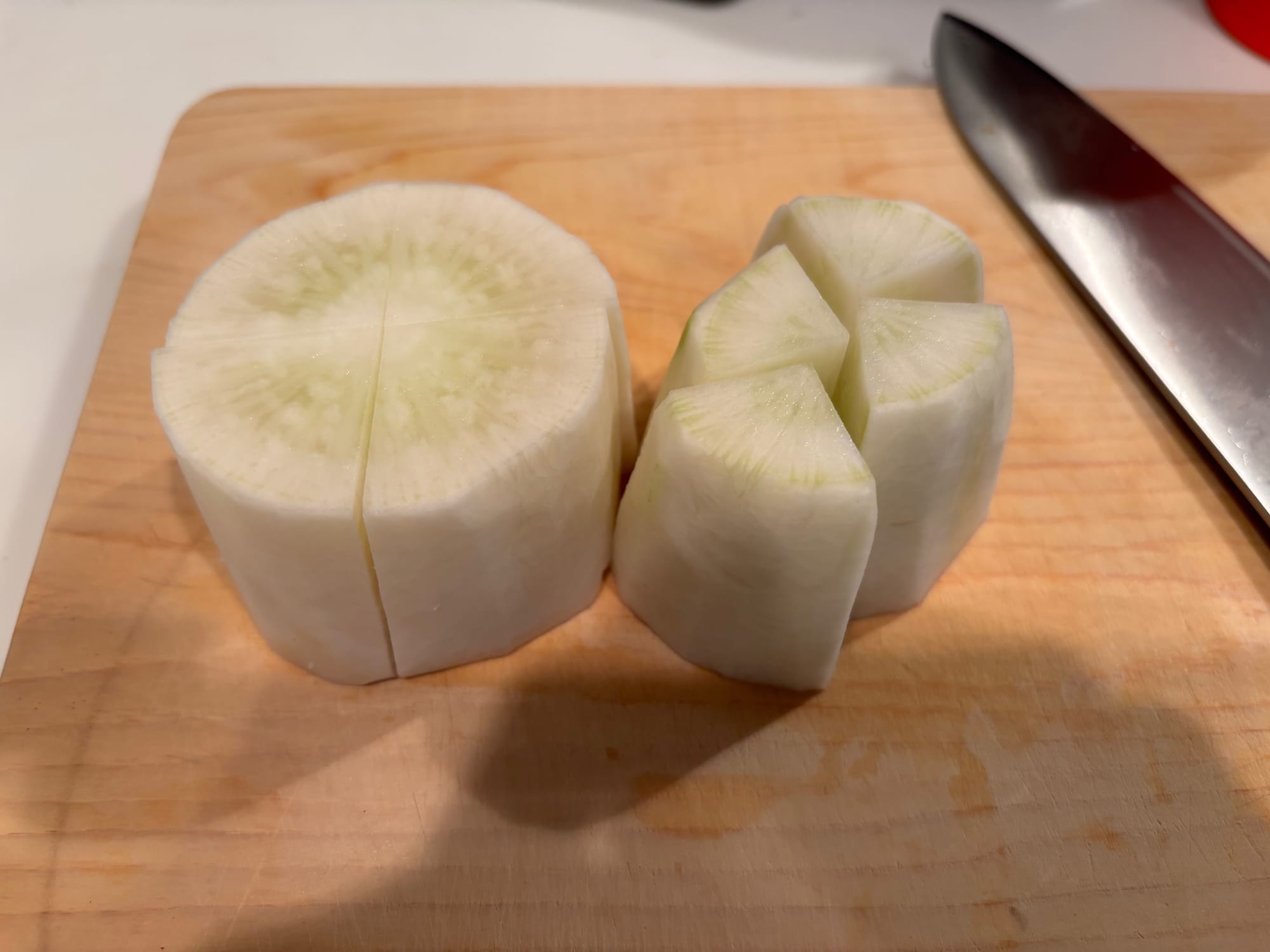
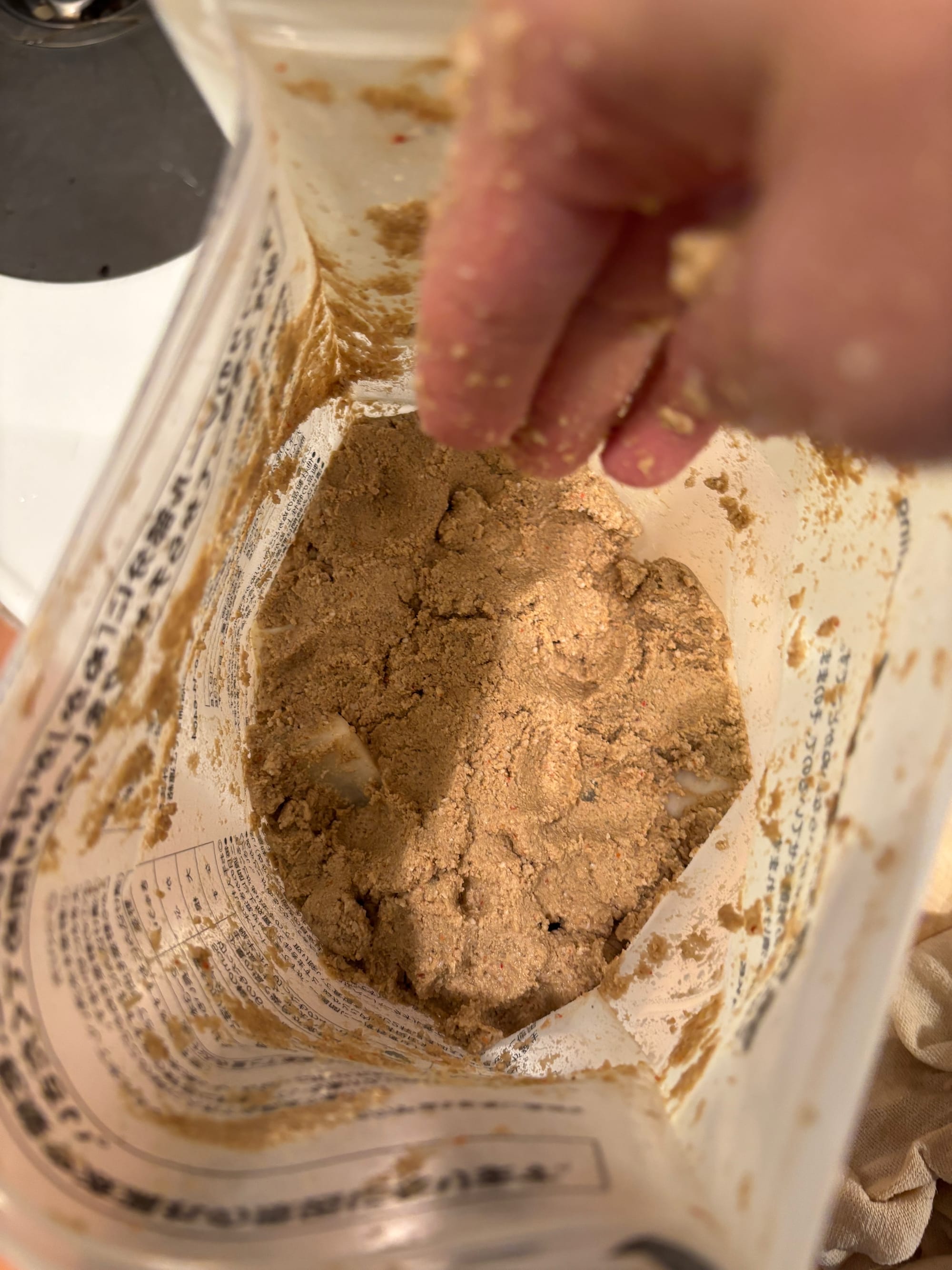
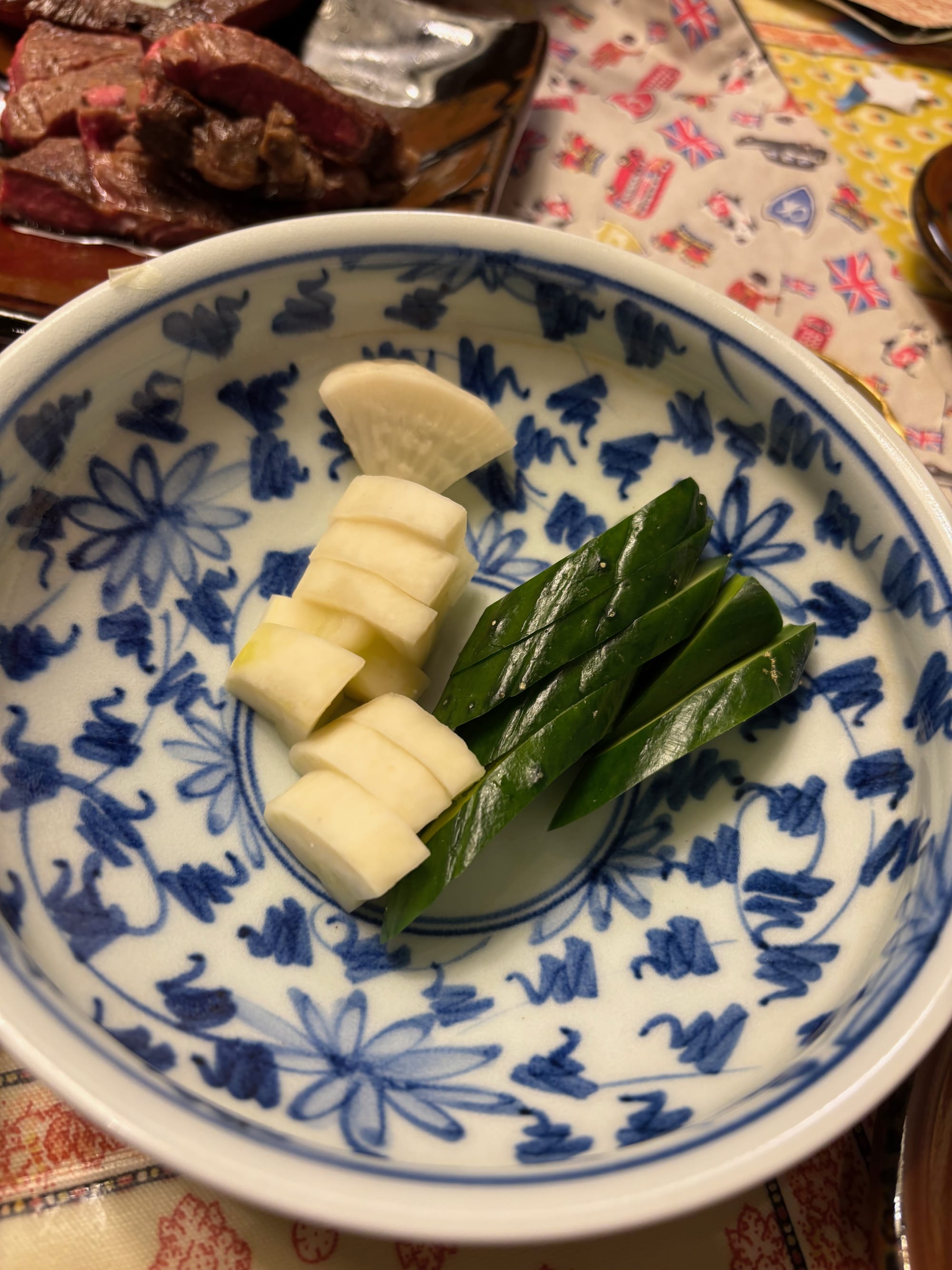
(L) Cutting up daikon into small pieces, (M) Burying it in the nukadoko, (R) The final product
Health benefits of nukazuke
According to a study, nukazuke has better nutritional benefits than unpickled vegetables:
"The abundance of nutrients in nukazuke, compared with fresh vegetables, has been attracting attention. In particular, nukazuke contains vitamins, notably vitamin B1, at higher concentrations than in fresh vegetables, suggesting that the nutrients of rice bran are transferred to nukazuke. In addition, the dietary fiber in nukazuke is suggested to improve various physiological functions, including lowering blood lipid levels."
This makes nukazuke another addition to my daily intake of vegetables, which I am proactively eating more of to lower my cholesterol. That said, like most tsukemono, nukazuke is high in salt. So it should be enjoyed in moderation!
--Ends