WB038: The Way of the Househusband
Manga (Japanese: 漫画) is a comic or graphic novel originating from Japan. According to Statista, Japan's manga industry had a size of JPY700 billion (~US$4.7 billion) in 2024.
During my growing years in Malaysia, I recall how manga series like Dragon Ball (Japanese: ドラゴンボール), Doraemon (Japanese: ドラえもん) and Slam Dunk (Japanese: スラムダンク) were popular among school-going kids, despite them not speaking a word of Japanese.
This makes manga a great "soft power" tool - the ability to persuade through ideas, values and culture. Very much the opposite of "hard power" tools like trade tariffs and threats of war. South Korea's "K-Pop" and "K-Drama" industry is another good example of "soft power".
Doraemon, which began as a manga in 1969 and became an animated TV series ("anime") in 1975, is one of Japan's most well-known cultural exports. Who can forget the famous theme song Doraemon no uta (Japanese: ドラえもんの歌, English: Doraemon's Song)?
Although manga is increasingly being published in English, reading a manga series in Japanese is something I aspire to do. Though the language barrier is a hurdle, I feel it is a worthwhile aspiration.
Finding the ideal manga series
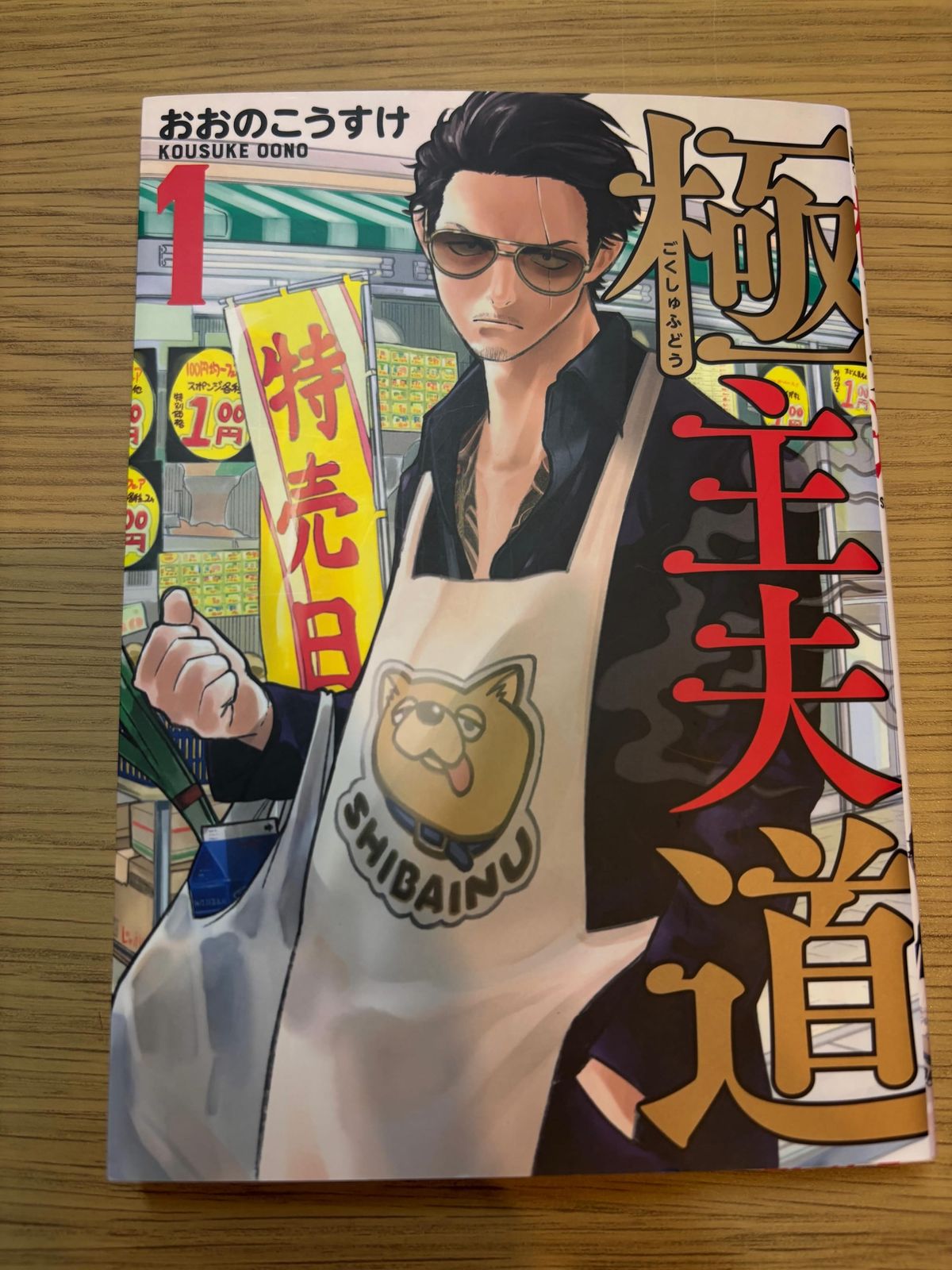
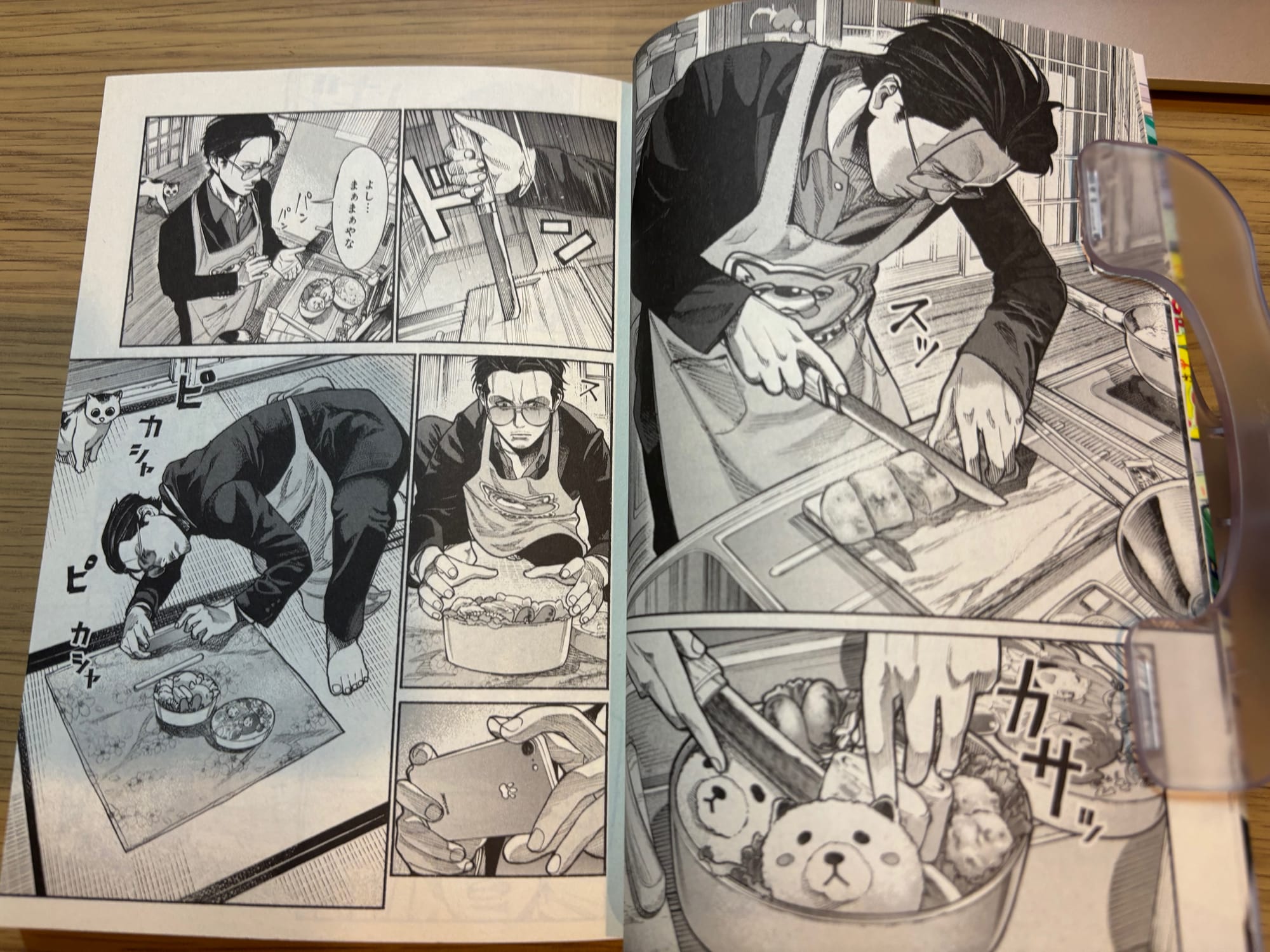
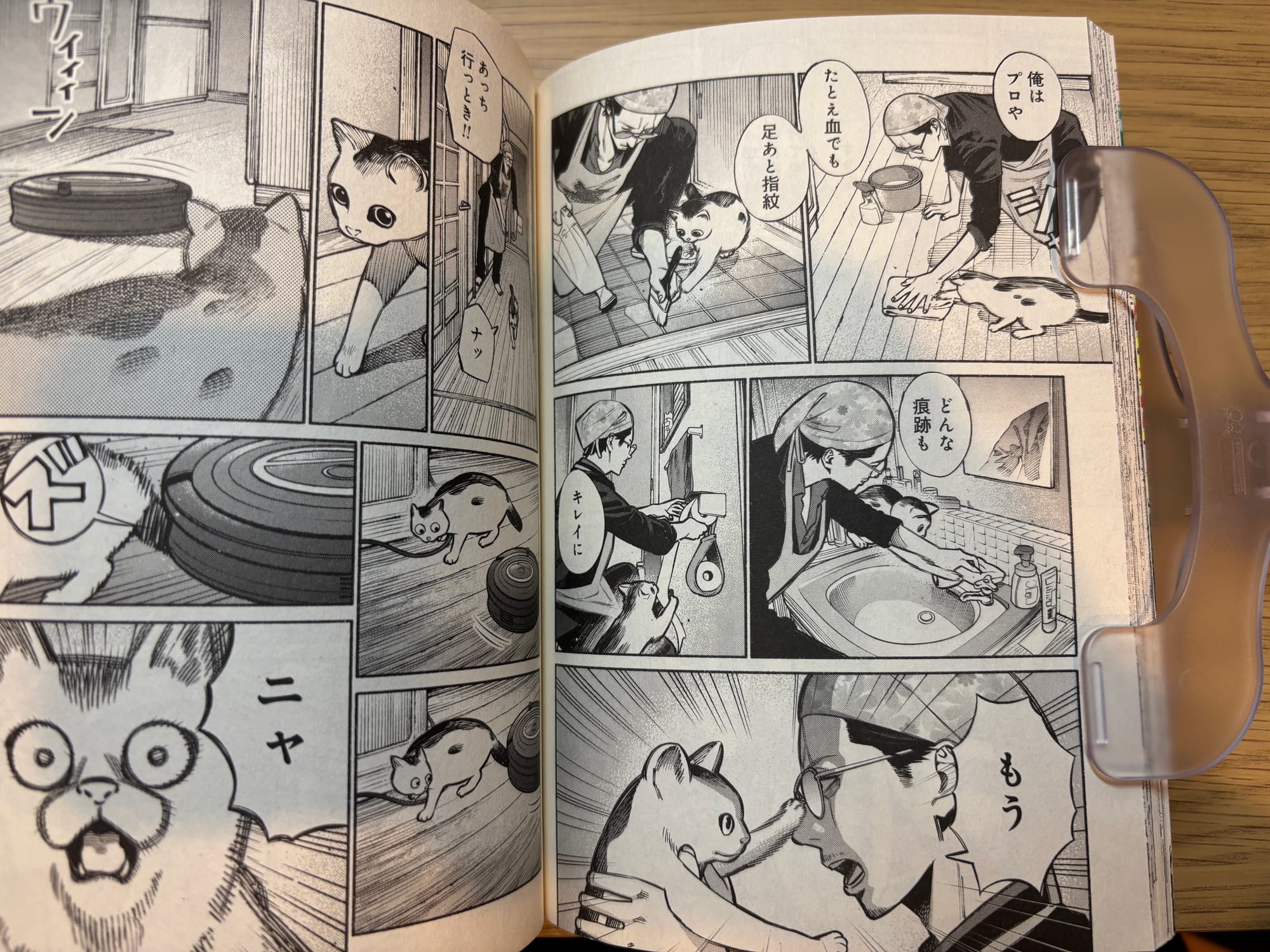
I've been on the lookout for an interesting and simple to read manga series, opting for Gokushufudou (Japanese: 極主夫道). This is a manga about an ex-yakuza called Tatsu (Japanese: 龍, English: dragon), who retires from a life of crime to become a househusband.
I find this manga very entertaining, not only for its outrageous storyline and character development (Tatsu is forever wearing a "Shibainu" apron), but also because I can relate to certain aspects (no, not the yakuza part) of Tatsu's househusband experiences.
Example 1: Doing gardening and wondering what I can cook with the output
"どう料理したろか" ("How should I cook this?")
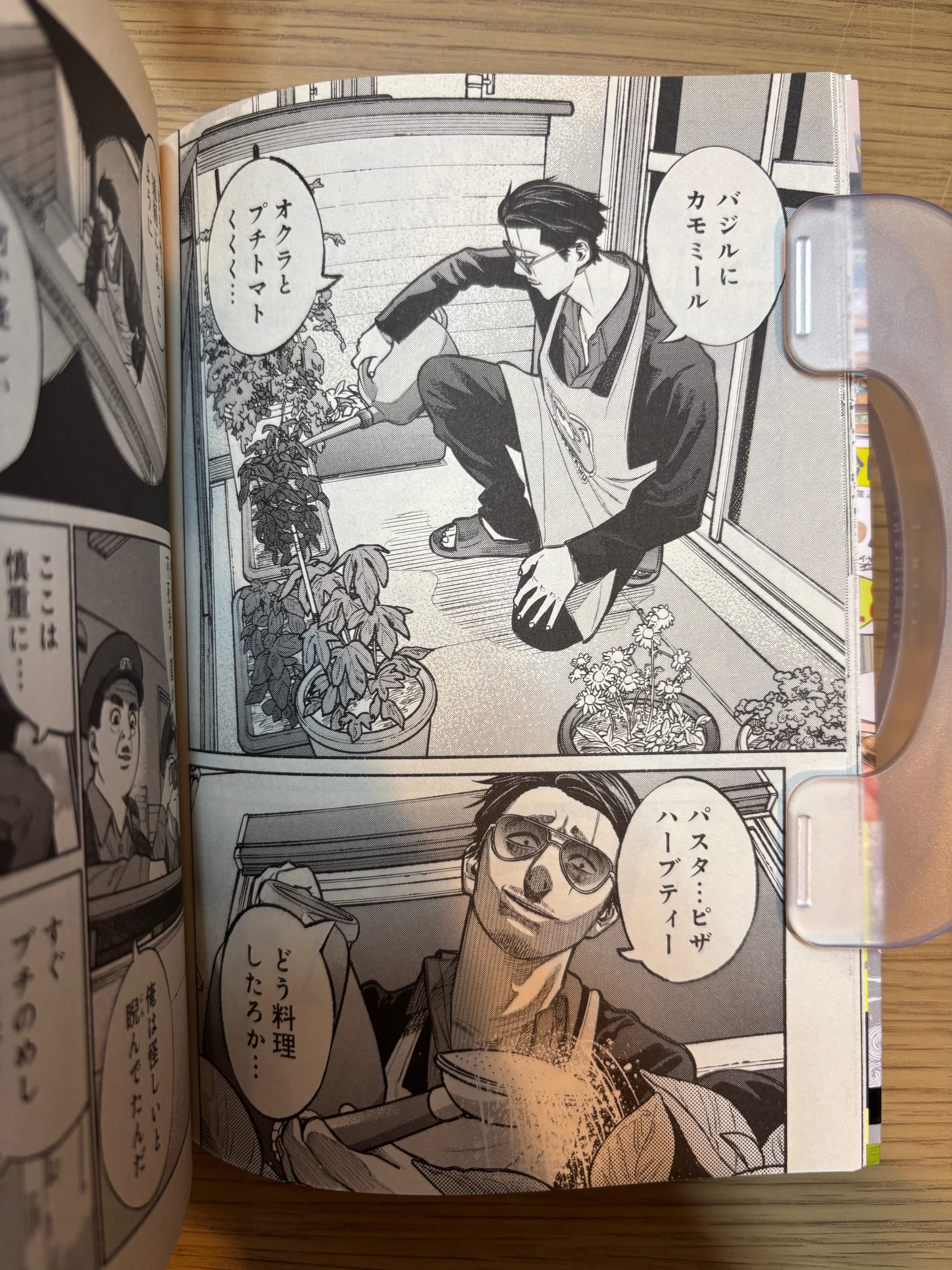
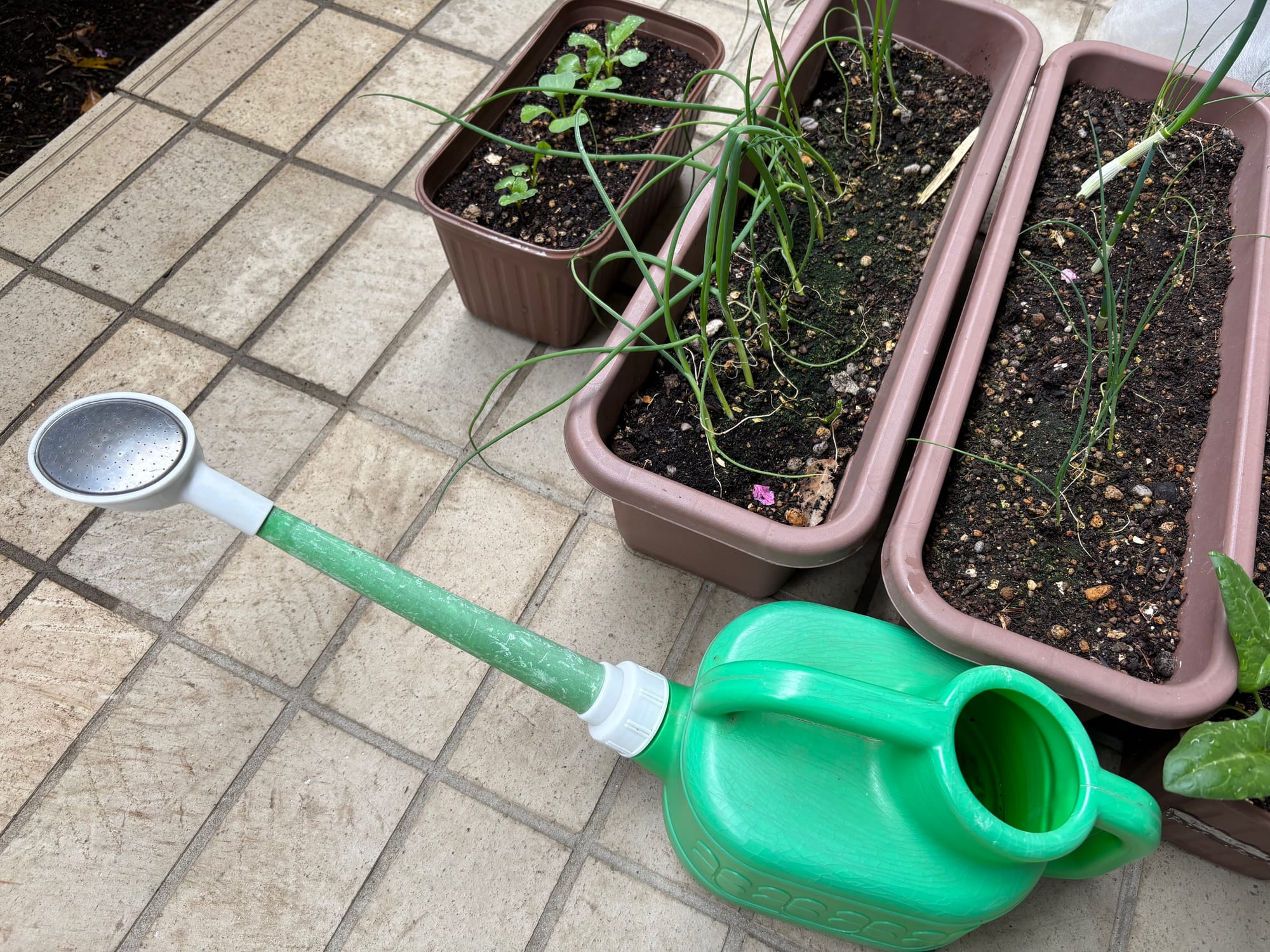
Gardening - we both use the same watering jug!
Example 2: Doing housework, and preparing bento (Japanese: 弁当, English: Japanese box lunch)
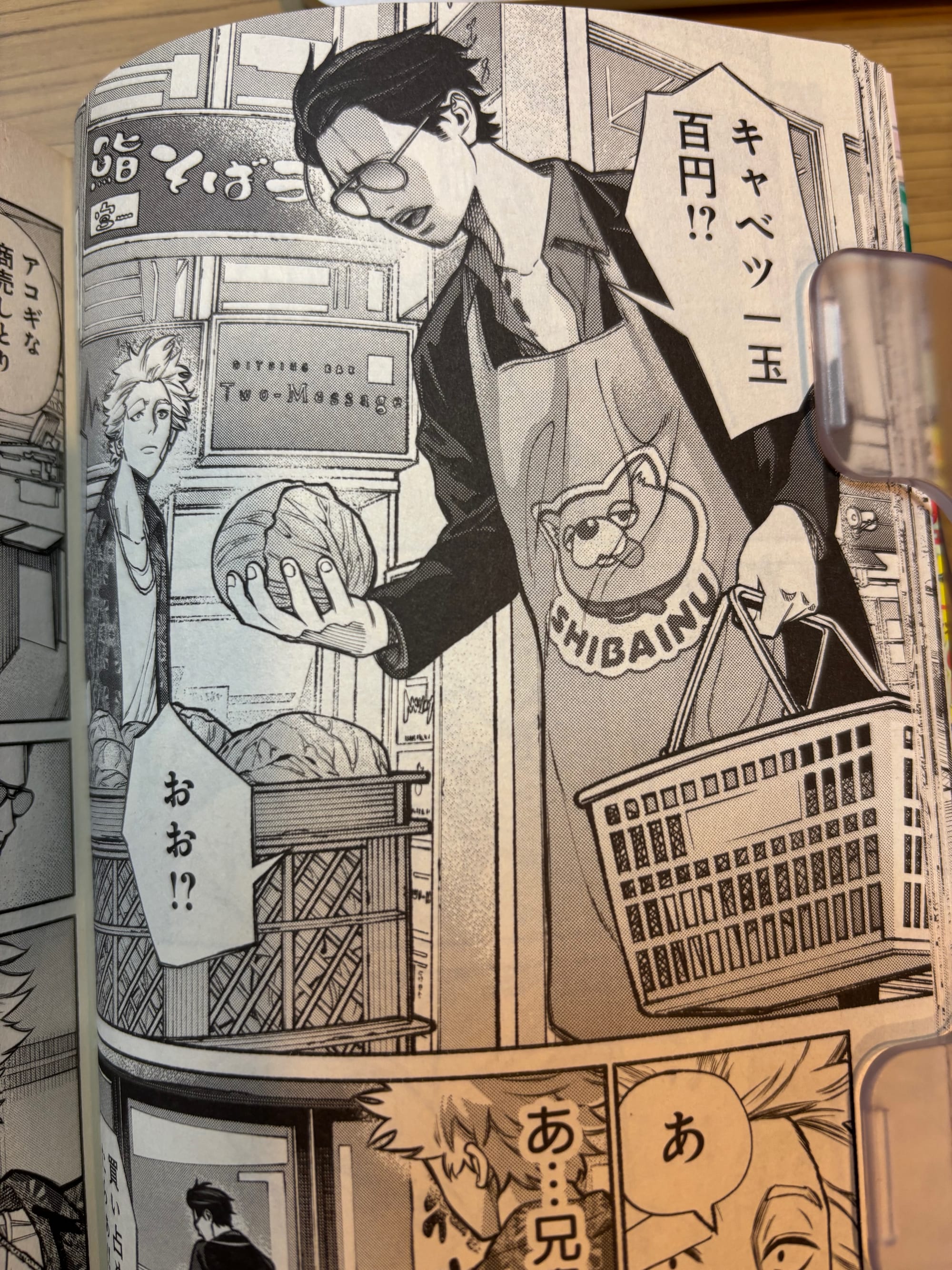
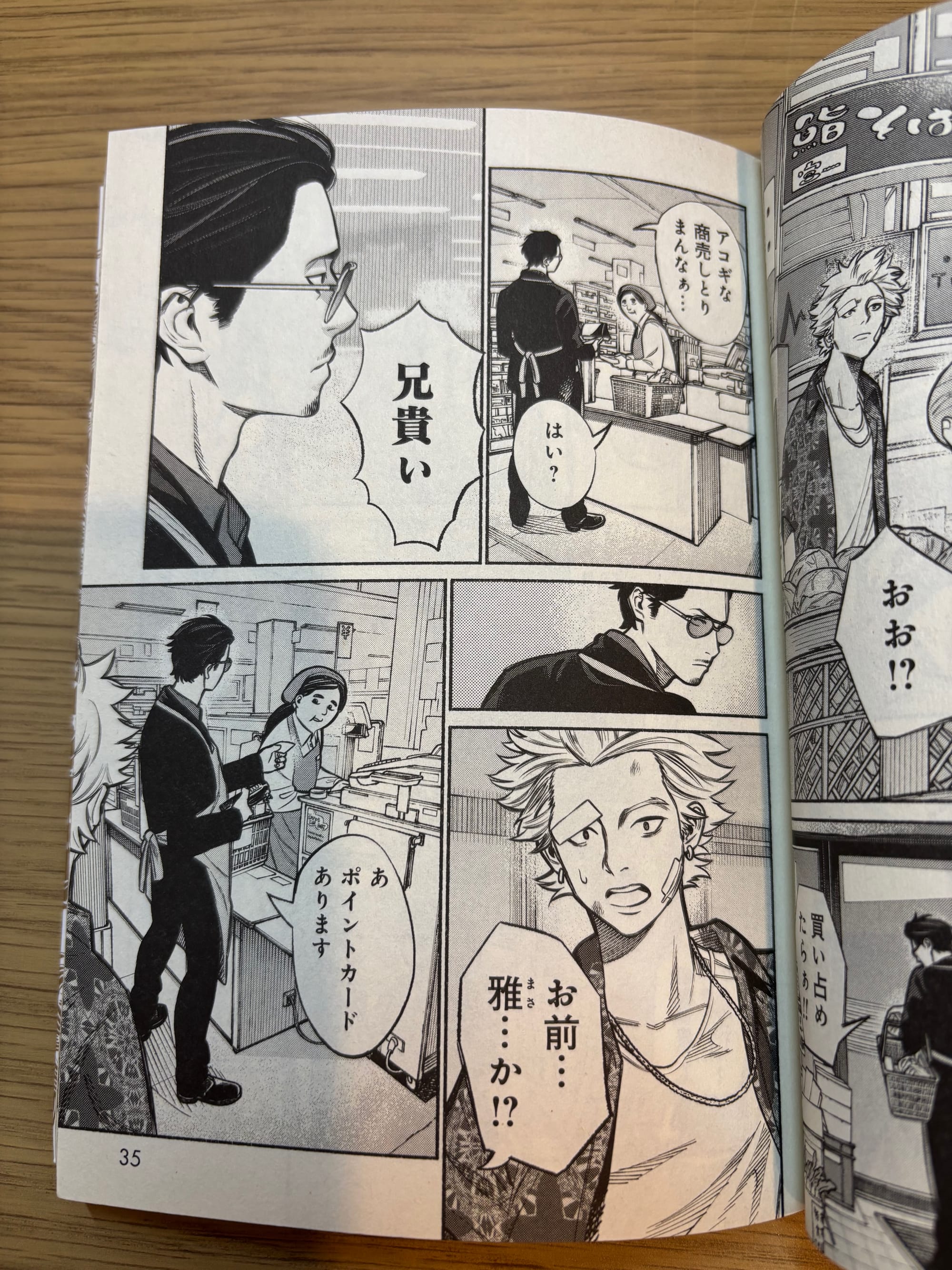
Example 3: Shopping for groceries, getting excited over discounted products and collecting loyalty points in a supermarket
"キャベツ一玉百円" ("One head of cabbage for JPY100?!")
"あ。ポイントカードあります" ("Ah, I have a points card.")
Another benefit of reading Japanese-language manga is the large second hand market. I have bought the first two volumes, both second-hand from Rakuten Ichiba. Despite being used, both volumes are in mint condition and cost JPY230 (US$1.60). This is far cheaper than the retail price of JPY660 (US$4.48).
Gokushufudou is quite popular in Japan - the first volume came out in 2018 and 15 volumes have been published to date. The manga has also spawned an anime and live-action television drama, both available on Netflix.
Apart from the dramatised accounts of Tatsu's daily adventures, I am also learning more about the Japanese language.
Dialects and yakuza lingo
Like most languages, colloquial and everyday language differs from textbook language. It's a bit difficult to explain how it differs, though all I can say is there have been instances where I've tried using textbook Japanese in a conversation, only to be met with a puzzled look.
Gokushufudo is written in the Kansai dialect (Japanese: 関西弁), with conversational-style grammar (as it is a comic). This sometimes makes it difficult to understand, as I am more familiar with textbook Japanese. That said, because it is a comic, I can more or less make out the storyline from the graphics.
My Japanese teacher told me locals from the Kansai region, where Osaka is located, are more friendly and direct than Tokyo-ites. Certain expressions are also said differently in the Kansai area. For example, the expression "Thank You". In Tokyo, this is expressed as "arigatou" (Japanese: ありがとう). But in Kansai areas (like Osaka), one would say "ookini" (Japaneses: おおきに).
Dialect aside, my wife said the dialogue uses quite a lot of yakuza-style language, which is quite rough and impolite. For obvious reasons, she said I should be mindful about using this in public!
--Ends