WB039: Enjoying a peaceful Hanami
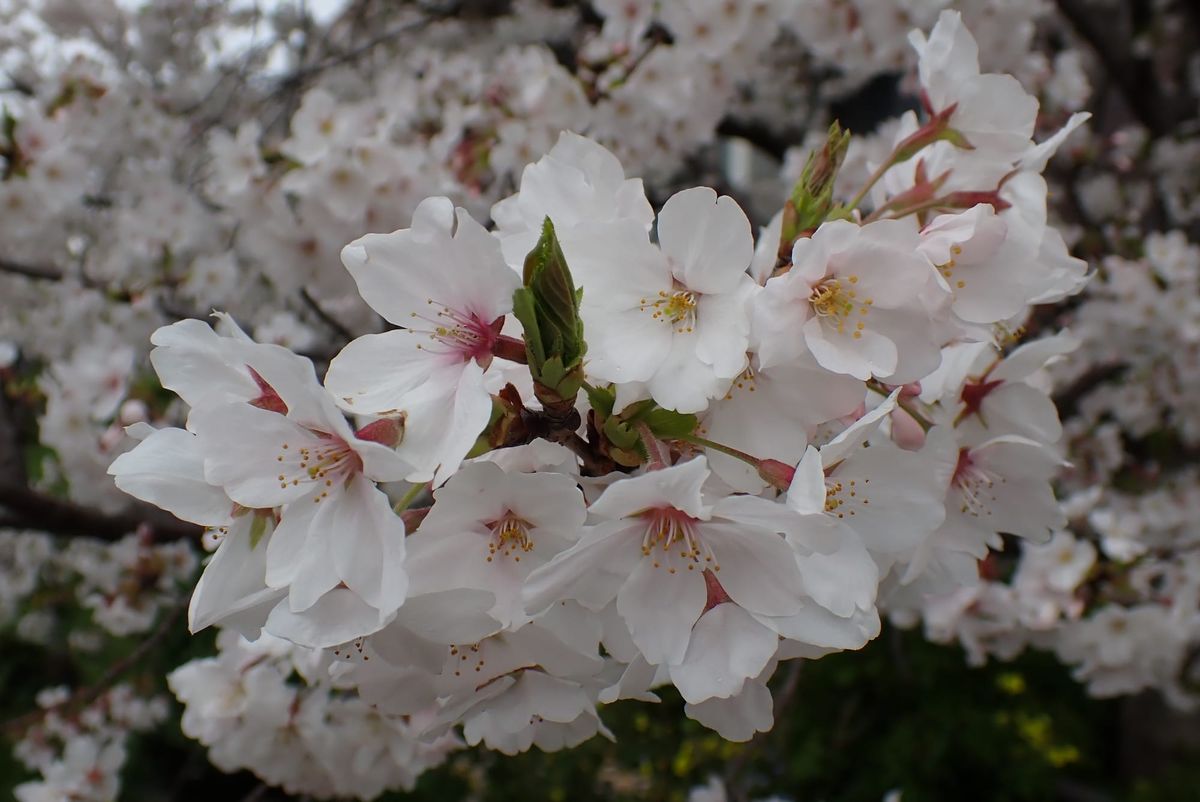
One of Japan's most famous attractions is the hanami (Japanese: 花見, English: cherry blossom flower viewing) that takes place at the start of spring in late-Feb/March.
The cherry blossom, or sakura (Japanese: 桜), is one of many famous symbols associated with Japan, alongside icons like Mount Fuji (Japanese: 富士山).
In January each year, predictions are made on when Japan's sakura will bloom, which starts first the south and later in the north.
One voice of authority is the Japan Meteorological Corporation ("JMC"), which has a dedicated page on nationwide flowering predictions. JMC's predictions are regularly updated as the season progresses.
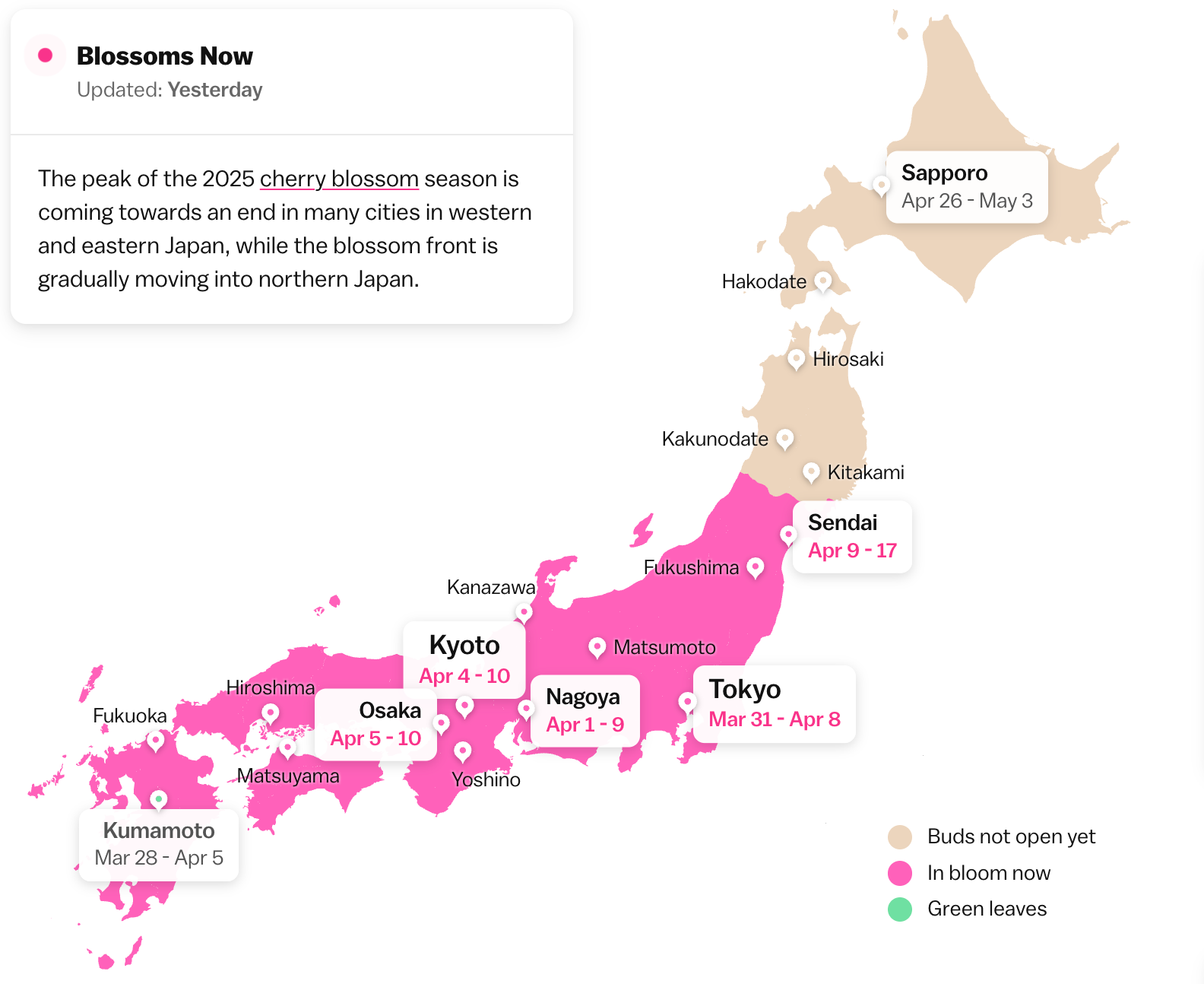
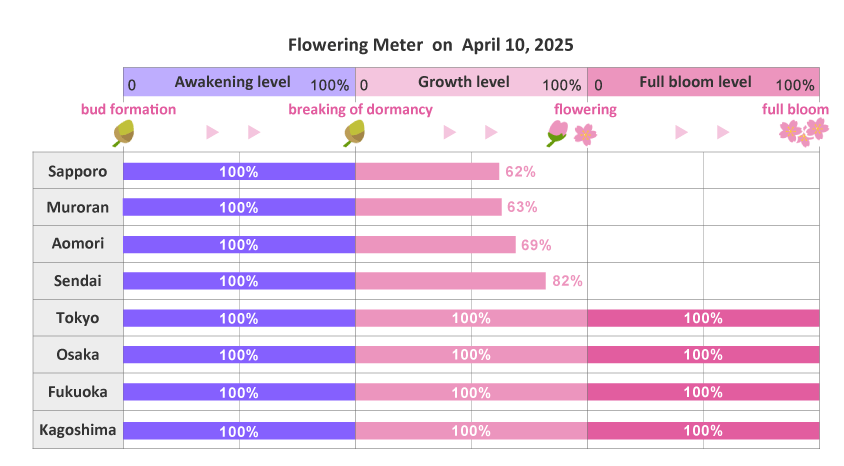
I imagine it must be quite a stressful job making these predictions, as tourists from all around the world plan trips to Japan just to catch the cherry blossoms in full bloom.
Unfortunately, the impact of global warming is making it increasingly harder to make accurate predictions. These days, sakura are observed to be flowering earlier as winter ends earlier and earlier.
Hanami is a very, very popular activity amongst both locals and foreigners. Not only because sakura in full bloom are stunning, but also because the warmer spring weather is a welcome respite from the sometimes bitterly cold winter months. Hanami is also a great occasion to eat, drink and be merry with friends and family.
There are many famous sakura-viewing areas in Tokyo, such as Meguro River (Japanese: 目黒川), Ueno Park (Japanese: 上野公園) and Yoyogi Park (Japanese: 代々木公園).
These spots are always packed with locals and tourists, who I guess go there for the atmosphere and to take & share "Insta-worthy" photos.
Being fans of the quiet life and not running with the herd, we decided for a more peaceful hanami in Setagaya District's (Japanese: 世田谷区) Kitazawa Greenway (Japanese: 北沢緑道).
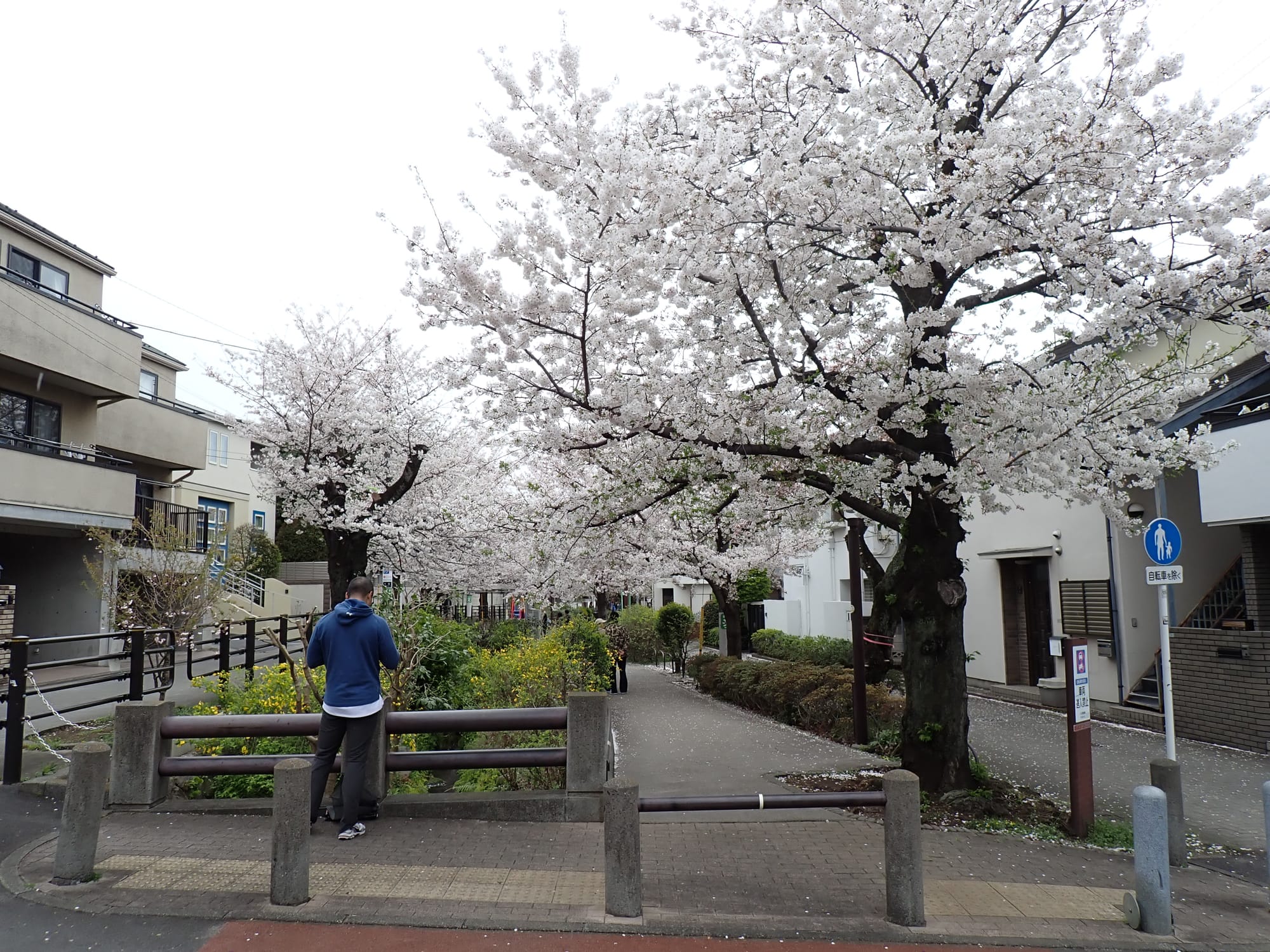
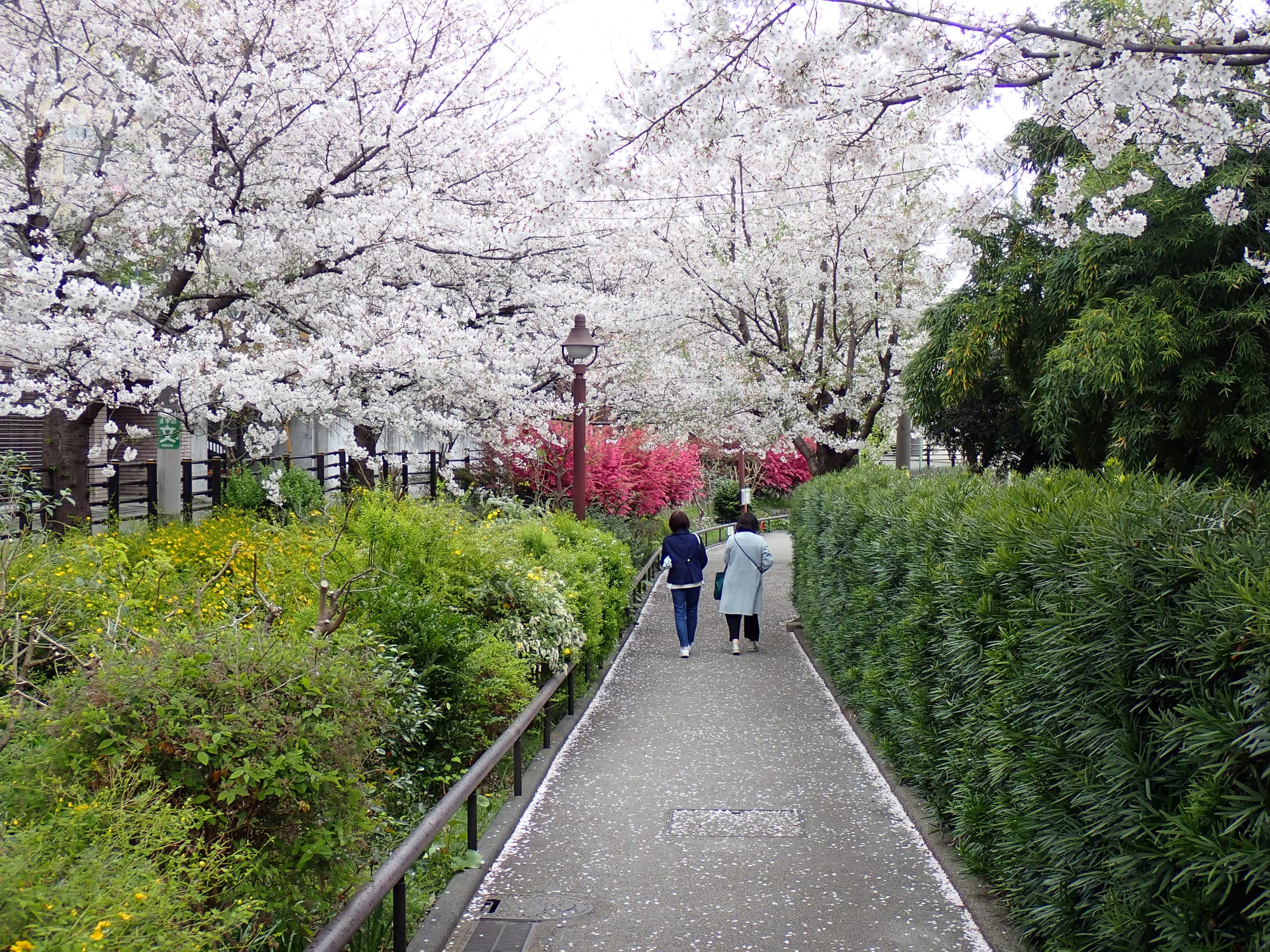
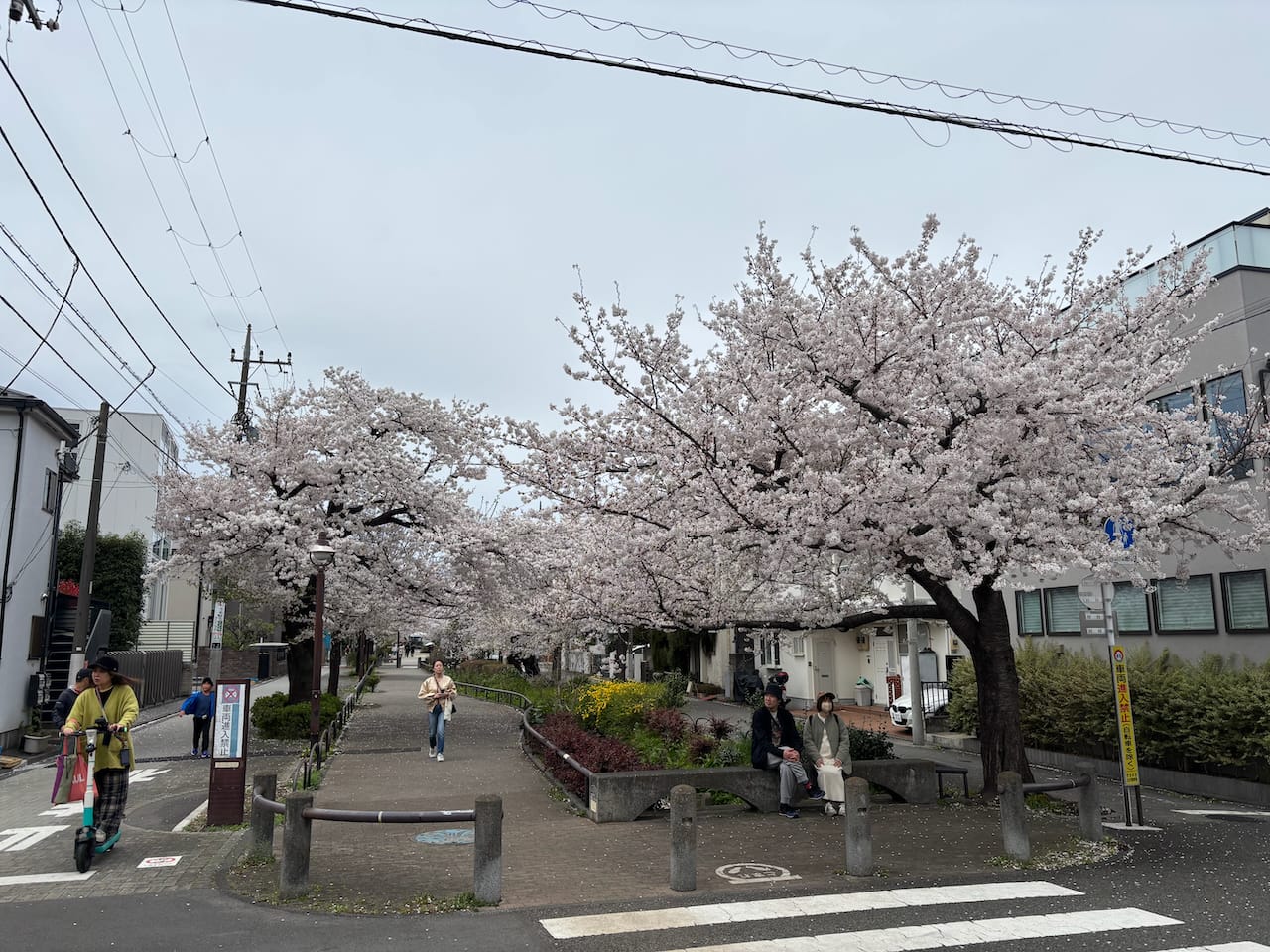
Sakura-lined Kitazawa Greenway
Kitazawa Greenway is about 4.3km long and connects to the Karasuyamagawa Greenway (Japanese: 烏山川道) that I regularly run along.
An area guide we came across explained the design and history of the Kitazawa Greenway, which I believe was built in the 1960's. The Greenway was designed to be lined with sakura trees and foliage, along with a little stream running through it. Below the stream is the sewerage.
I feel greenways such as the Kitazawa one are a great example of the benefits of good, long-term planning that other cities around the world should take a leaf from.
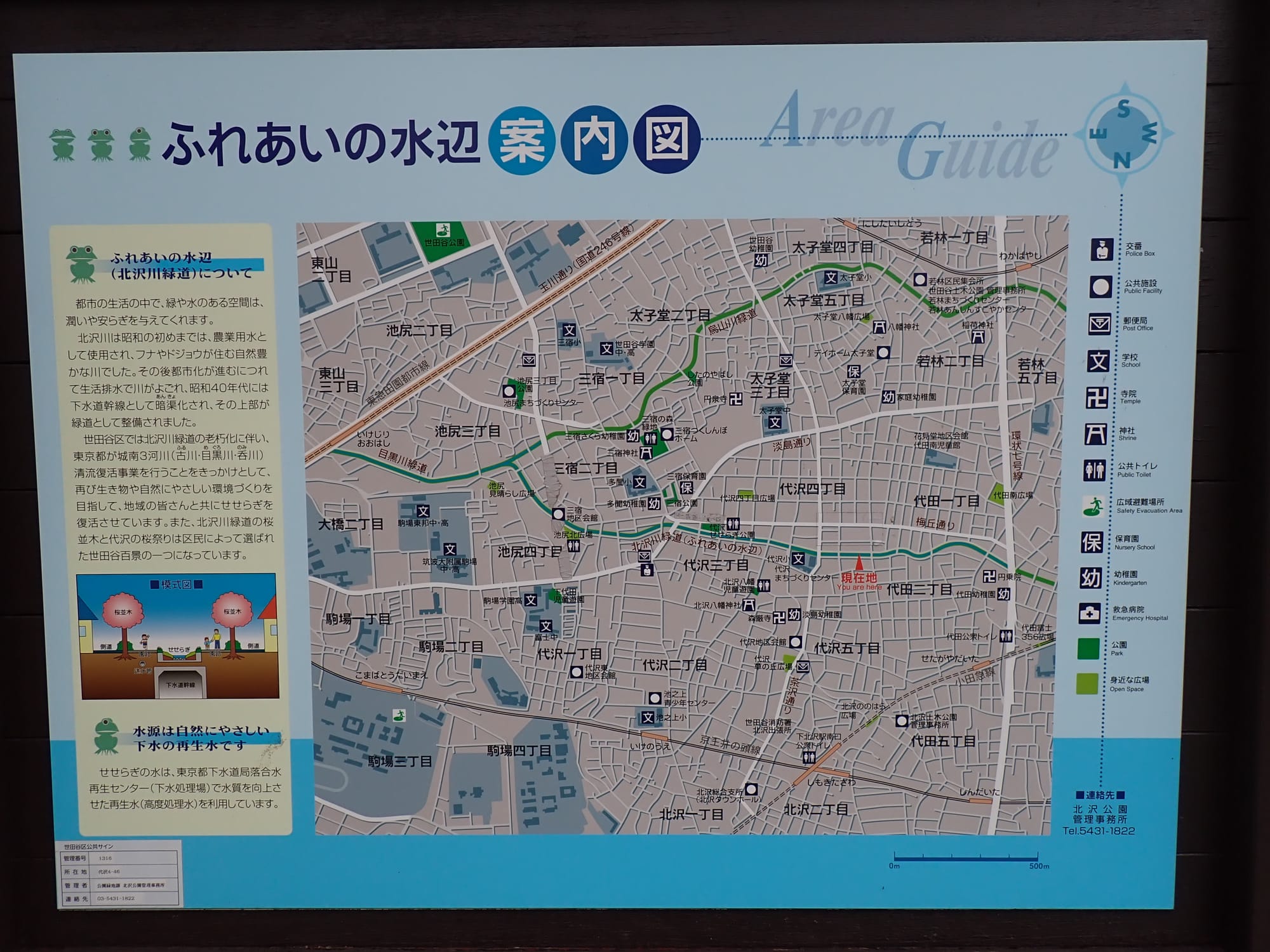
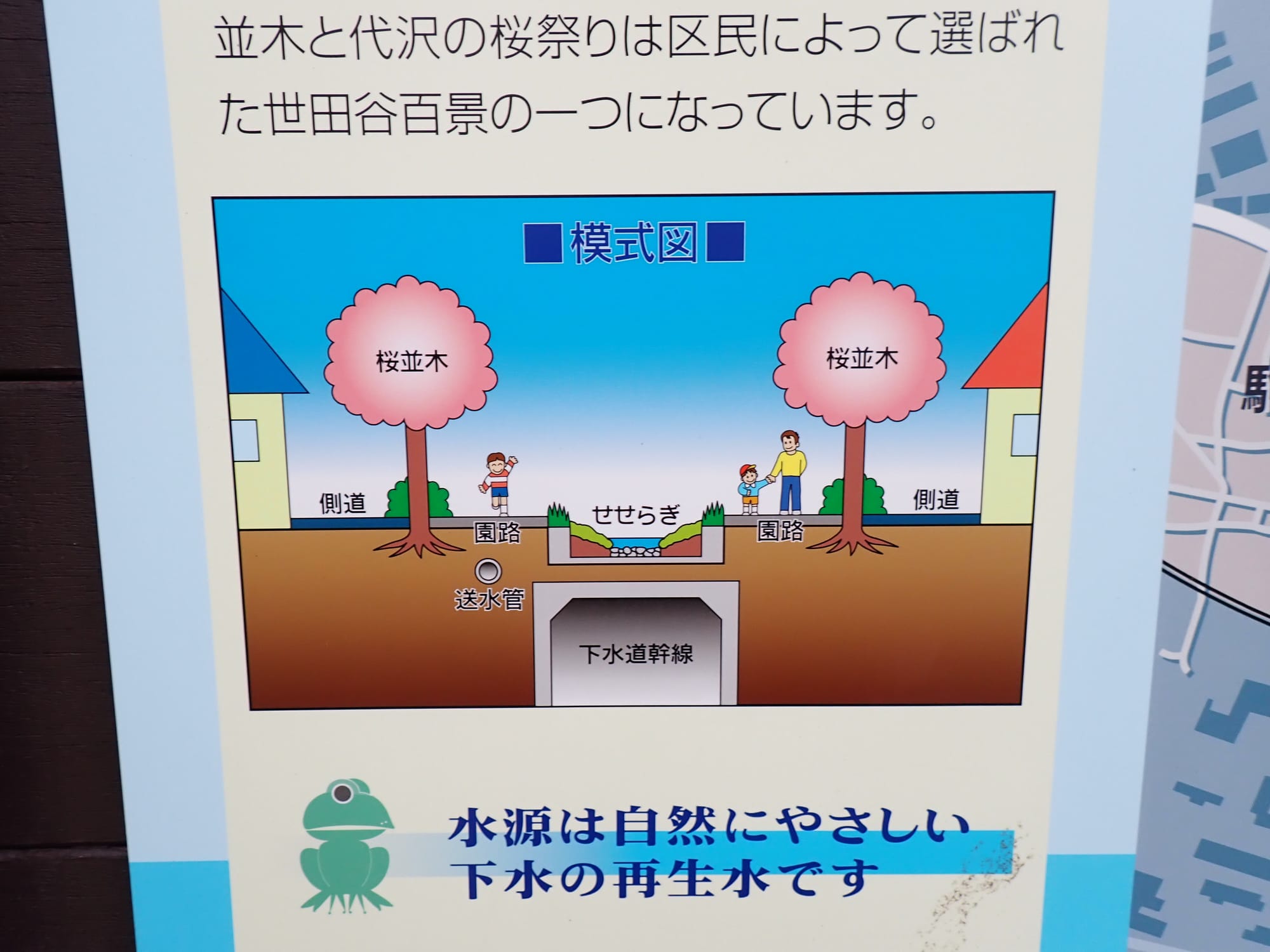
Kitazawa Greenway area guide
These well-designed greenways have multiplier effects, such as promoting healthy activities like walking & running, and encouraging establishments to set up shop.
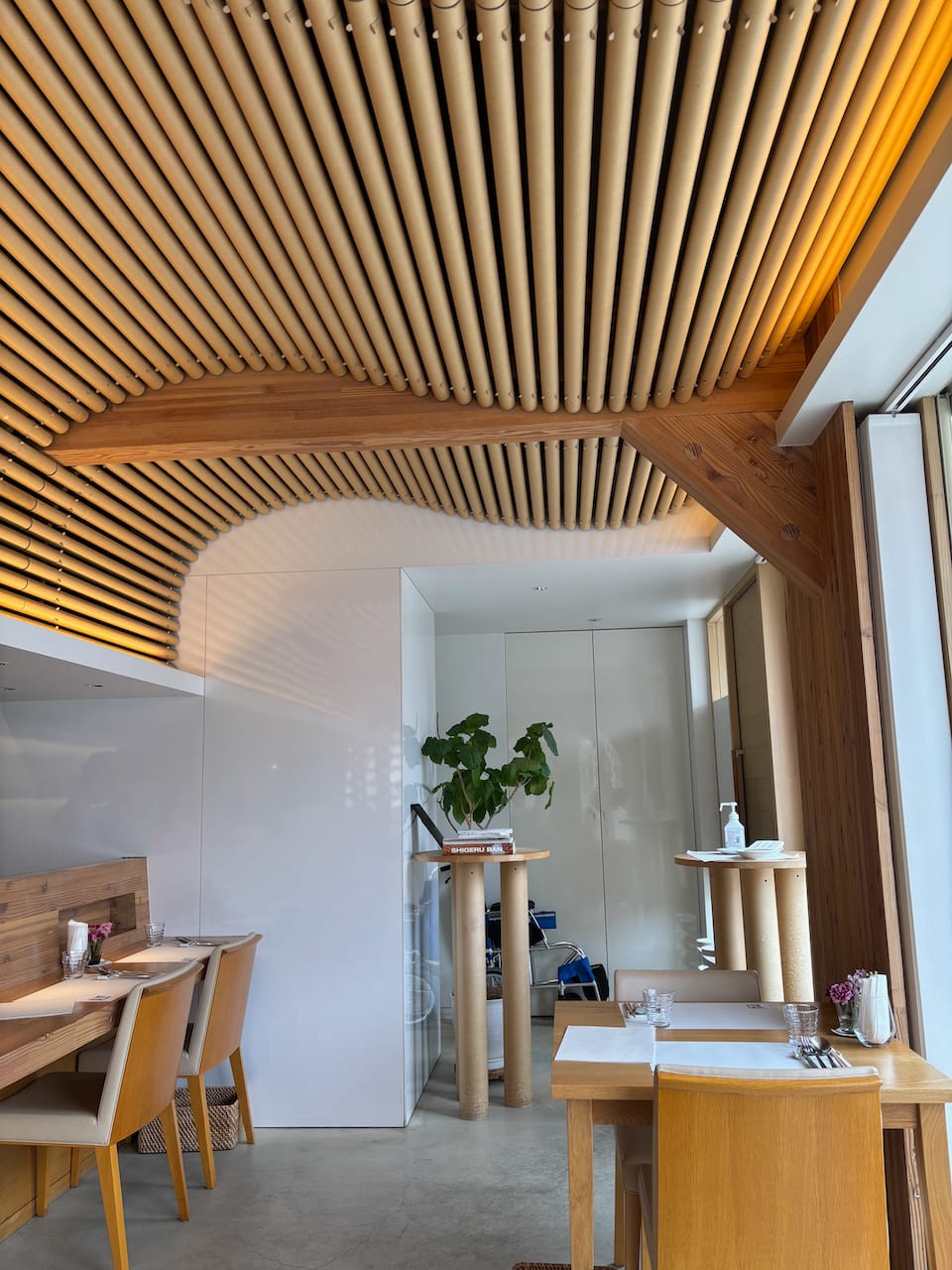
For example, along the Kitazawa Greenway is a French/Italian restaurant called Bon Sante, whose interior design was done by an architect called Shigeru Ban (Japanese: 坂 茂). Ban is well known for using recycled cardboard and paper in his works and won the prestigious Pritzker Architecture Prize in 2014.
In big cities like Tokyo, it is convenient to resort to Google Maps to find the best places to visit. The drawback is that everyone does the same thing. It sometimes pays off to walk the path less travelled and encounter memorable experiences and hidden gems.
--Ends