WB042: Hiking up Mt. Oyama
Japan is a predominantly mountainous country, with 75% of the natural land being mountains according to the country's Ministry of Land, Infrastructure, Transport and Tourism.
The mountains make for great skiing during the winter months, while hiking is a popular outdoor activity during the warmer months. With the spring weather of late being mostly sunny and cool, we decided it was an ideal time to go for a hike.
I've only hiked once in Japan, in a mountain located in Tokyo's Hachioji-shi (Japanese: 八王子, English: Hachioji City) called Takaosan (Japanese: 高尾, English: Mt. Takao).
Given its relatively close proximity to downtown Tokyo (about an hour by train), Takaosan is a popular hiking destination for urbanites. It is also a relatively easy hike, as the mountain is only 599m high.
Eager to explore new hiking destinations, we decided on Mt. Oyama (Japanese: 大山), a 1,252m mountain located in Kanagawa (Japanese: 神奈川) prefecture. Yokohama city (Japanese: 横浜市) - one of the first Japanese ports to open to foreign trade in 1859 - is the capital of Kanagawa.
Getting to Mt. Oyama
Mt. Oyama is easily accessible by public transport.
We first took a train on the Odakyu Line (Japanese: 小田急線) from Shimokitazawa Station (Japanese: 下北沢駅) to Isehara Station (Japanese: 伊勢原駅). The ride was about 45 minutes long.
From Isehara Station, we hopped on a local bus to the Oyama Cable Car Station (Japaneses: 大山ケーブル駅). As it was a Sunday, the area was fairly crowded with mainly local hikers and sightseers.
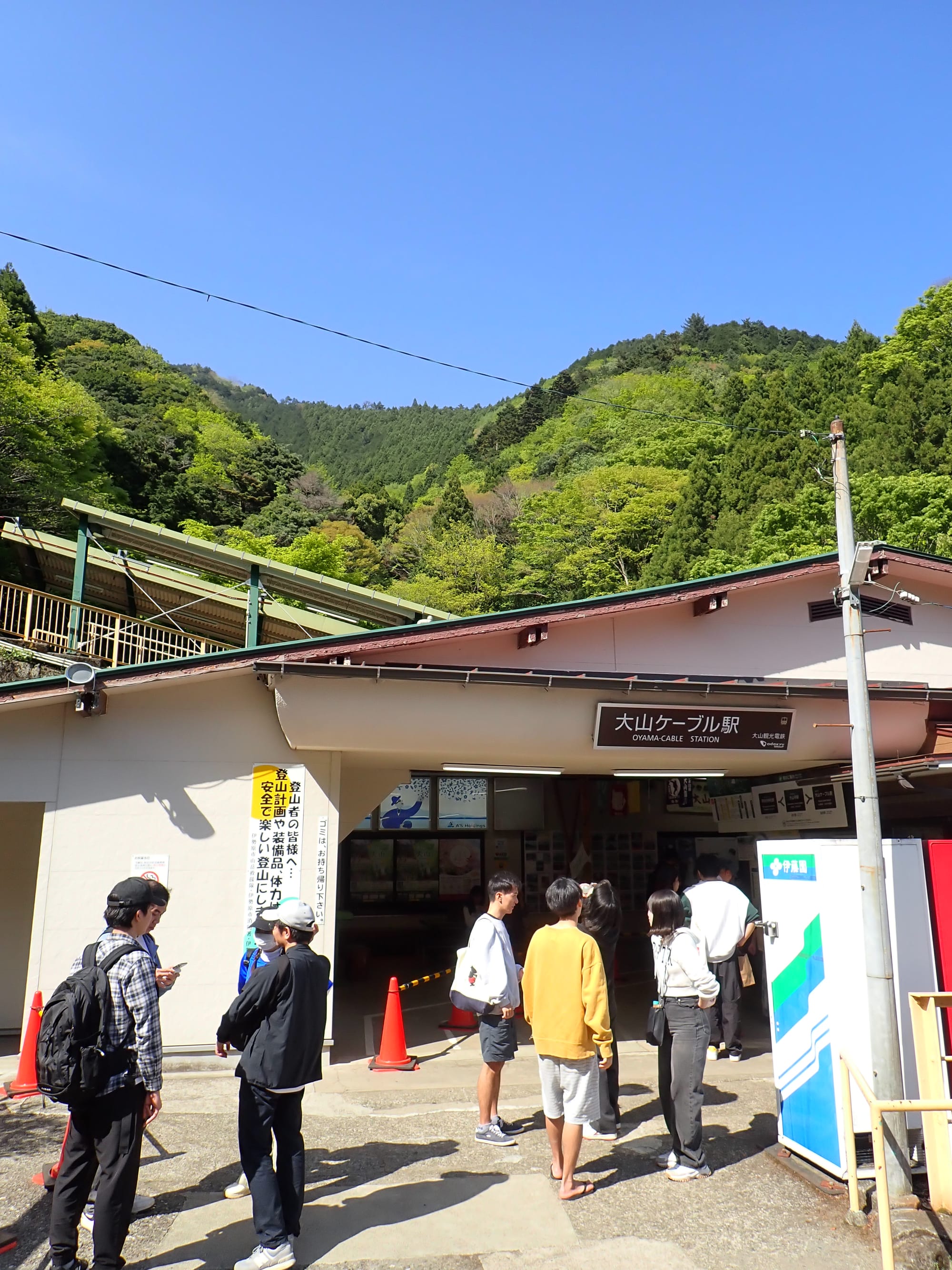
Oyama Cable Car Station
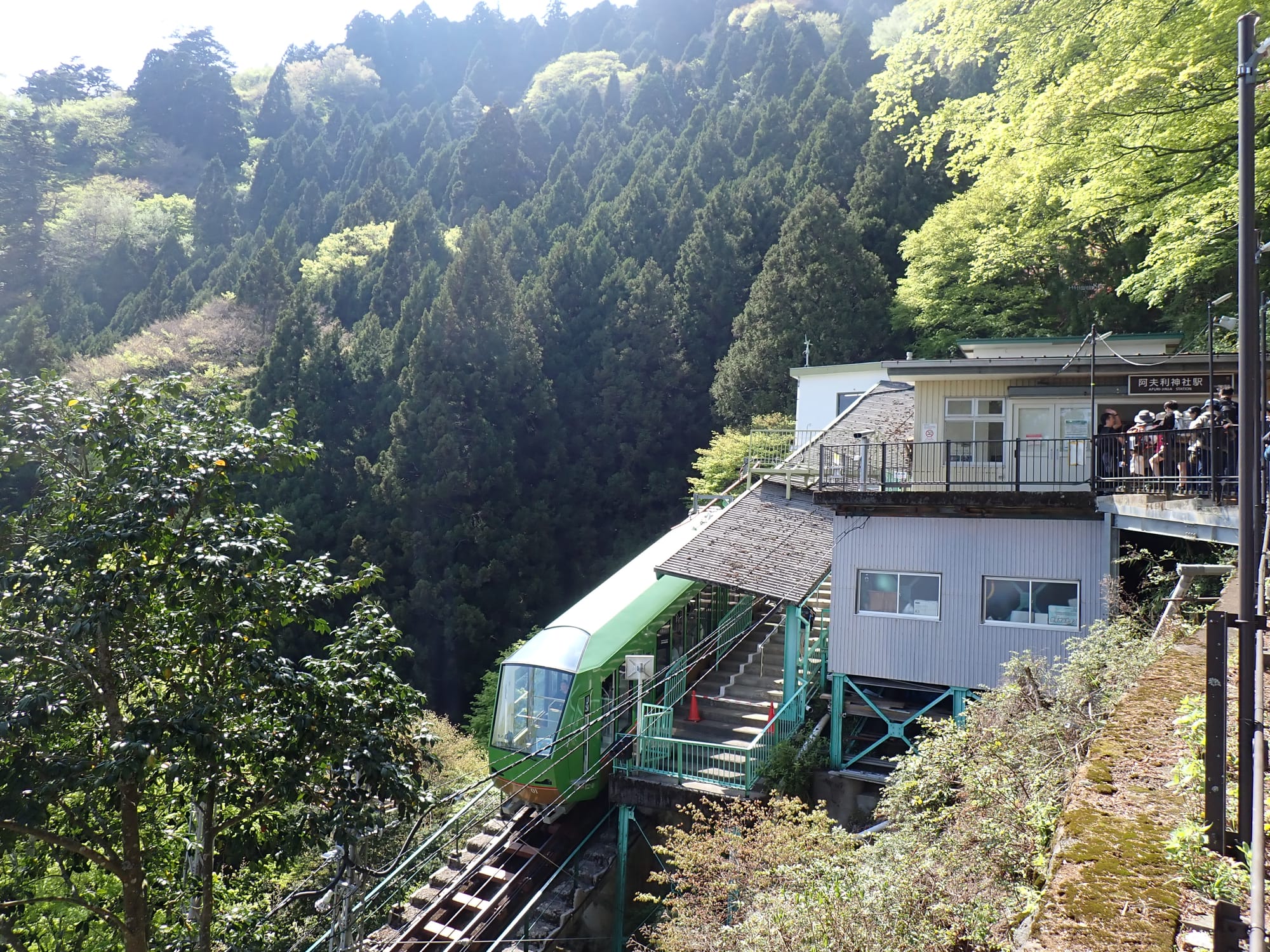
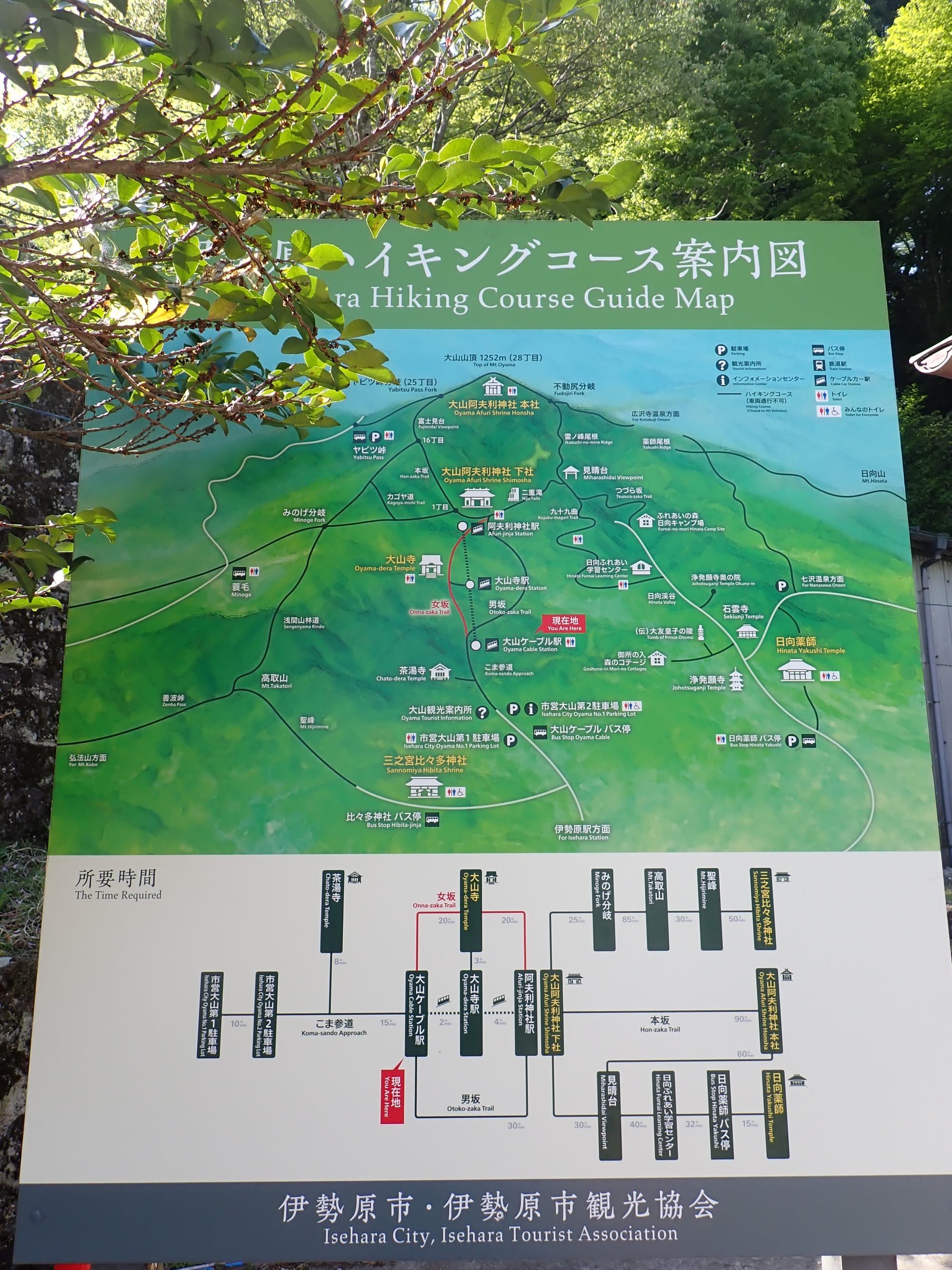
Hikers either begin their hike at the cable car station or start from the Oyama Afuri Shrine (Japanese: 大山阿夫利神社), a 6-minute cable car ride from the station.
We opted for the cable car ride and started our hike from the Shrine, which is an historic Shinto (Japanese: 神道) shrine built more than 2,200 years ago. Some visitors come to Mt. Oyama just to visit the shrine and observe the beautiful views and scenery.
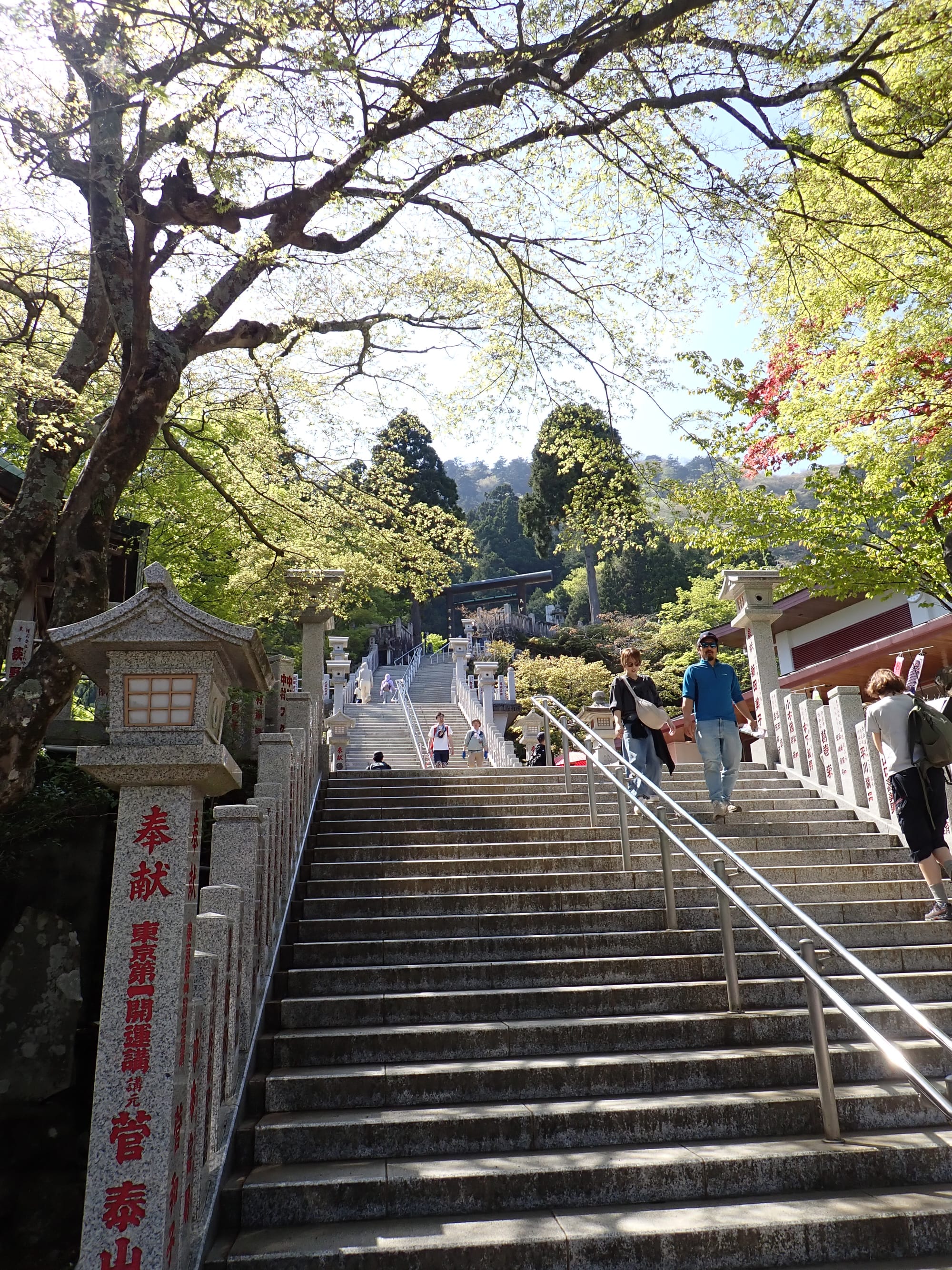
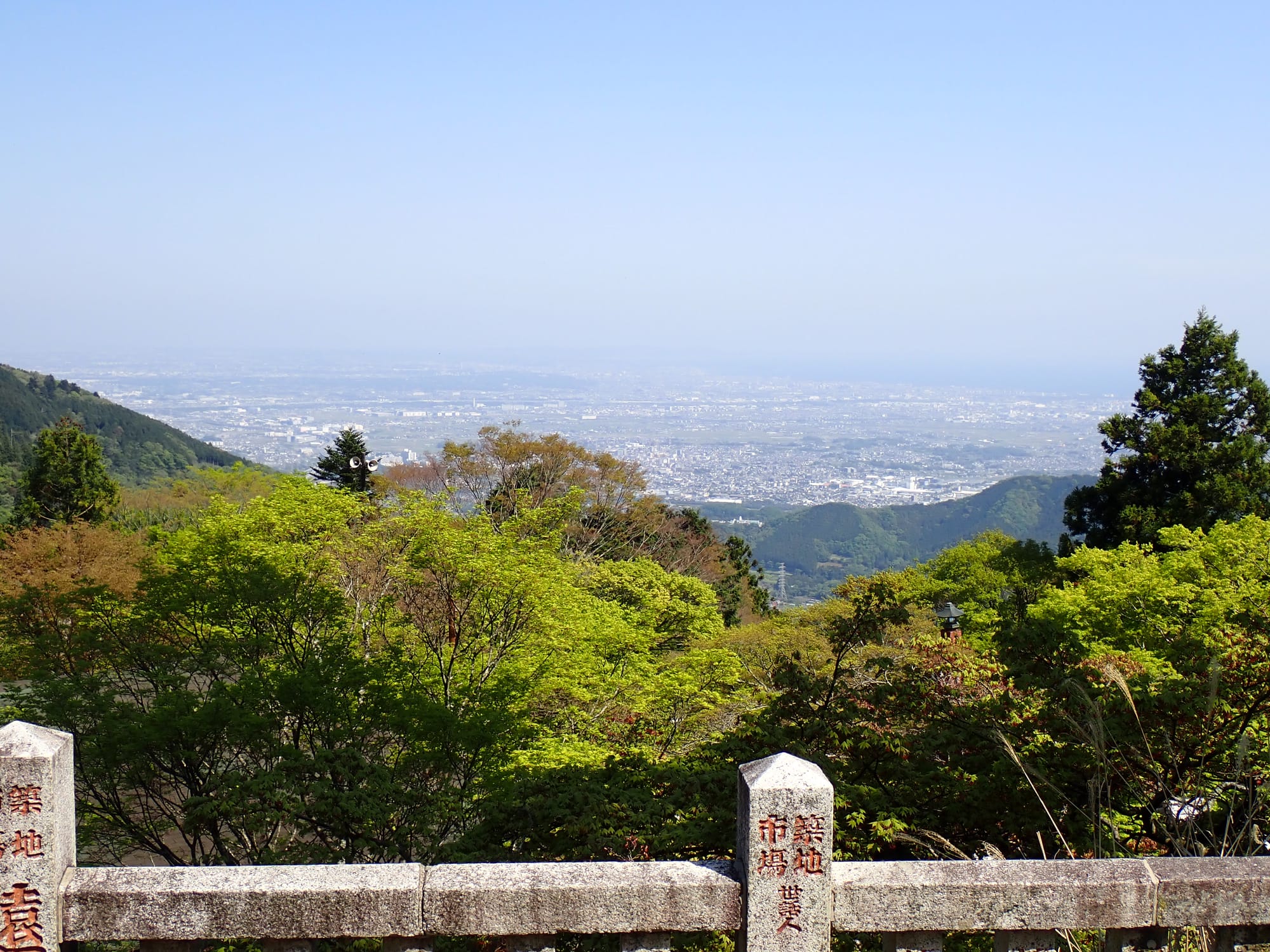
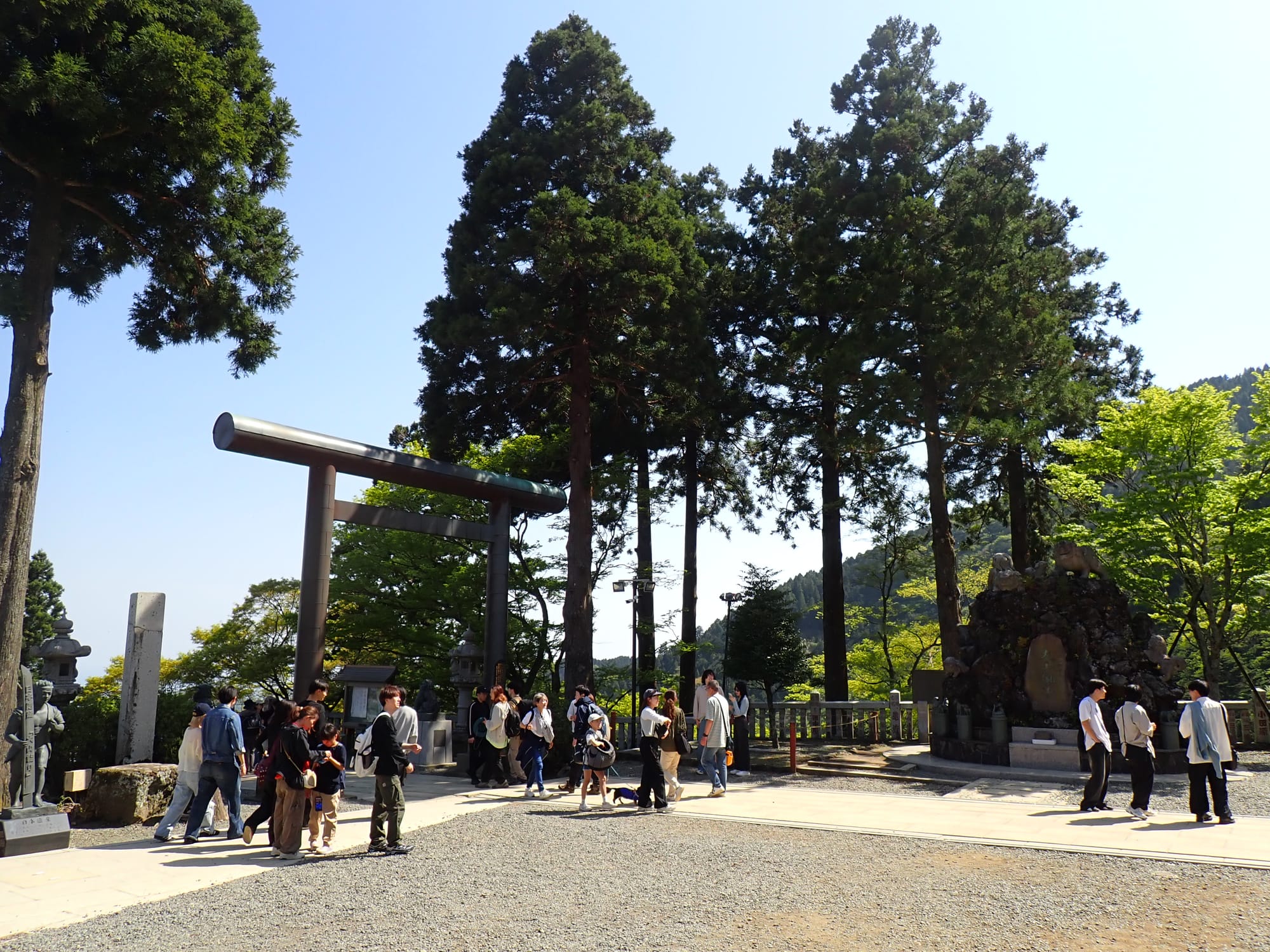
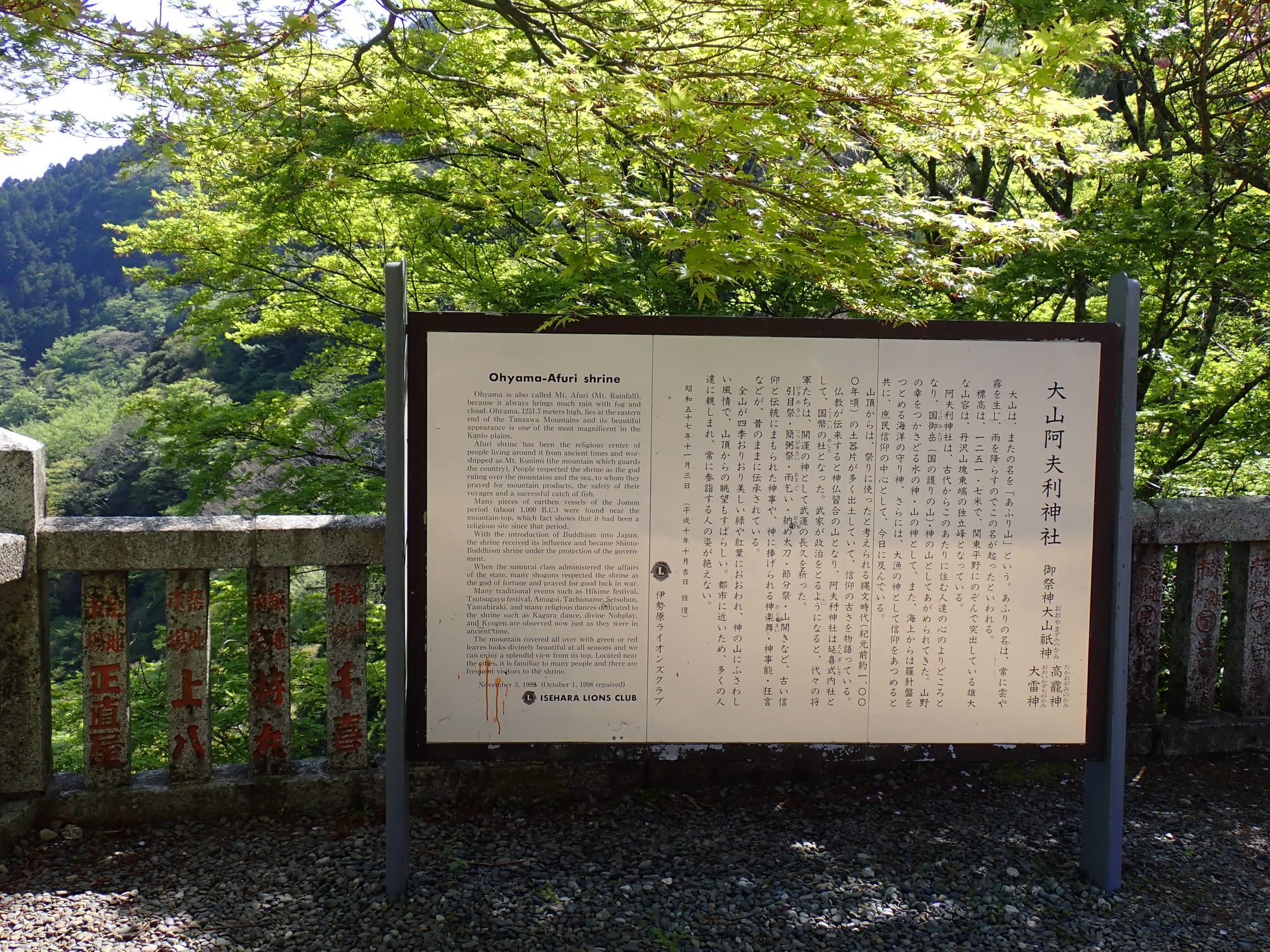
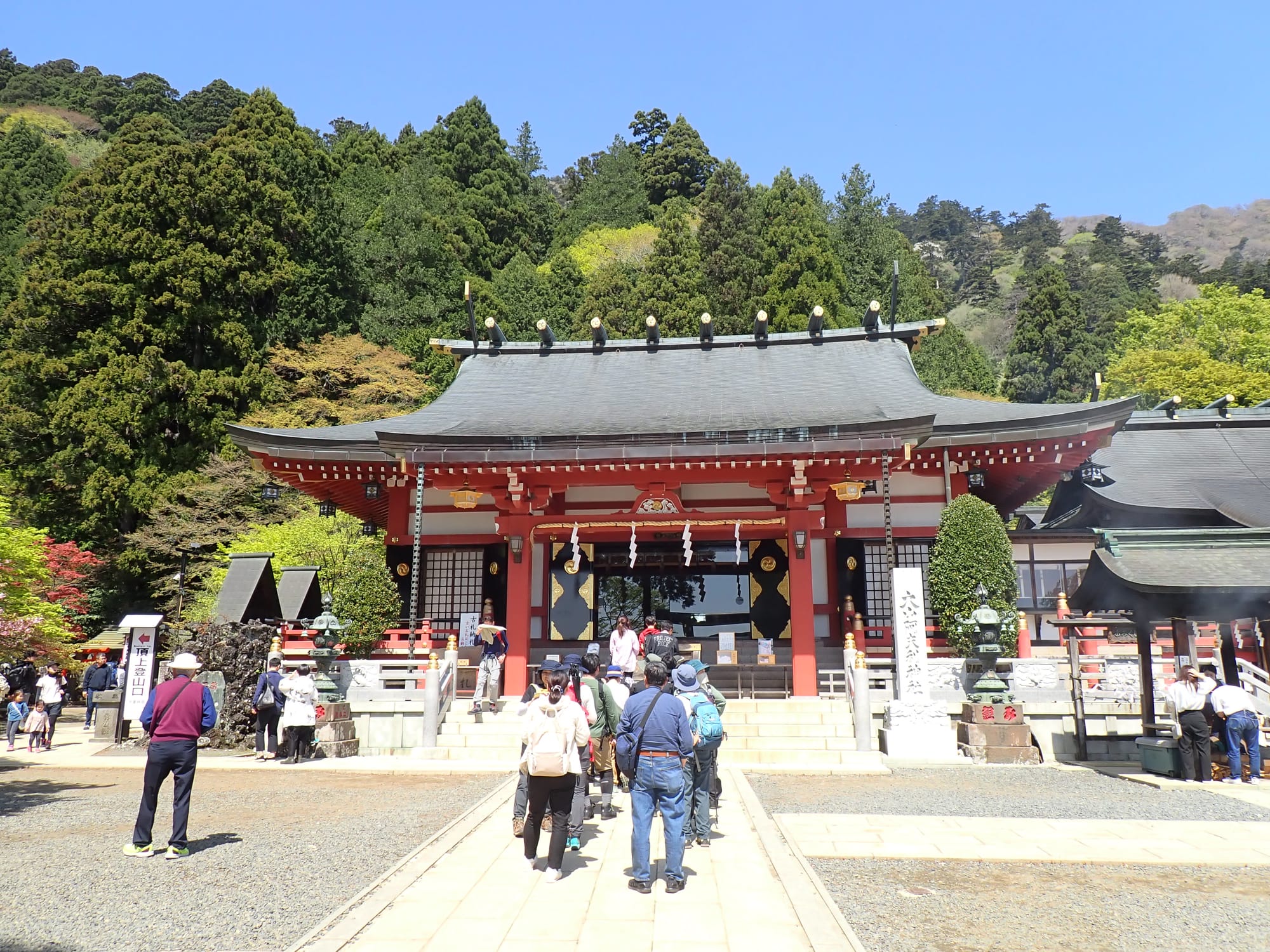
Oyama Afuri Shrine
The hike up to the summit
As you can see from the photos above, the weather was perfect for hiking. The forest in the earlier part of the hike had tall trees that offered shelter from the sun. It was also fairly breezy and cool.
The hiking trail was a combination of natural, rocky paths and man-made, wooden steps. It was not too difficult to hike on, making the hike accessible to families with young children. The route was also not terribly congested as hikers usually take different ascending and descending paths.
One thing I observed is that Japanese hikers are very well prepared, even for a day hike like this. Most of them wore proper hiking clothes and shoes, and carried medium-sized daypacks. I guess there is no harm in being prepared!
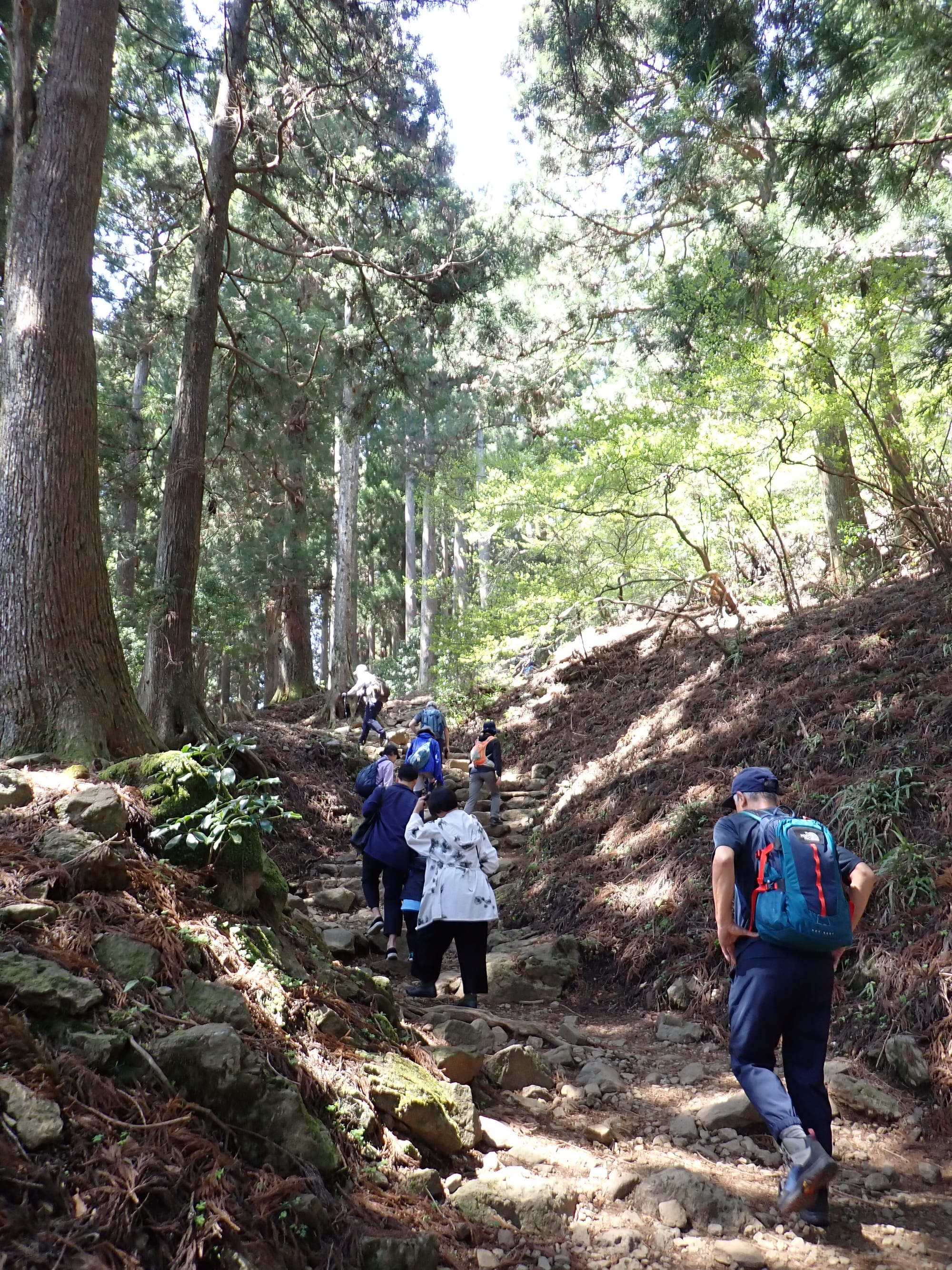
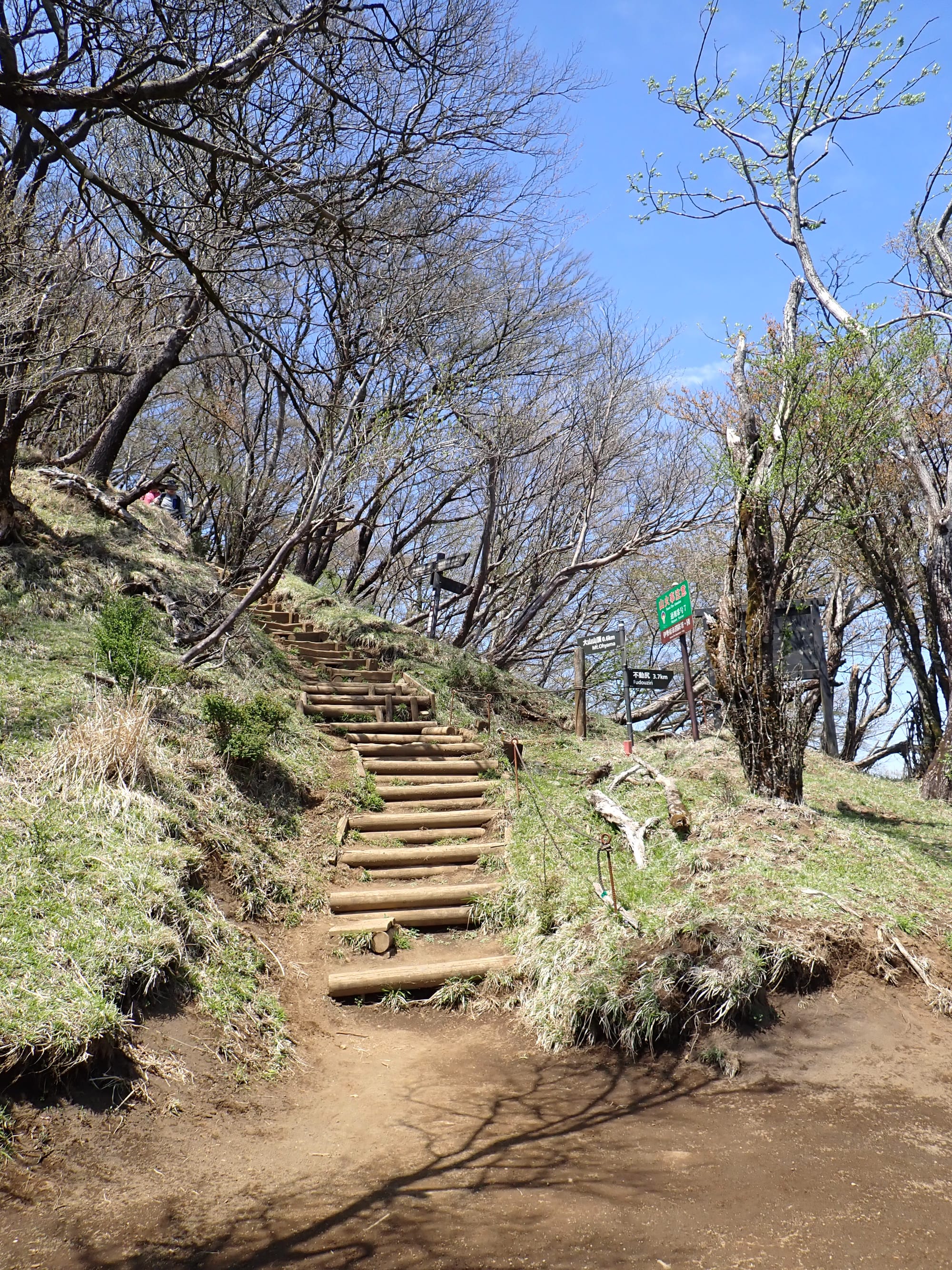
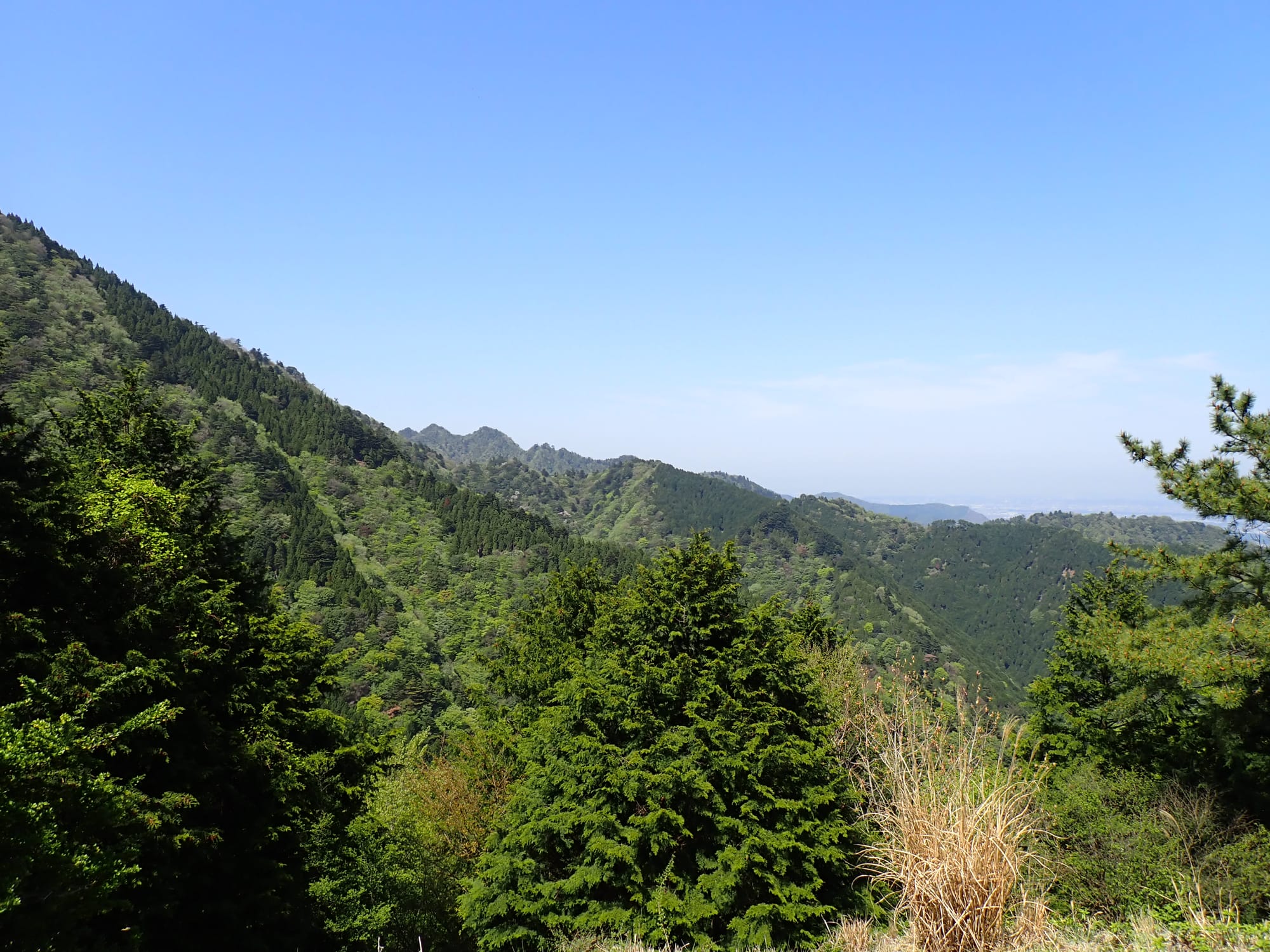
Lush greenery and good hiking paths
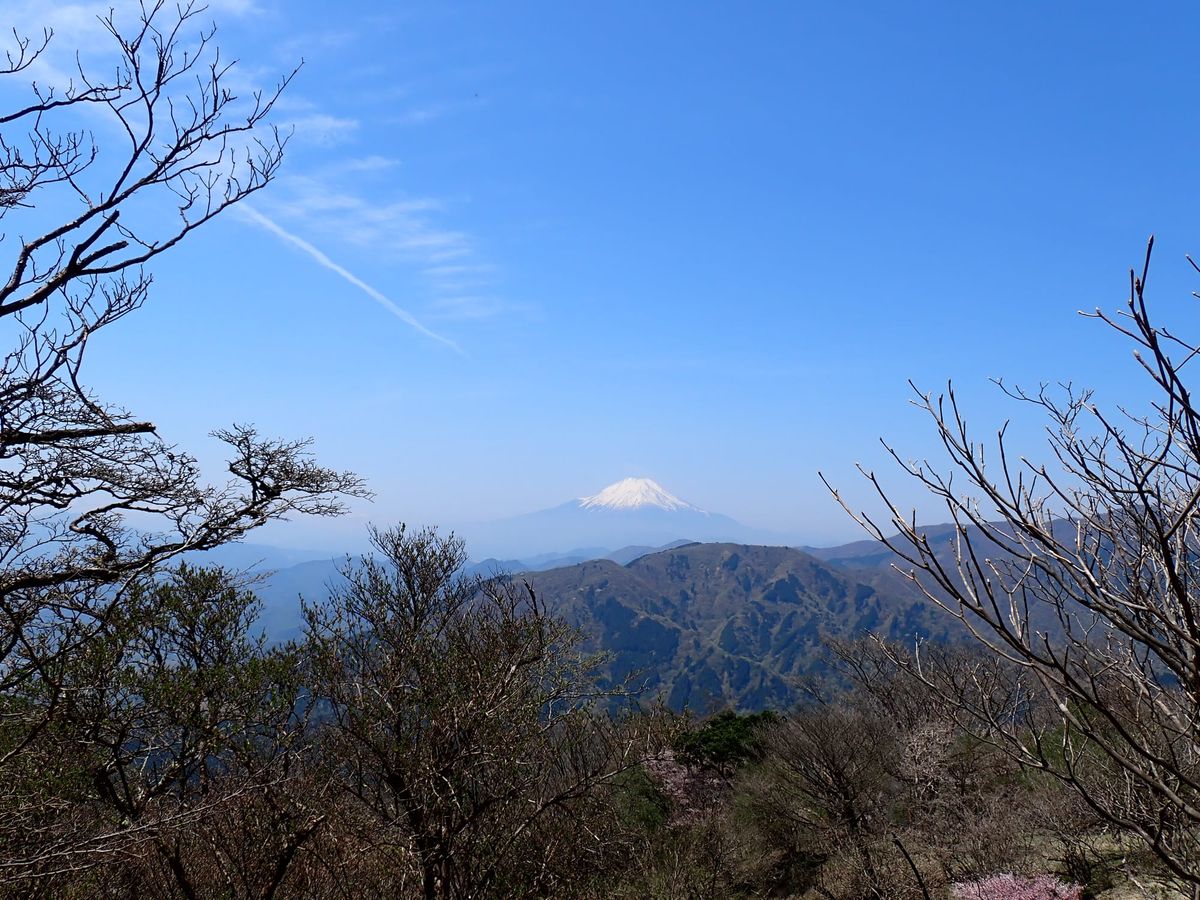
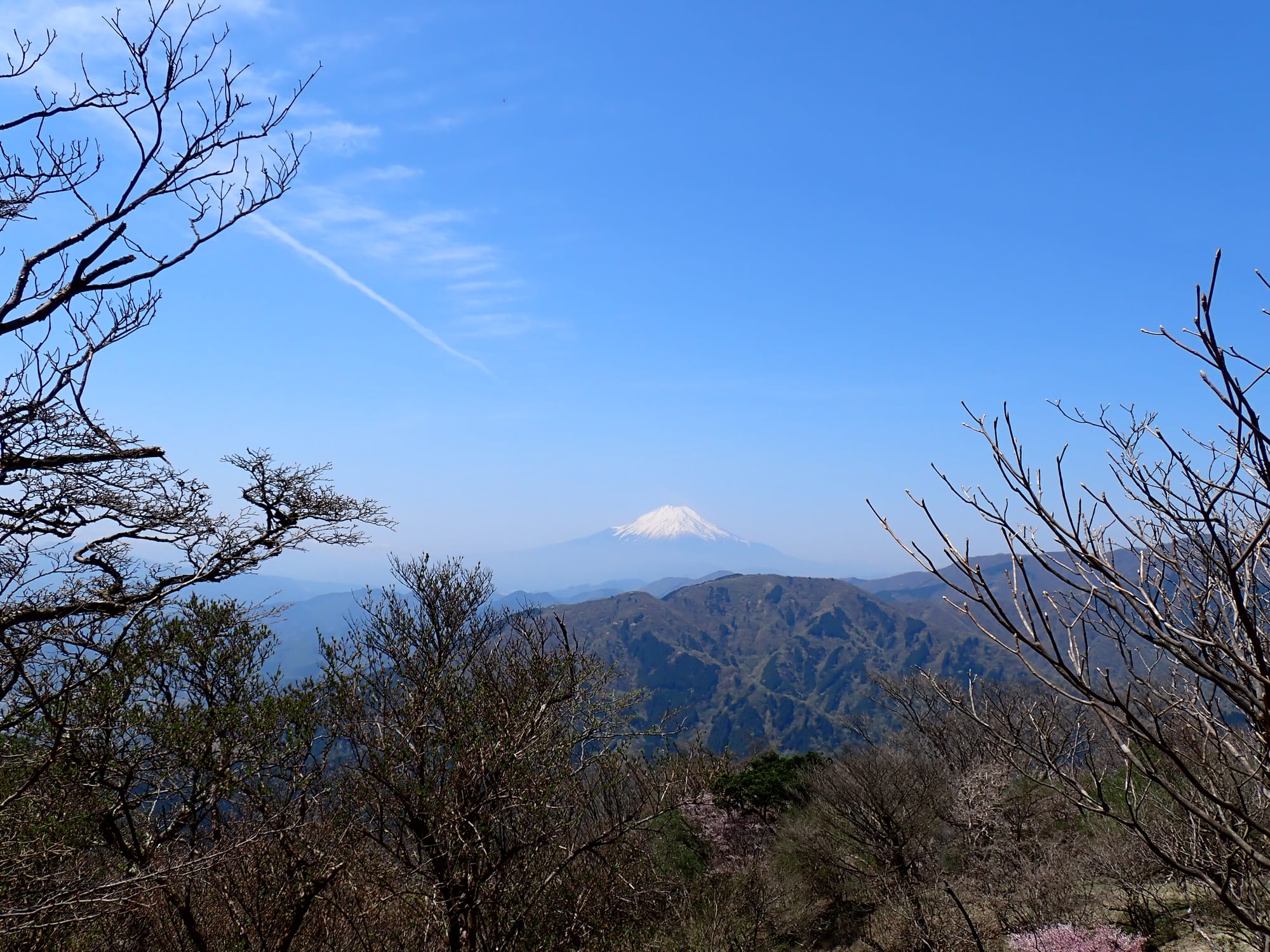
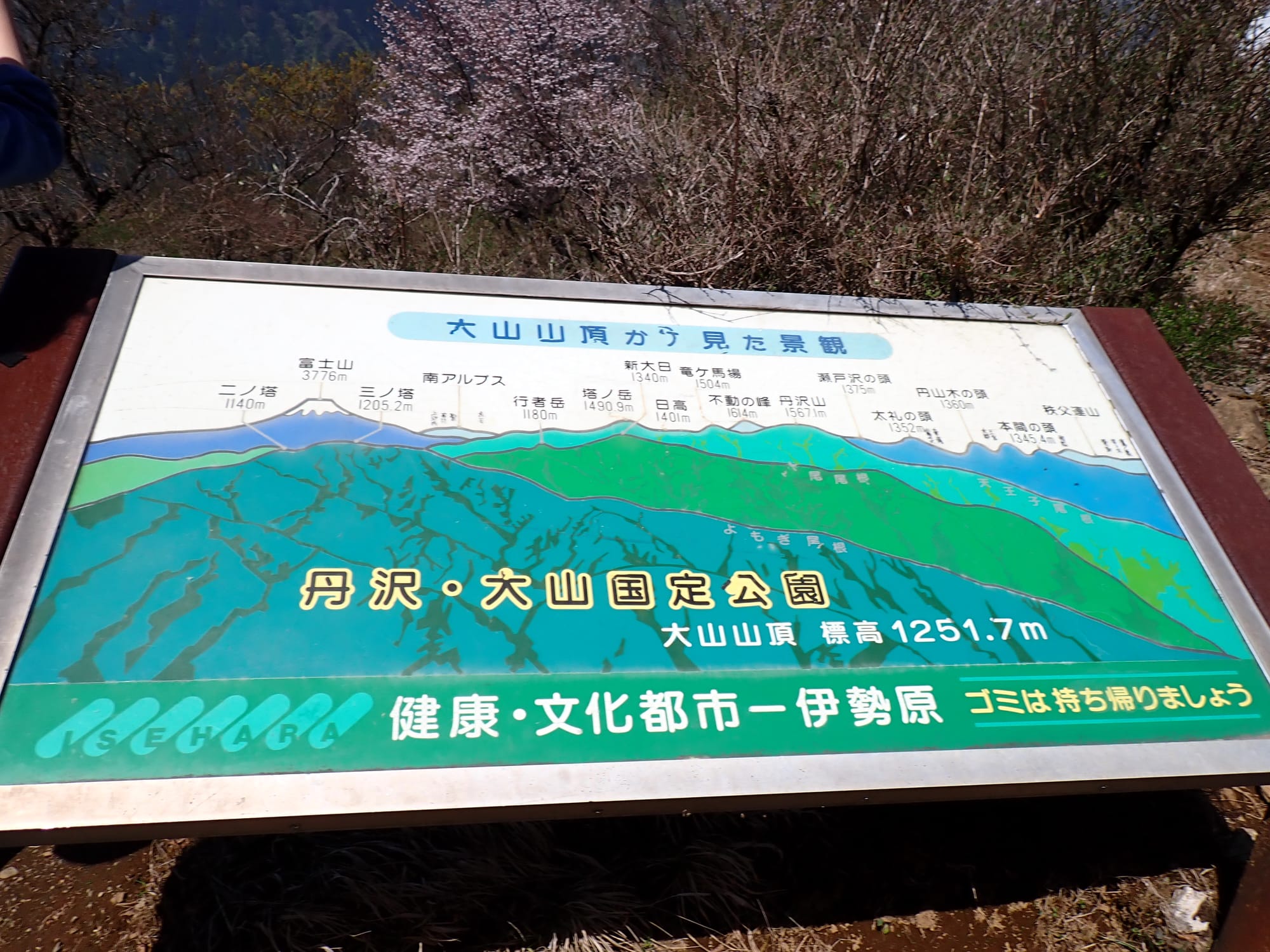
The highlight of the trip to me was seeing the much revered and famous Mt. Fuji (Japanese: 富士山) from the aptly-named Fujimidai (Japanese: 富士見台, English: Fuji viewpoint) checkpoint.
The clear & blue sky on the day, combined with the crisp and cool mountain air made for a great Mt. Fuji-viewing experience. And like drinking wine, the company also makes a huge difference! As we move into the warmer months, it will be one of the last chances to see a snow-capped Mt. Fuji.
We reached the summit of Mt. Oyama closer to lunch time, after about 90 minutes of hiking. There were already many hikers enjoying their lunch break: some brought basic foods like onigiri (Japanese: おにぎり) rice balls and cup noodles while some cooked up a small feast (!!) using portable bunsen burners.
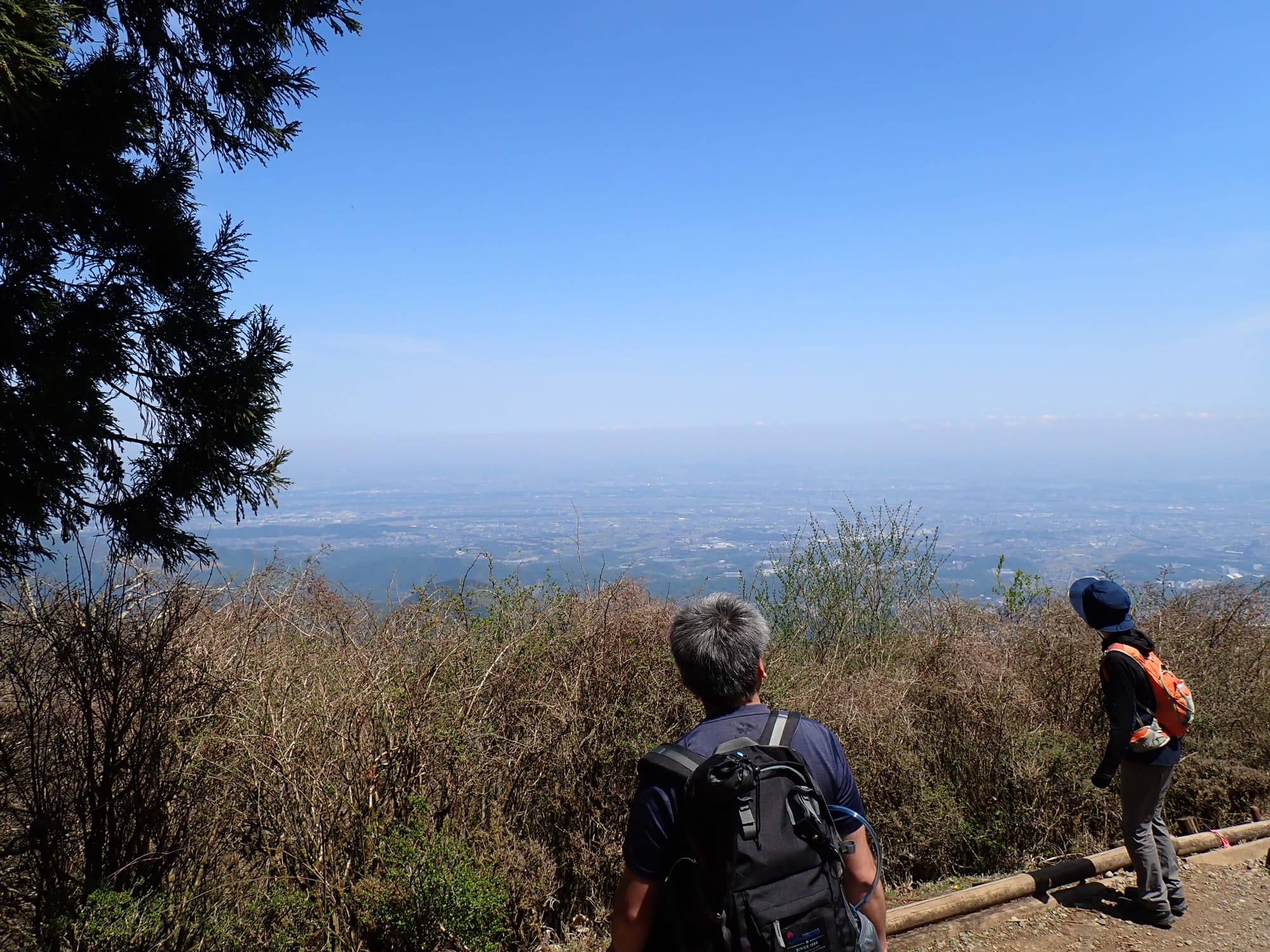
We even saw a group of young adults, likely university students, setting up a large pot to cook pasta. All in, there was a very lively atmosphere with good vibes.
The hike back down took under an hour, and we finished up our day celebrating the end of our hike with beer and small bites at a local izakaya (Japanese: 居酒屋) in Isehara.
--Ends