WB043: A New & Satisfying Routine
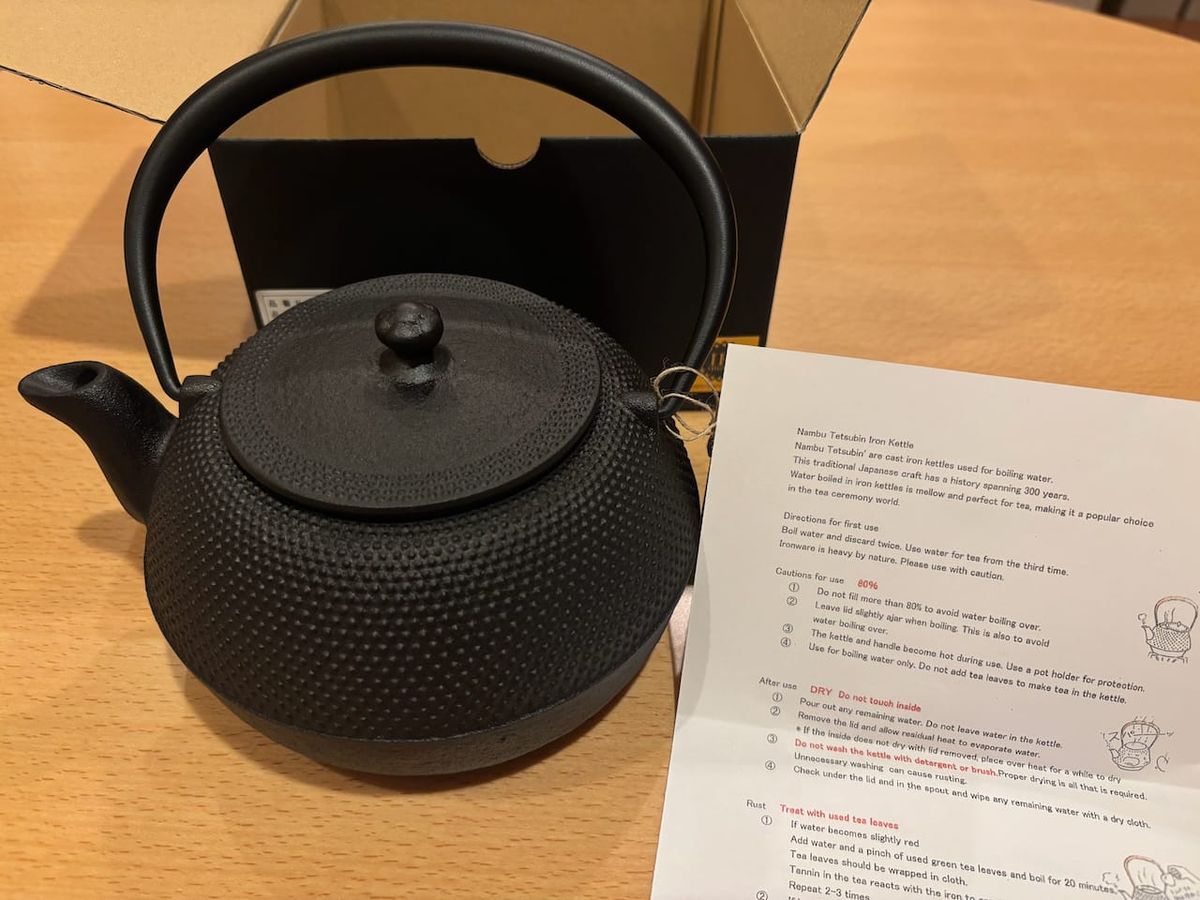
I recently started a new daily routine of boiling water using a traditional Japanese cast-iron kettle called a tetsubin (Japanese: 鉄瓶), which has been around since the end of the Edo period (Japanese: 江戸時代).
Today, Iwate Prefecture (Japanese: 岩手県) is where many good quality tetsubins are manufactured by skilled craftsmen.
Because a tetsubin is entirely made of iron, it is only to be used for boiling water and not for brewing tea. Tea gets discoloured due to the chemical reaction between tea's tannins and the tetsubin's iron.
Locals believe tea tastes better when tetsubin water is used, due to the trace amounts of iron content from the boiling process. The iron is also believed to be good for your body, as iron is essential in making haemoglobin.
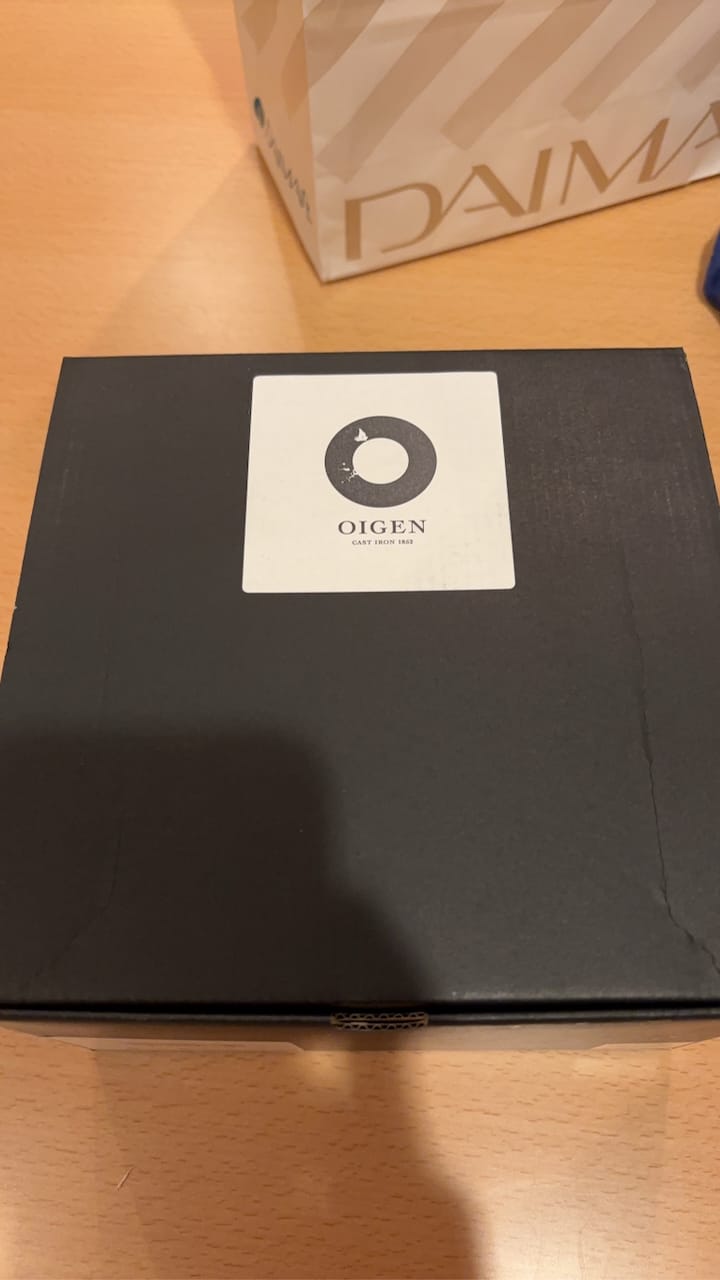
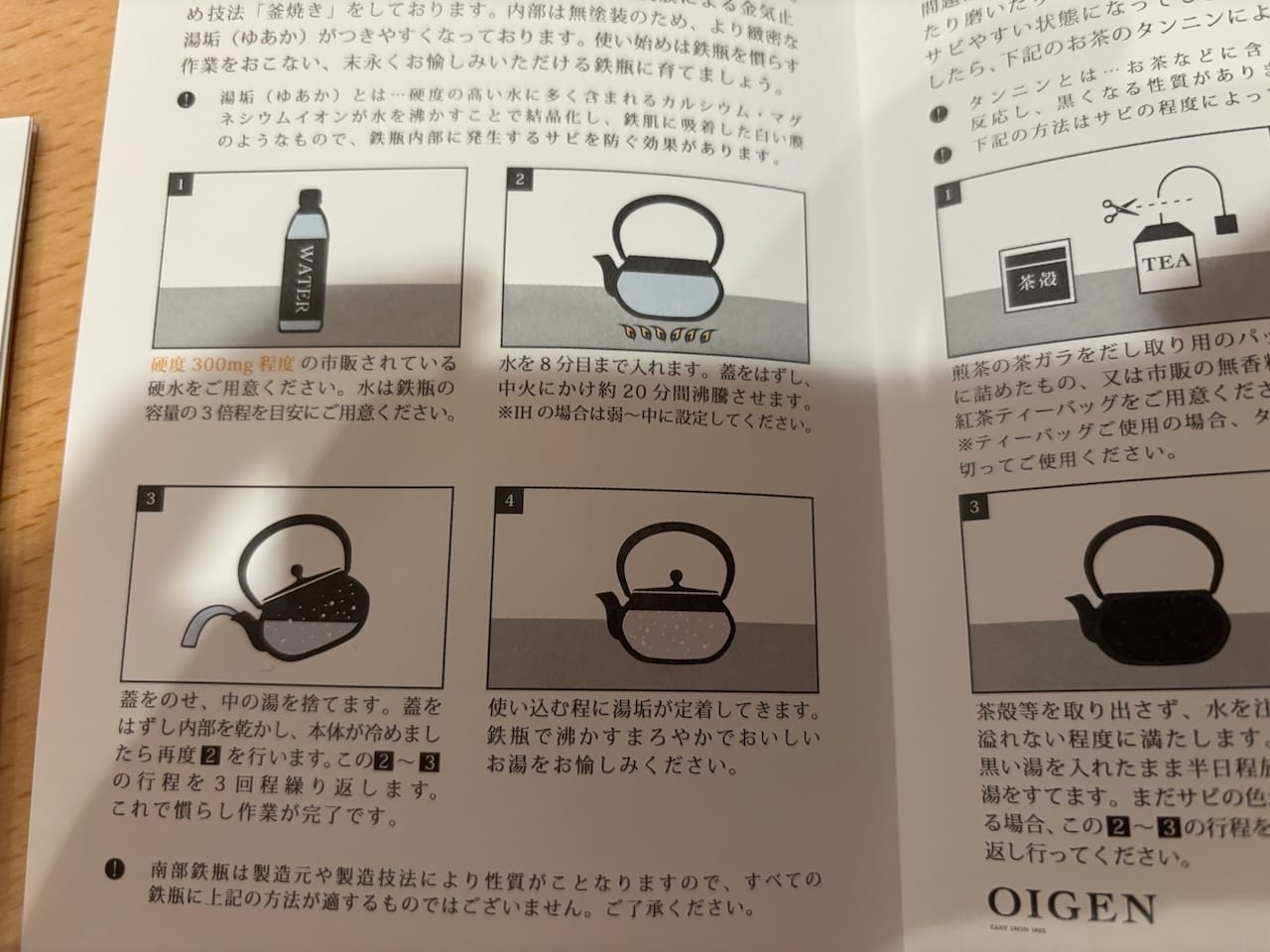
(L) A lifelong investment: an Oigen tetsubin! (R) How to prepare your tetsubin for use
This Business Insider video on YouTube explains the time-consuming and complex process of making a tetsubin by hand.
Good quality, handmade tetsubins don't come cheap and need to be properly cared for. As a result, buying one is a serious consideration, especially considering an electric kettle is cheaper and easier to maintain.
That said, price is what you pay, and value is what you get.
My thoughts so far
Since buying an Oigen tetsubin (1 litre capacity) a few weeks ago, I've been using it daily to boil water for drinking and making tea and coffee. It takes between eight to ten minutes to boil water on a medium-high flame.
There's just something about boiling water the old-fashioned way that makes this new routine enjoyable, therapeutic and easy to adopt, despite being less convenient than an electric kettle.
Upon reflection, I think it is because we've become hardwired to always search for the most efficient and convenient way of doing things, overlooking the burden and suffering we create for ourselves in doing so.
It's always important to assess the value proposition of striving for more.
Knowing I'm using a good quality product made by a skilled craftsman who has spent years honing his craft is also another factor behind my enjoyment.
Watching the Business Insider video made me appreciate the skill involved to navigate the challenging and complex tetsubin manufacturing process, from creating the mould to lacquering the final product.
For example, the tetsubin's iconic concave-convex dots, known as arare, are all placed by hand, with some tetsubins having as many as 2,000 arares.
Despite its high costs, I tell myself its a worthwhile investment because it is built to last a lifetime. It also means the cost gets amortised over many years!
My daily tetsubin routine
After several sessions of trial and error, I've settled on the following routine to boil water using our tetsubin.
- Set a timer to 8 minutes
- Fill the tetsubin with water and boil it on a medium-high flame
- Listen for the sound of the water reaching boiling point - this is when the bubbling sound reaches a crescendo and drops off quite quickly
- Turn off the flame and remove the tetsubin from the stove (with oven mittens)
- Take off the lid and pour all the water into a separate flask or electric kettle
- Make sure there's no residual water in the tetsubin
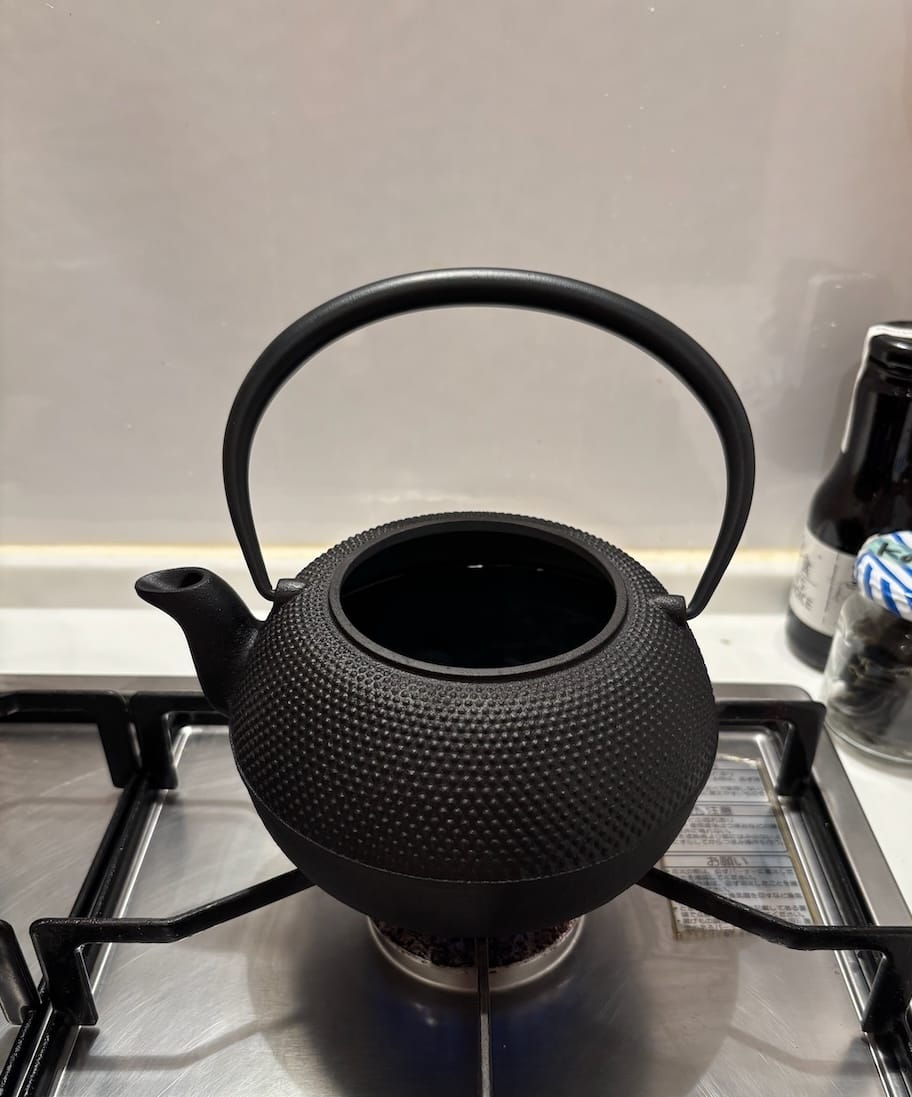
Step 6 is really important as rust forms from the chemical reaction of water reacting with the tetsubin's iron interior. So far, I find this is not an issue as all the residual water self-evaporates from the tetsubin's retained heat. Observing the water transform into mist-like vapour is quite satisfying.
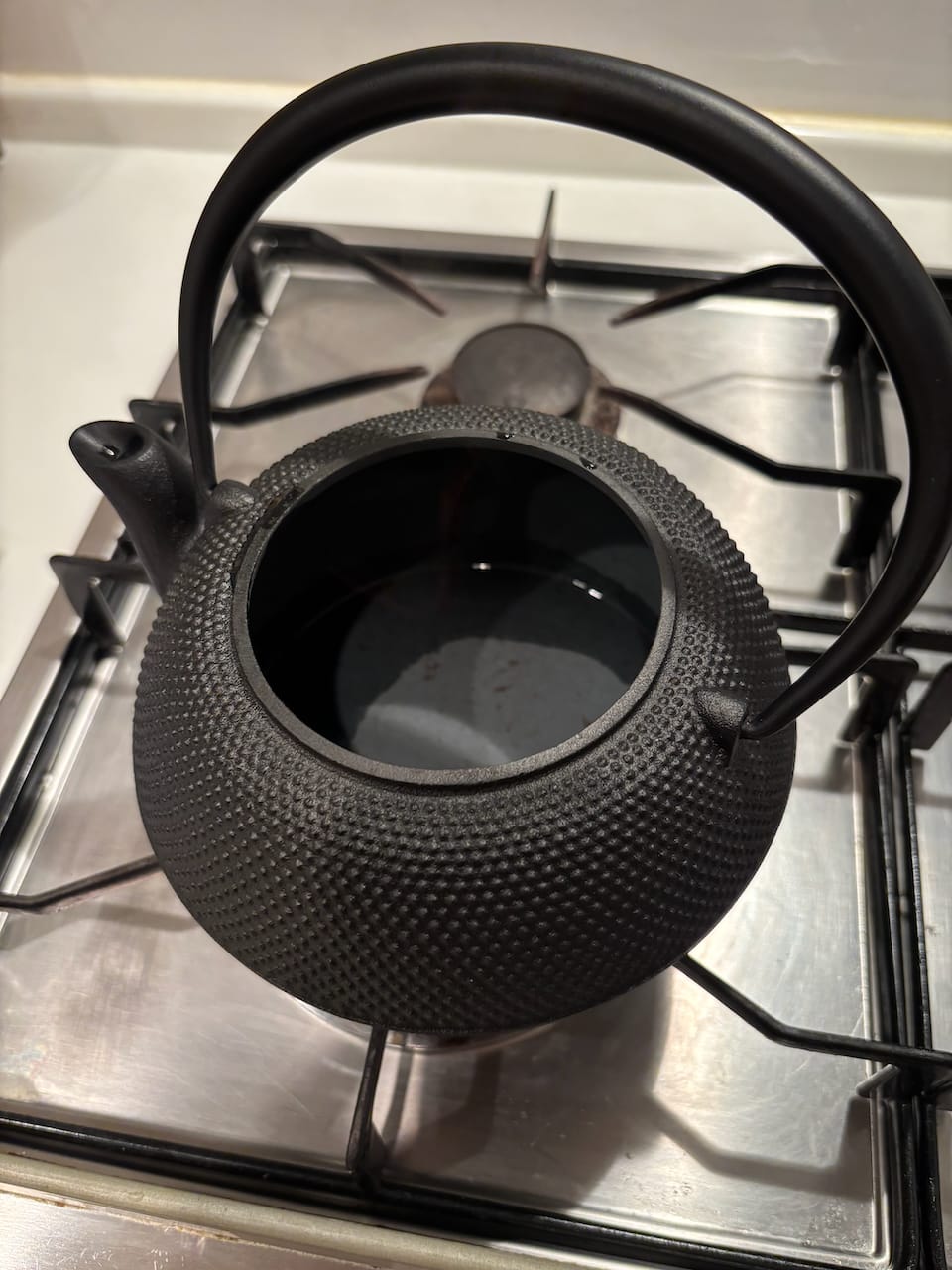
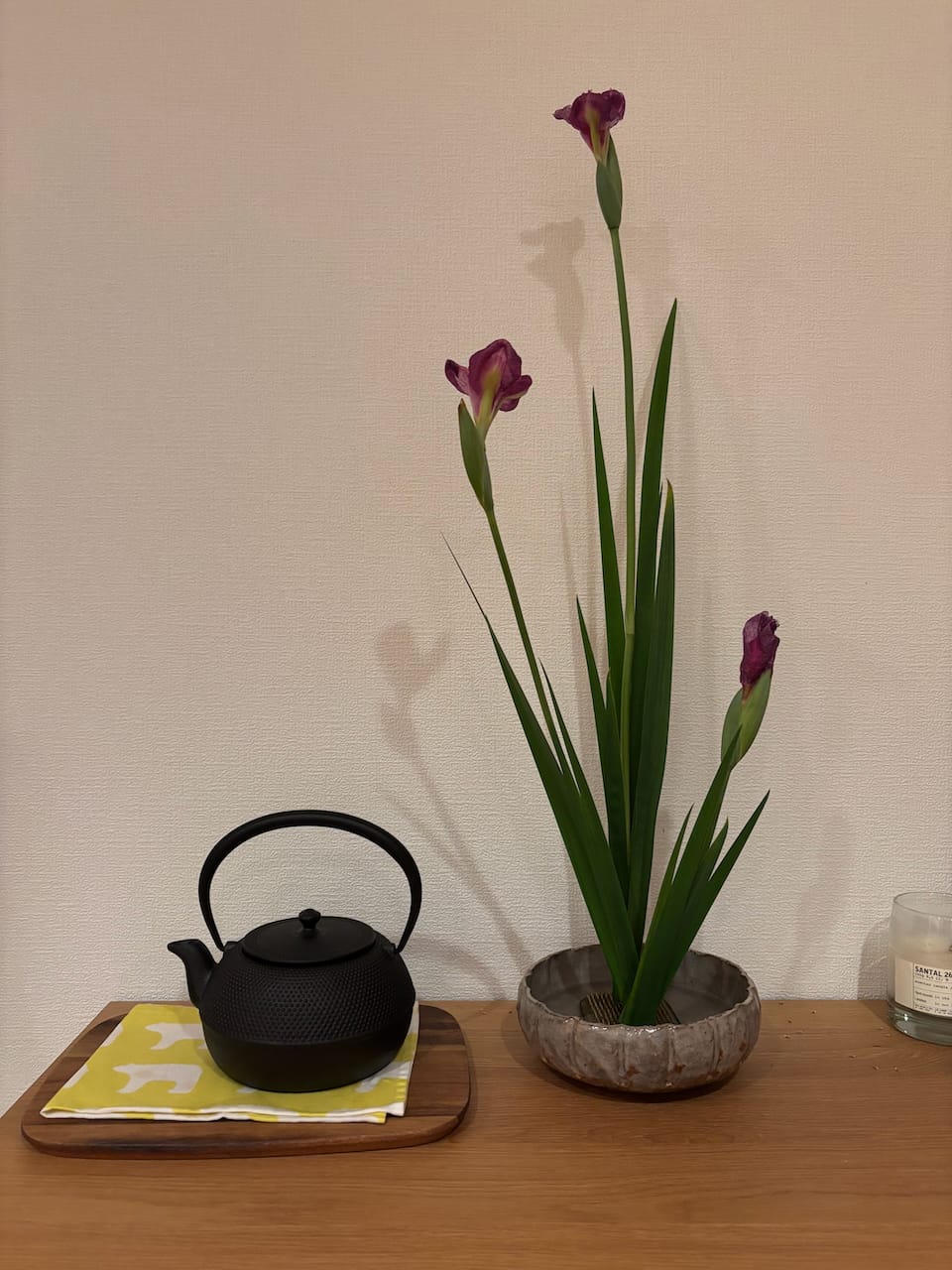
(L) Residual water (dark area inside the tetsubin) gradually self-evaporates (R) Tetsubin next to an Iris ikebana arrangement
As with most traditional products, there are now mass-produced tetsubins sold at more reasonable price points.
I'm not entirely sure of the quality of these mass-produced products and feel it's better to invest in an original tetsubin, especially if you appreciate the craft of making it and you're after a lifetime of enjoyment.
--Ends