WB044: Practical, easy and tasty
Since making a determination to eat more vegetables, I've successfully incorporated at least two servings of salad into my daily diet.
Upon reflection, two things have made this transition easier than I anticipated.
- A simple salad is all about preparing and assembling vegetables. You just need to find vegetables that can be prepped ahead of time and eaten raw. For example carrots, daikon radish (Japanese: 大根), and shin-tamanegi (Japanese: 新玉ねぎ, English: spring-time onions)
- Making salad tasty by using (in moderation) salad dressing.
In other words, making healthy meals a part of life is a function of preparing tasty and practical dishes. I'm always excited and motivated when I find recipes that fulfil these criteria.
Luckily for me, my mother-in-law is a practical cook who loves to share foolproof recipes with me. And my wife is also very patient in letting me use her as a guinea pig to test these recipes.
Recipe 1: Sarada Chikin or Poached "Salad" Chicken
My mother-in-law calls this dish sarada chikin (Japanese: サラダチキン, English: Salad Chicken). It is a skinless chicken breast poached in a simple yet tasty homemade marinade.
Ingredients:
- 250g - 400g of skinless chicken breast
- Homemade marinade: a mixture of cooking sake (1 Tbsp), sugar (1 Tsp), salt (1/3 Tsp), ground black pepper (1/2 Tsp) and chicken stock powder (1 Tsp). You can adjust the proportions to your liking
Steps to cook:
Step 1: Poke both sides of the chicken breast with a fork. This makes it easier for the marinade to be absorbed
Step 2: Place the chicken in a plastic bag safe for poaching in hot water. Pour the marinade in the bag and marinate overnight in the fridge
Step 3: Bring a pot of water to a boil. Ensure there is sufficient water to fully submerge the bag of marinated chicken.
Step 4: Place the bag of marinated chicken in the pot, kill the flame and close the pot with its lid. Leave the chicken to poach for around 45 minutes to one hour.
Once fully poached, the chicken is ready to be eaten! You can either tear the chicken into shreds or cut it into thin slices.
The savoury flavour profile of this chicken makes it a very flexible protein ingredient, be it for salad, a sandwich or even a noodle dish. It can also be refrigerated and eaten over a few days.
The marinade is also very flavourful and can be added as a flavour enhancer for a soup.
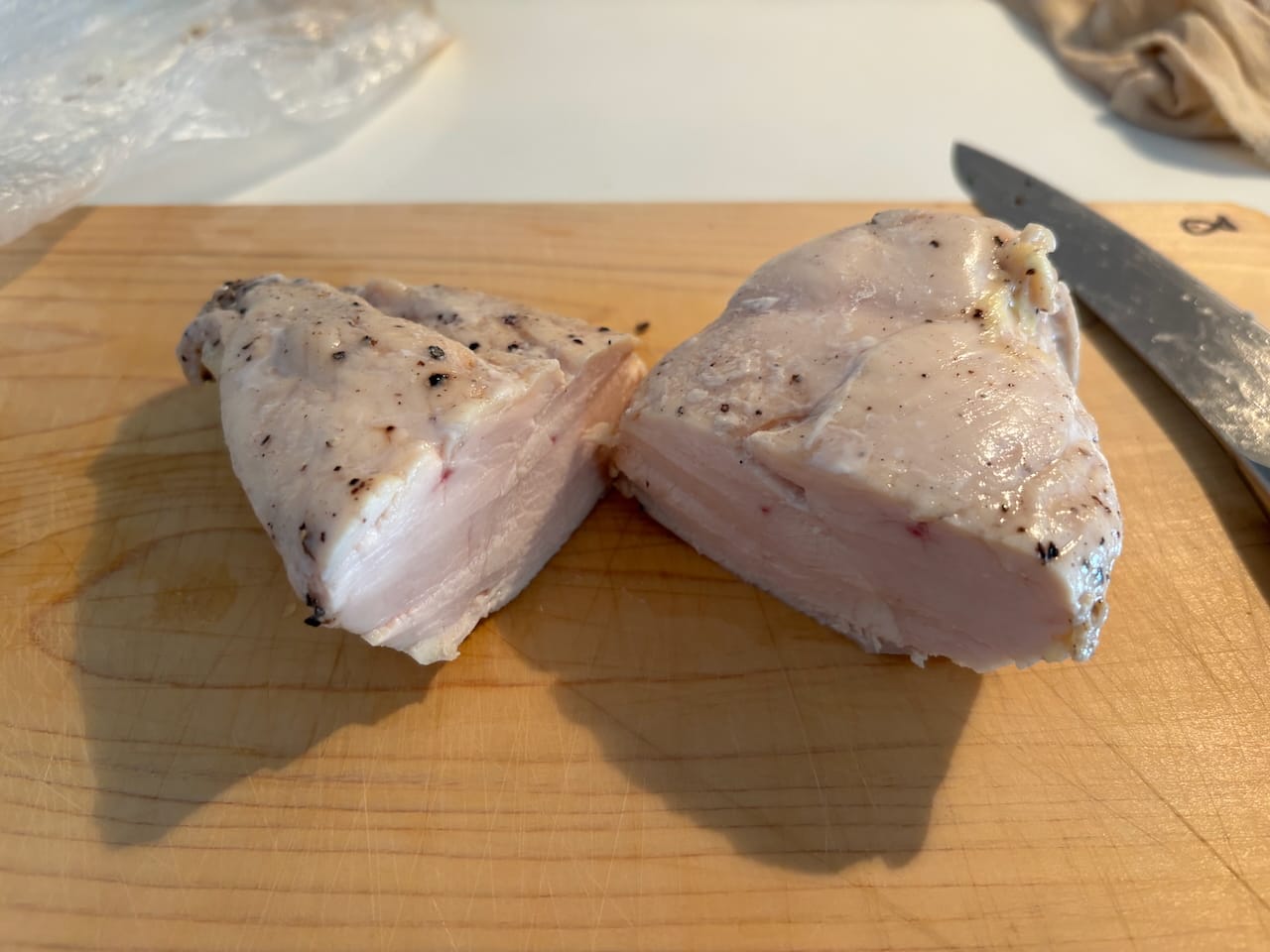
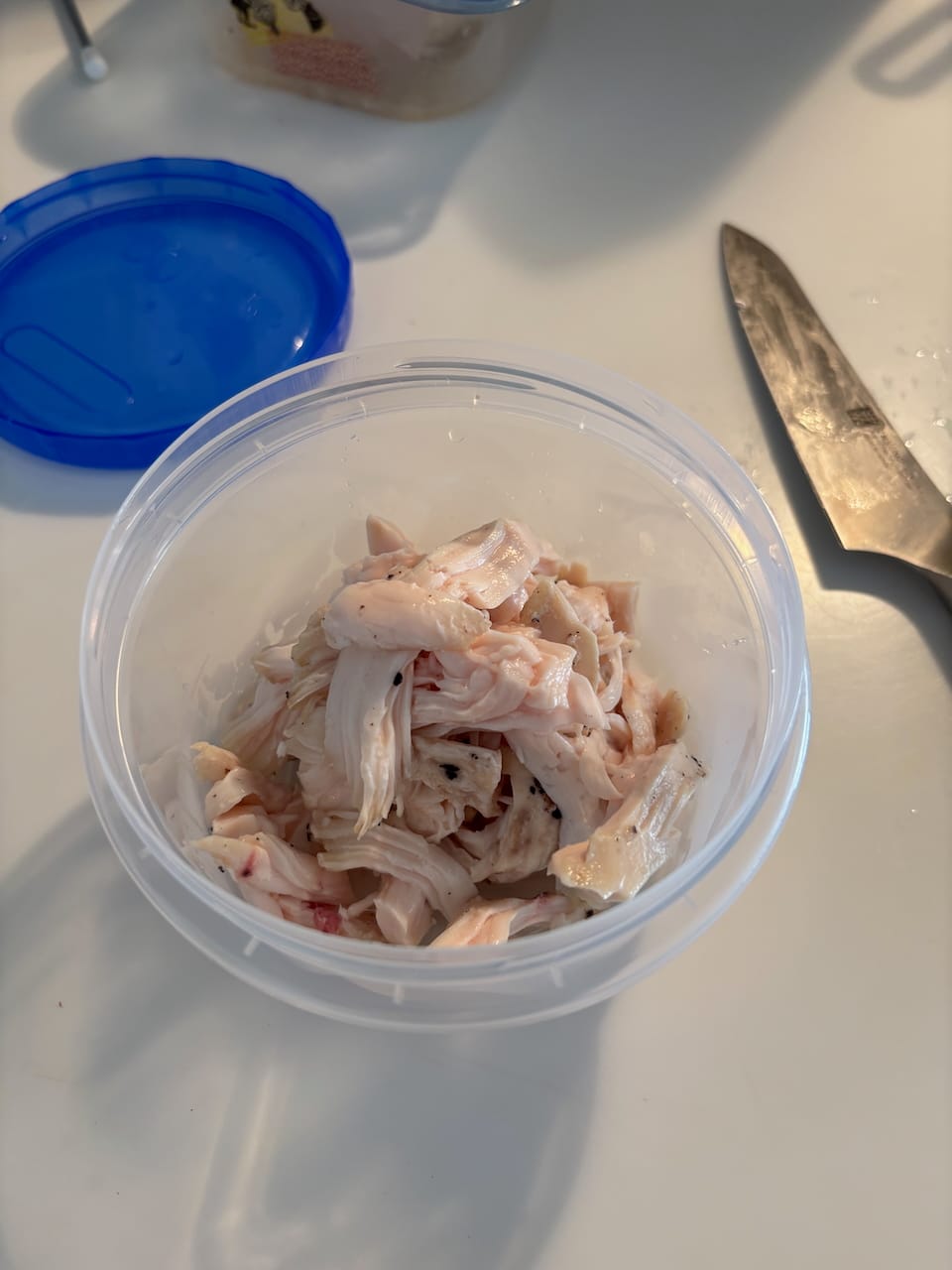
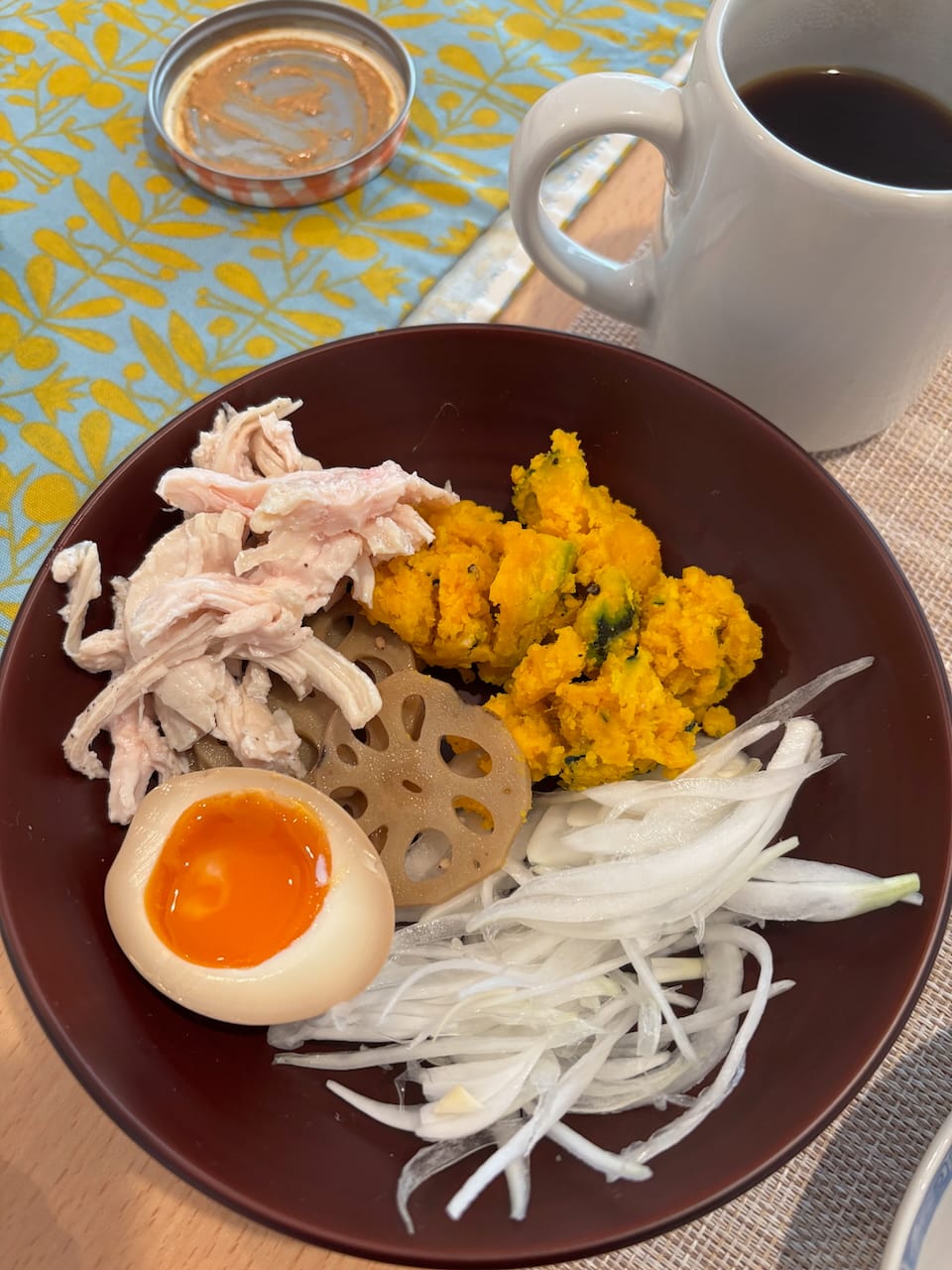
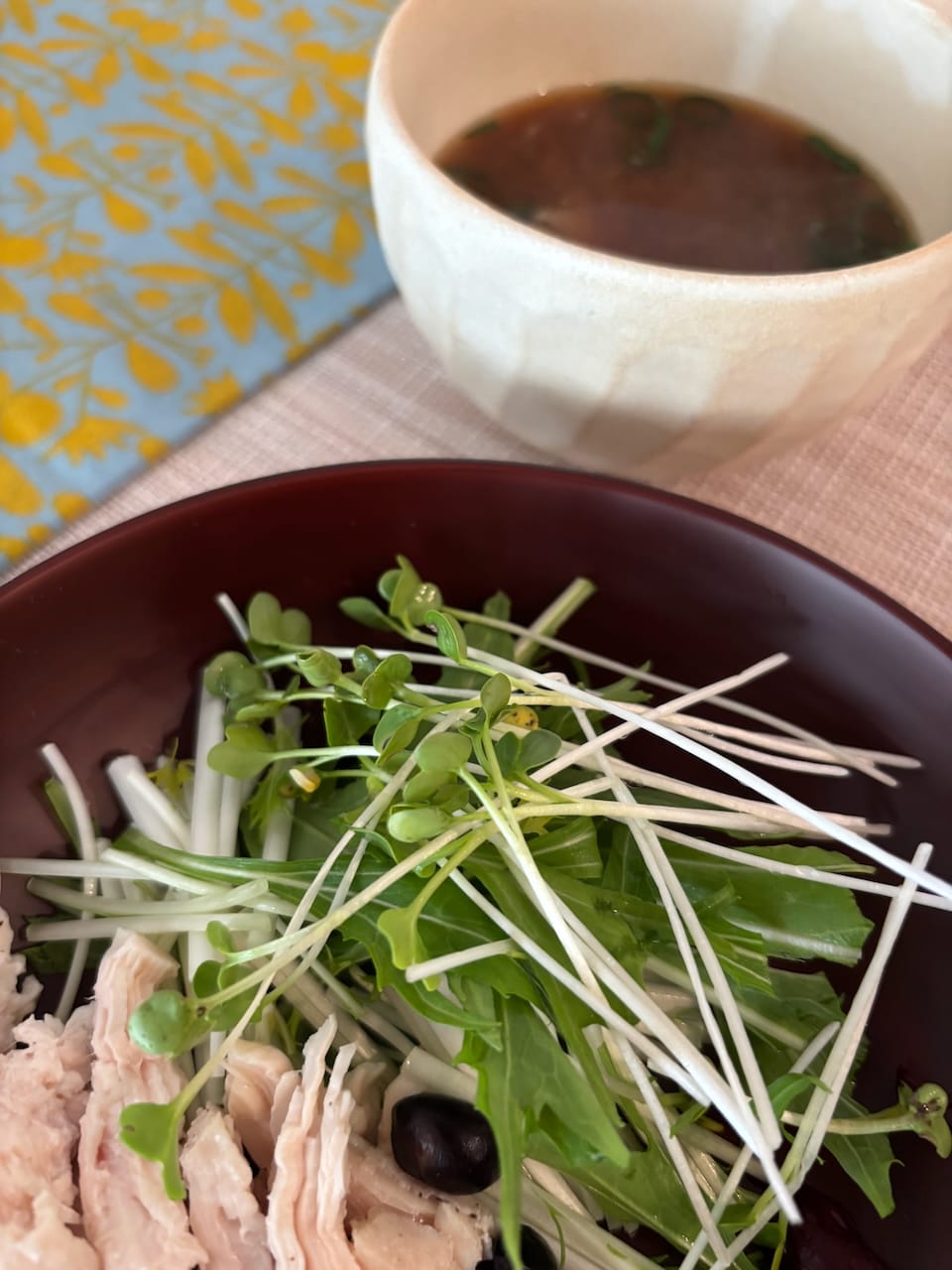
Sarada chikin eaten with salad.
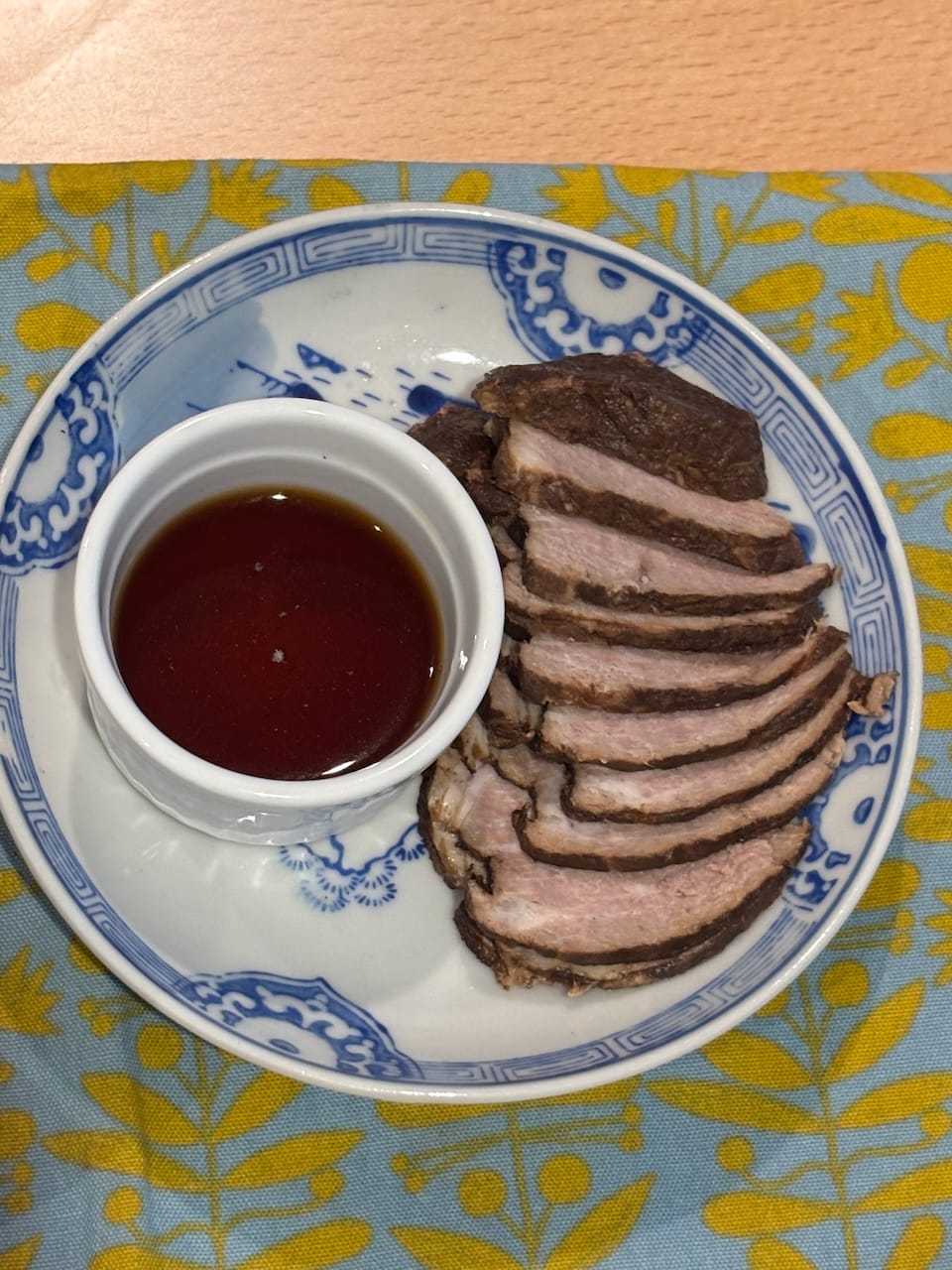
Recipe 2: Pork Loin braised in black tea
Like the sarada chikin, this pork dish is simple, tasty and can be refrigerated and eaten over a few days.
Ingredients:
- Two bags of black tea
- Pork loin (~400g - 600g)
- Homemade marinade mixture: Japanese soy sauce (80ml), white rice vinegar (40ml), mirin* (Japanese: 味醂, English: sweet rice wine) (40ml) and cooking sake (40ml)
*Mirin is sweet cooking wine. So as a mirin replacement, I add sugar to cooking sake
Steps to cook:
Step 1: Blanch the pork loin in boiling water for 1 minute. Take it out and let it rest.
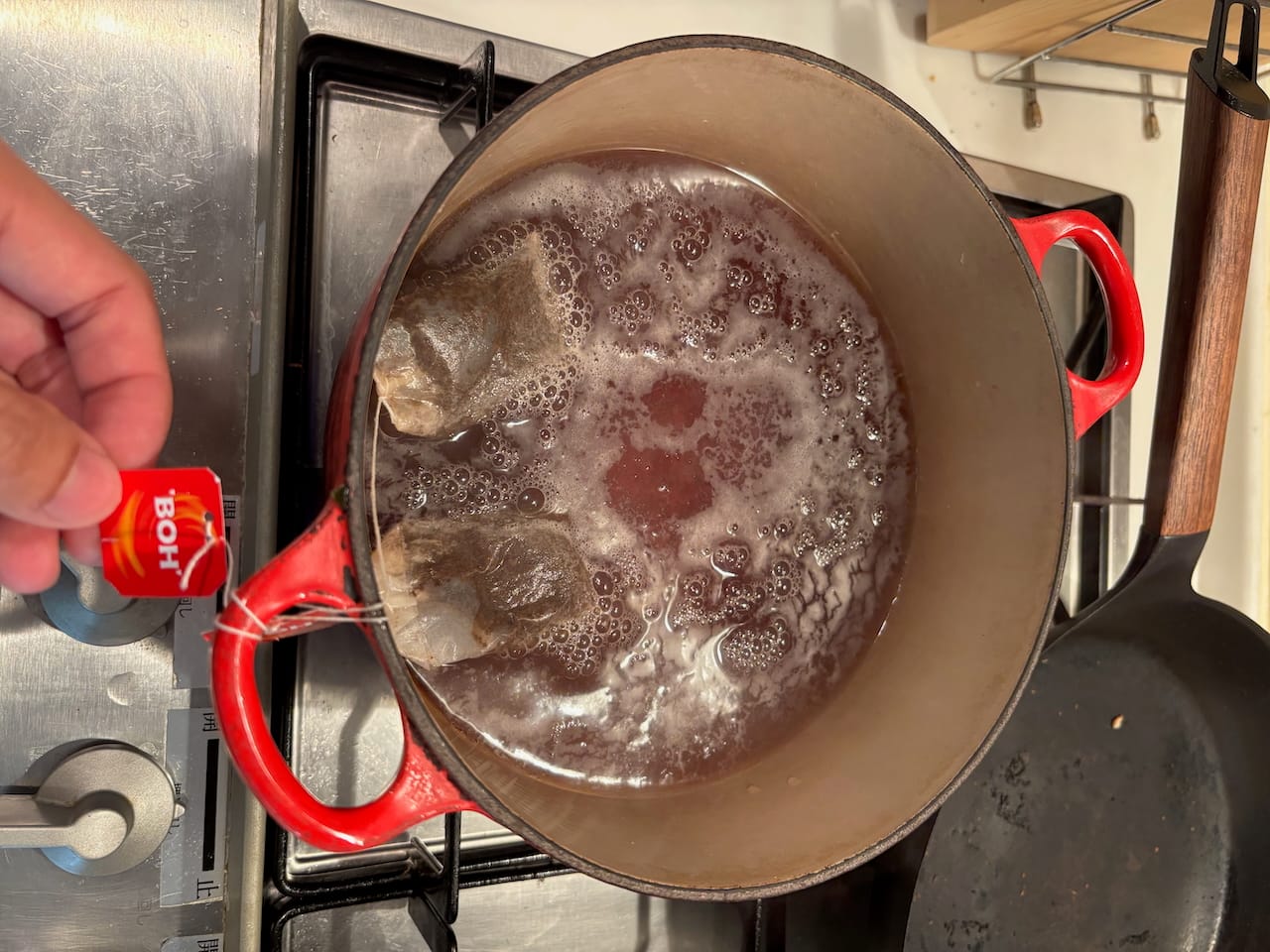
Step 2: Bring a pot of water to a boil and brew the black tea. Ensure there is sufficient water to submerge the pork.
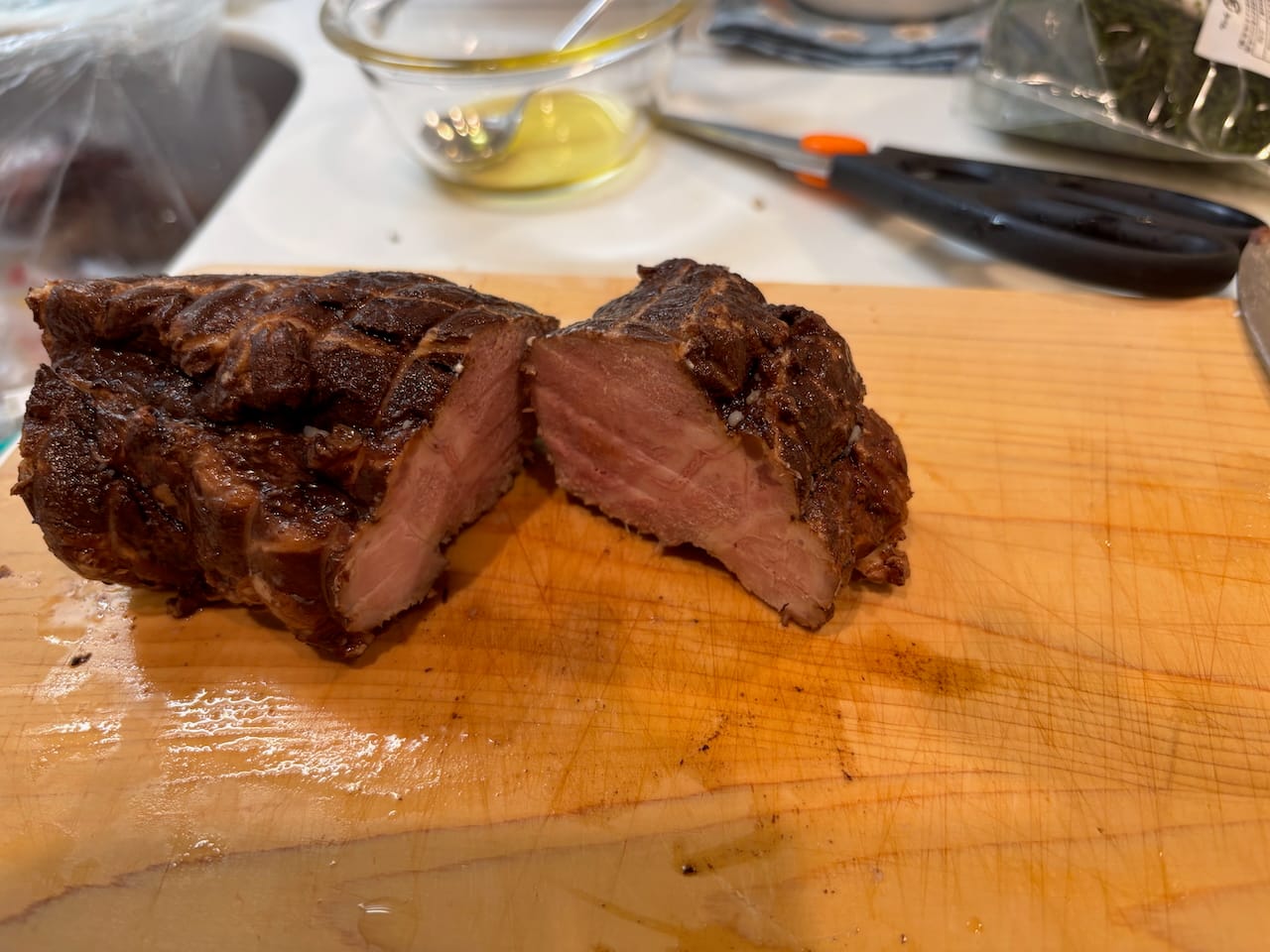
Step 3: Add the blanched pork loin to the pot of black tea and braise for 40 minutes to an hour on a medium flame. Keep the lid on the pot.
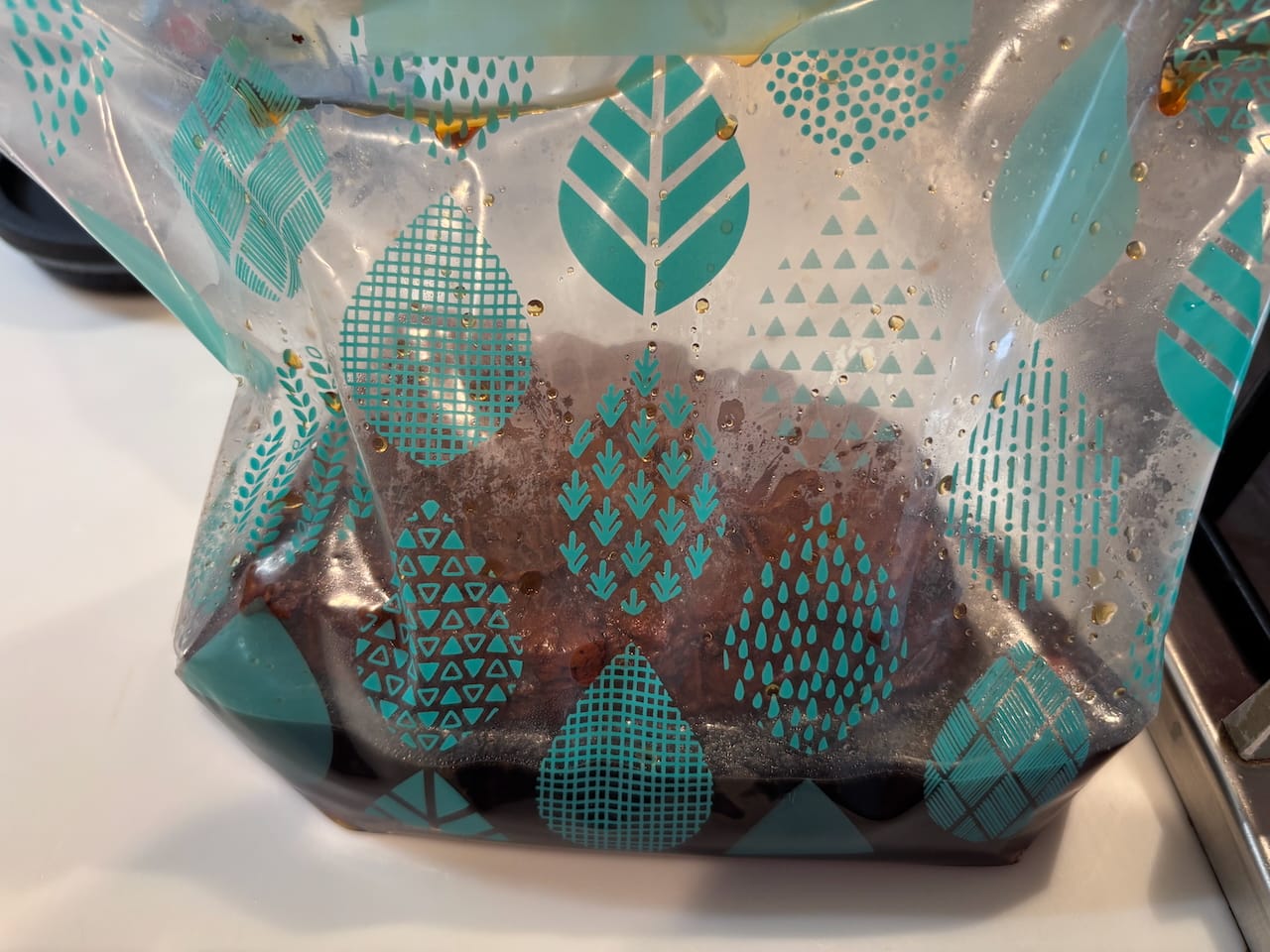
Step 4: Remove the cooked, braised pork from the pot of tea and add it to a ziplock bag. Pour the marinade into the bag and refrigerate this mixture overnight.
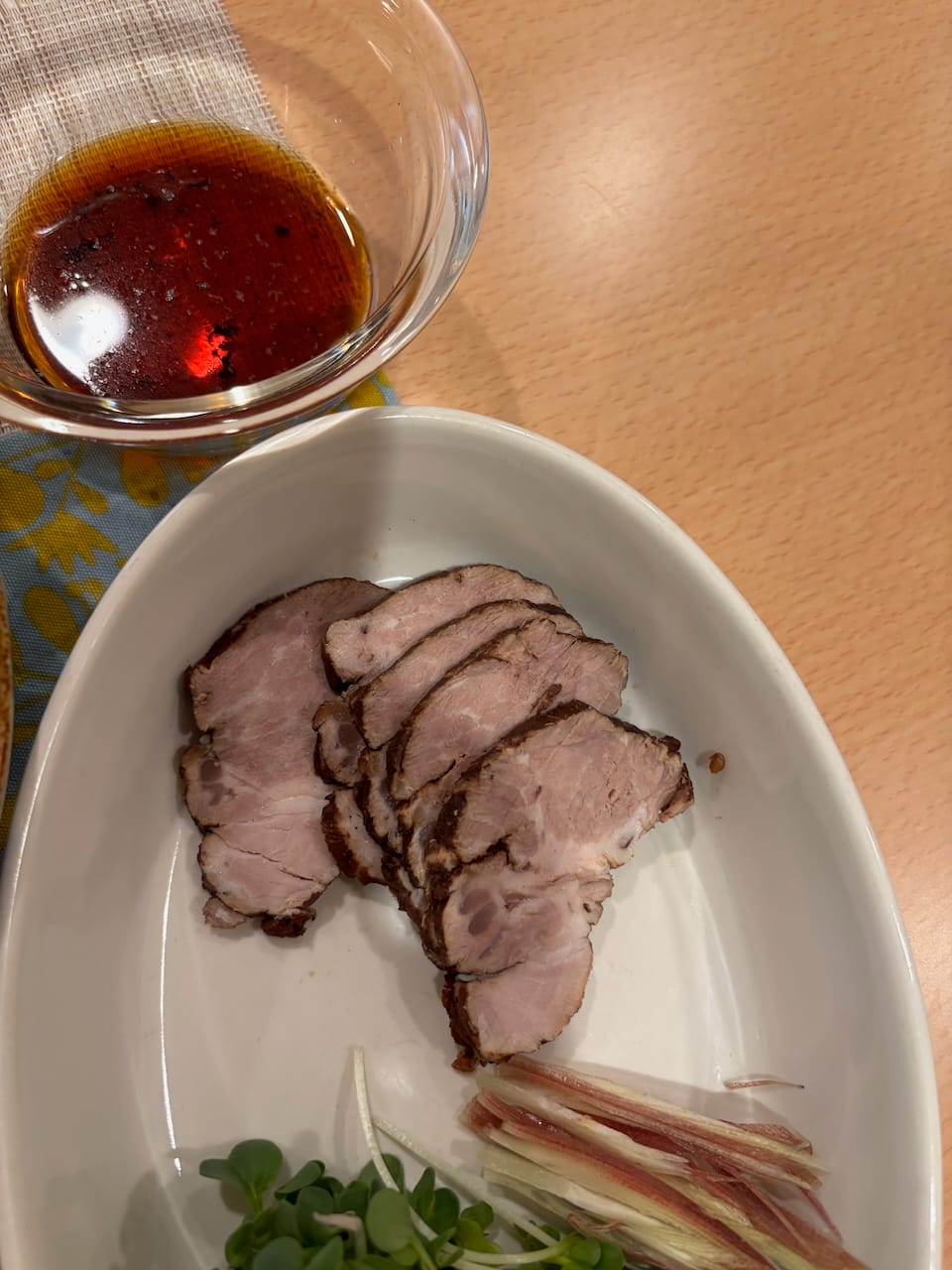
To eat the pork, cut it into thin slices and drizzle the marinade. I have eaten this pork with salad, on its own and also as a pasta topping. Come to think of it, this braised pork will also go well as a char siu replacement in a bowl of pork ramen.
Having spent most weekdays cooking breakfast and dinner, I feel more confident in preparing home-cooked meals that are more healthy and nutritious. I also now understand why some people say cooking well is a function of practise and repetition.
--Ends