WB045: Made To Move You
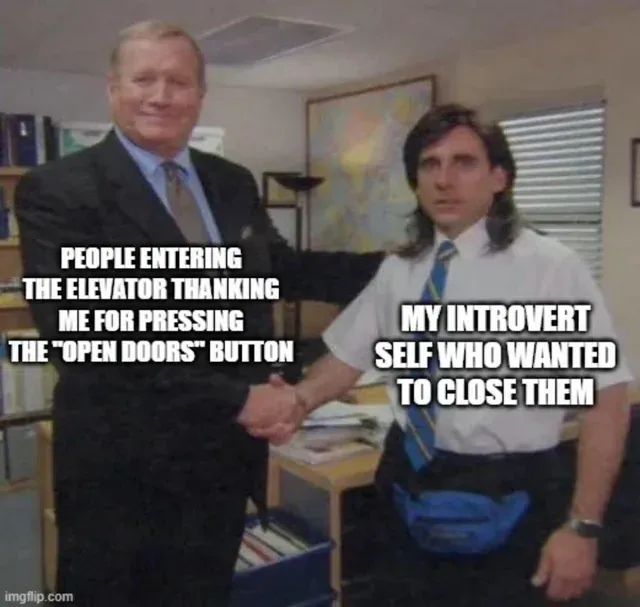
Last week, I listened to an engaging interview on the In Good Company podcast, where the host of the podcast, Nicolai Tangen, interviewed the leader of a company that builds & maintains a product that moves 2.4 billion people every day.
Tangen is the CEO of Norway's sovereign wealth fund, which is called Norges Bank Investment Management.
"What is this product?", one might wonder.
Important, yet easily overlooked, said product is the humble elevator. And the company in question is US-listed Otis Worldwide Corporation (NYSE: OTIS)("Otis").
Valued at around US$38 billion, Otis has (I feel) a great company tagline: "Made to move you".
The idea of a 50-minute long interview discussing elevators is enough to put one to sleep. Come to think of it, the idea also contradicts the term "elevator pitch", which is a short and concise description of an idea, company or subject.
Boring as it may sound, I came away with many illuminating perspectives despite what many would deem an unexciting company and business.
Judy Marks, President and CEO of Otis, was a great interviewee who gave me the impression of a hands-on and employee-oriented leader. She acknowledges that elevator technicians are the life and blood of the company, and respectfully refers to them as "colleagues", instead of "employees".
A fresh take on an underrated convenience
Below are a few new perspectives I developed from listening to the podcast.
Firstly, it did not occur to me that elevators can be seen in a similar light to airplanes. As transporters of humans, both products are designed and built to move people fast, comfortably and most importantly, safely.
Like airplanes, the only time people talk (and complain) about elevators is when they break down.
Marks outlines some real-world scenarios beyond Otis' control that the company has to account for. For example, mischievous passengers jumping up and down in a moving elevator or fraternity brothers, as a joke, trying to see how many of them can be crammed into a single elevator.
Secondly, I learned that as a business Otis has strong, built-in moats or competitive advantages that make it hard for new competitors to enter. Businesses with these characteristics are favourites of value investors like Warren Buffett.
Some examples of Otis' moat:
- The company's expertise in abiding by regulations in over 200 countries, which may or may not be the same, are hard to replicate
- Elevators and escalators are highly regulated, just like airplanes
- The 2.4 million units Otis maintains translate to sticky, long-term revenue generators, as maintenance is part of regulation
Thirdly, I think Otis' business is likely to survive and probably thrive in the current age of labour disruption brought by advancements in Artificial Intelligence.
Why? Because building and maintaining Otis' hardware is still very much dependent on skilled human technicians. Sure, there will come a day when humanoids can replace humans, but I doubt this will happen anytime soon.
Advancements in technology also serve to improve Otis' operational efficiency, translating to higher productivity and stronger operating margins. Case in point, Otis leverages Internet of Things like sensors that help detect issues in an elevator unit, giving the company a crucial heads up to dispatch a technician to minimise elevator downtime.
There are many more interesting points discussed in this podcast, which you should take the time to consume. I don't think a summarised, elevator pitch version of this podcast does it justice.
Background on Otis Worldwide Corporation
From Otis' 2024 Annual Report:
"Otis is the world’s leading elevator and escalator manufacturing, installation and service company. We serve customers in over 200 countries and territories around the world. Otis has global scale and local focus, with more than 1,400 branches
and offices, and a direct physical presence in more than 70 countries."
Otis was founded in 1853 by Elisha Otis, an American industrialist. The company was acquired in 1976 by United Technologies Corporation, which is now known as RTX Corporation (NYSE: RTX), following the former's April 2020 merger with Raytheon Technologies.
Otis was spun-off as a separately listed company as part of the merger.
As Otis operates in a highly-regulated space, it only has a few major competitors, namely Finland's KONE Oyj, Switzerland's Schindler Group and Germany's TK Elevator GmbH. According to Marks, there are also a few major Chinese and Japanese competitors (Mitsubishi Electric, Hitachi Ltd and Fujitec Co., Ltd.).
If you live in a building or house that has an elevator, find out how much it costs to maintain each shaft. These maintenance costs are not a choice, but a necessity due to regulation. If you can, find out how much these costs have also increased over the years.
Through this "DIY research", you hopefully have a good a sense whether Otis, or other well-managed elevator companies, makes a good, long-term investment.
--Ends