WB046: Cooking Tamagoyaki!
In Volume 1 of the Japanese manga (Japanese: 漫画, English: comic) Gokushufudou (Japanese: 極主夫道, English: The Way of the Househusband), the main protagonist Tatsu (Japanese: 龍, English: dragon) is seen making a tamagoyaki (Japanese: 卵焼き, English: fried egg roll) for his wife's bento set.
Bento is a Japanese-style home-cooked meal packed in a lunch box and prepared daily by housewives/househusbands for their school-going children and husbands/wives.
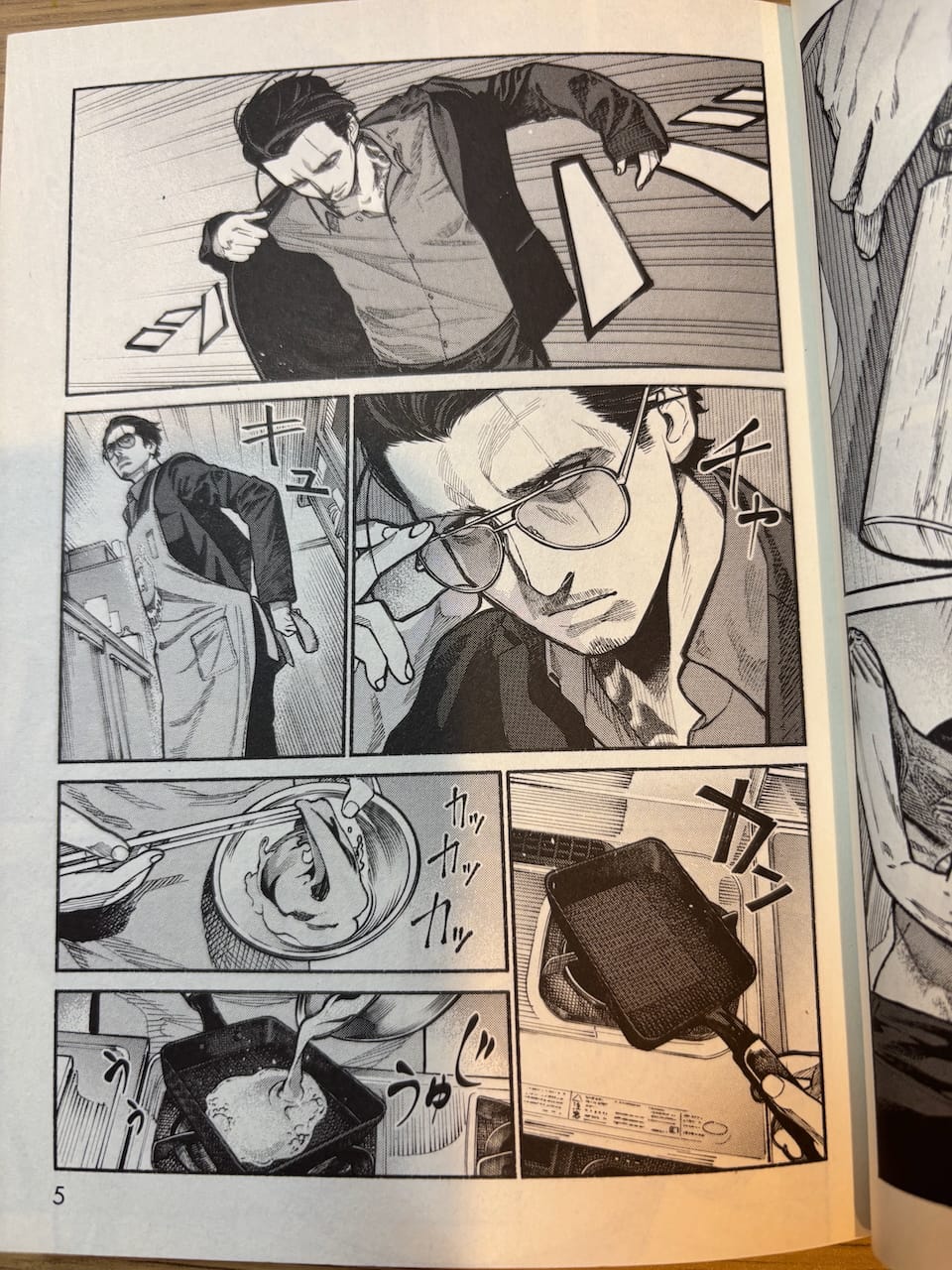
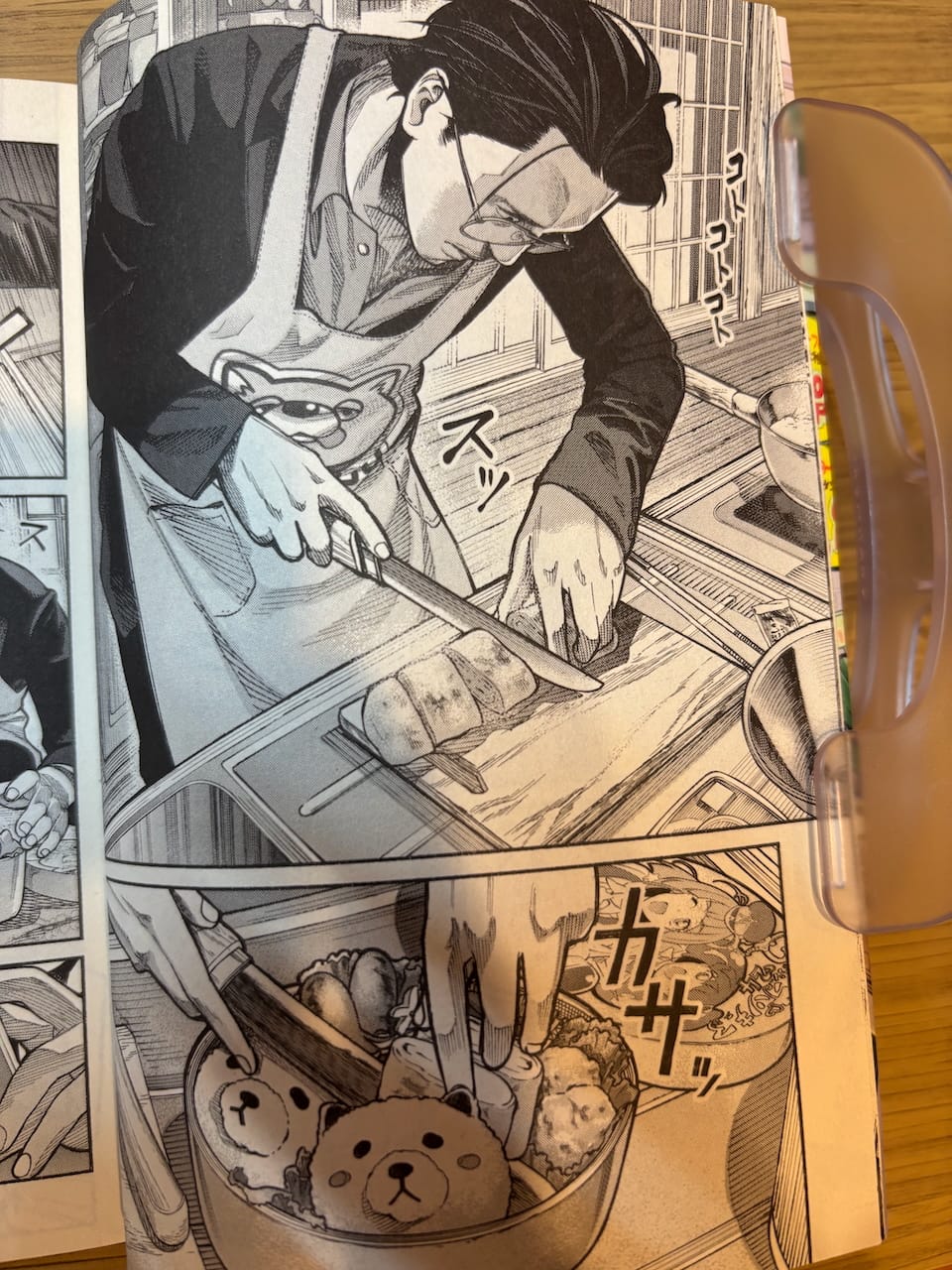
Tatsu making a tamagoyaki for his wife
Simple to prepare, nutritious (when prepared properly and eaten in moderation) and hard not to like, I'd say tamagoyaki is to the Japanese what omelettes are to the French. The former is important enough to have a page on it on Japan's Ministry of Agriculture, Forestry & Fisheries website.
Tamagoyaki is easily found in supermarkets, Japanese restaurants and convenience stores. If you throw a stone, I am sure you will hit a kid or salaryman or salarywoman whose bento has a tamagoyaki.
The Kanto-style version of tamagoyaki is called atsuyaki tamago (Japanese: 厚焼き卵) while the Kansai-style version is called dashimaki tamago (Japanese: 出汁巻き卵).
The difference between the two is Japanese dashi (Japanese: 出汁, English: soup stock) is added to the latter, leading to a fluffier and runnier tamagoyaki. This also makes dashimaki tamago a much harder dish to master.
I'd like to someday progress to preparing nutritious bento on a regular basis like Tatsu. So what better way than to start with atsuki tamagoyaki.
I first bought a simple non-stick, rectangular tamagoyaki frying pan. You can also use a regular cast iron version, but this requires more skill (and oil). You can technically use a round pan, but you're unlikely to get the desired outcome.
The egg mixture I use comprises:
- 3 eggs
- 1 tablespoon of Japanese soy sauce
- 1 teaspoon of sugar
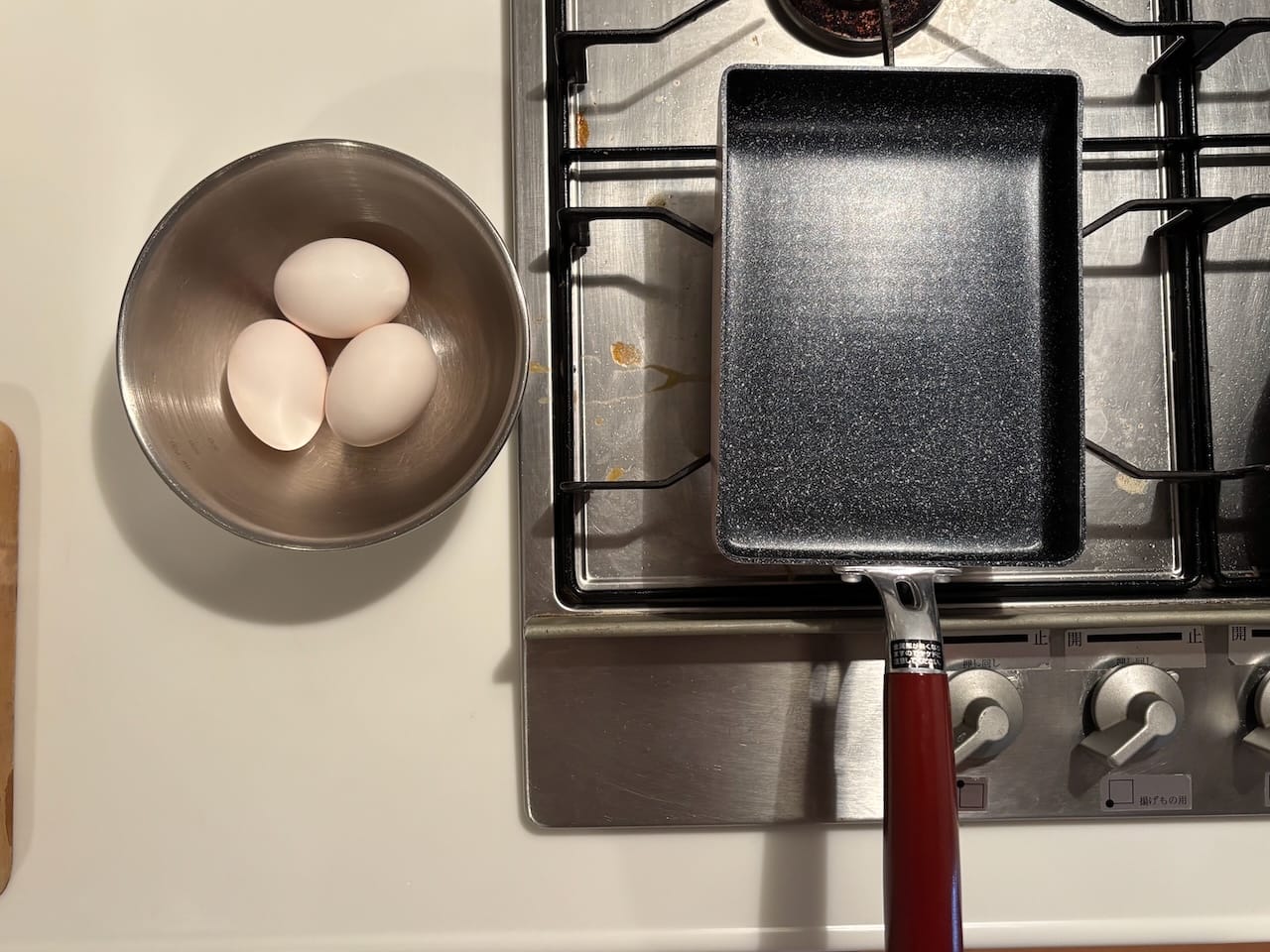
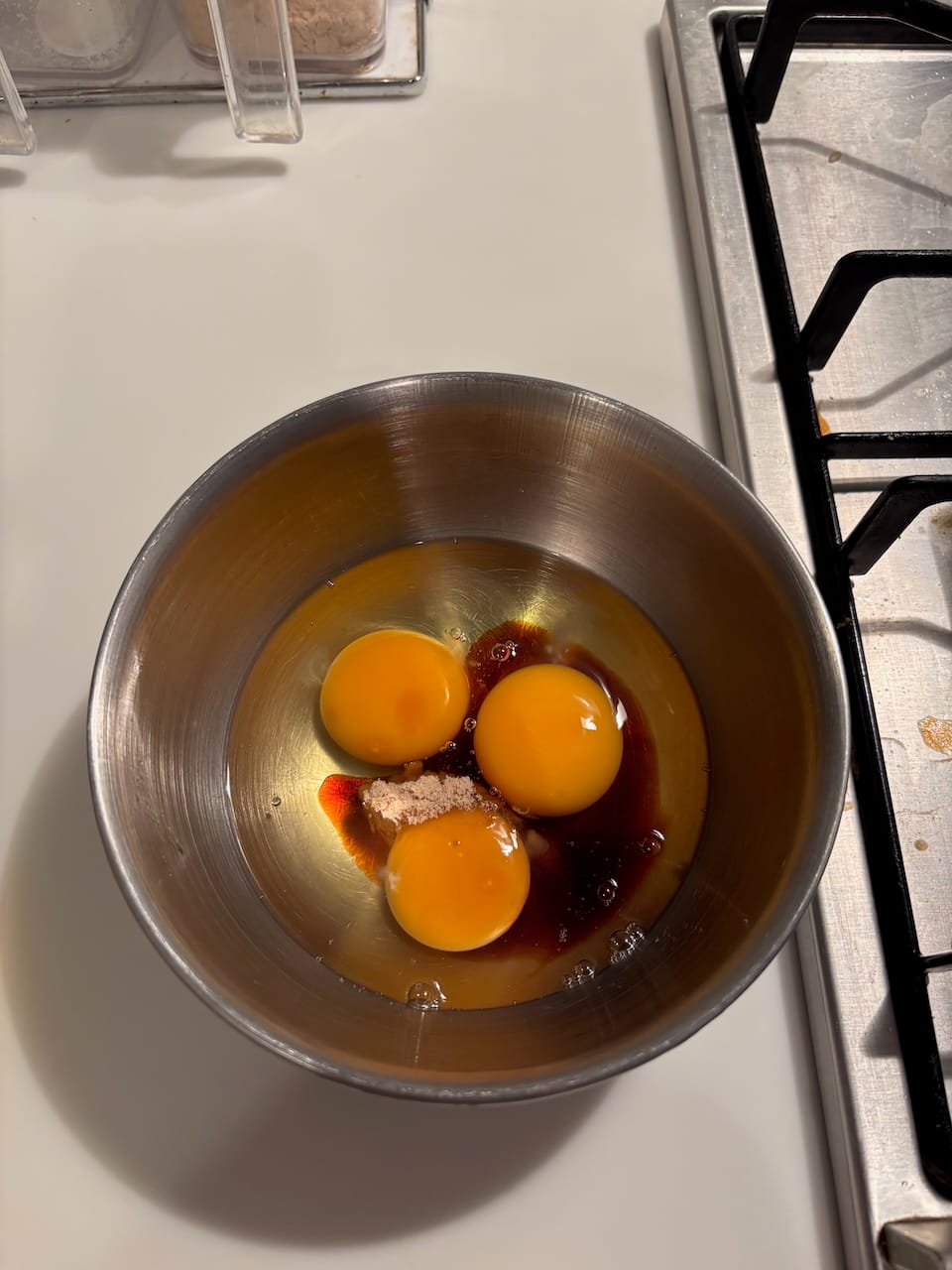
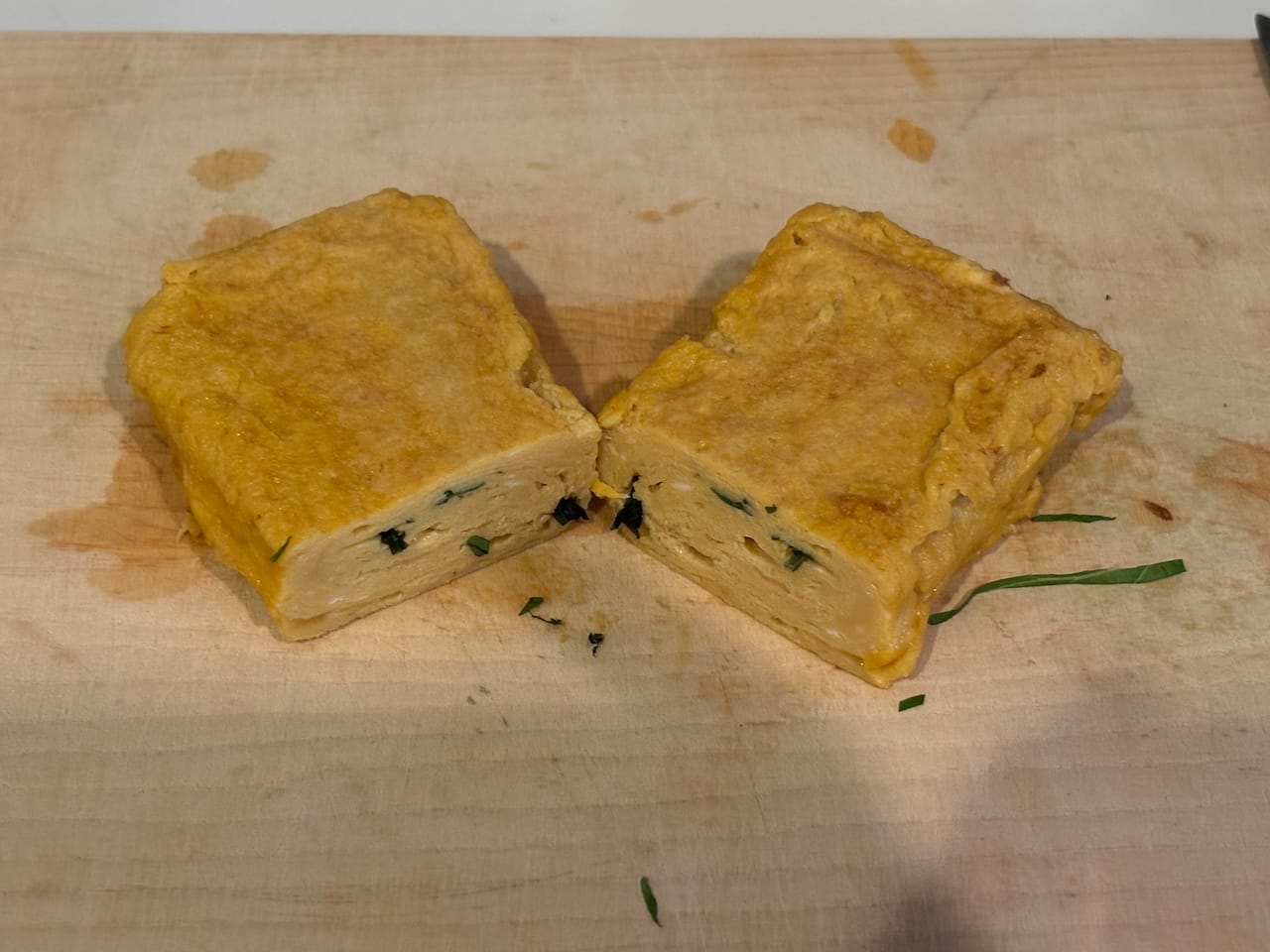
Making a shiso leaf tamagoyaki
Heat up the frying pan and oil. Be sure to oil the sides of the pan as well.
Pour a layer of the egg mixture into the pan. When the mixture is half-cooked, roll the egg onto itself, starting with the end furthest to you. Once the egg is fully rolled, push the roll to the furthest end and add more egg mixture. This step creates a new layer to roll the egg onto.
Repeat this process until all the egg mixture is complete. This video shows you how it's done.
The trickiest part I find is rolling the egg onto itself quickly without breaking the egg. Being cautious takes too long, resulting in an overcooked layer. One technique I have seen in many Youtube videos is using the pan to "flip" the egg onto itself instead of using a pair of chopsticks or spatula.
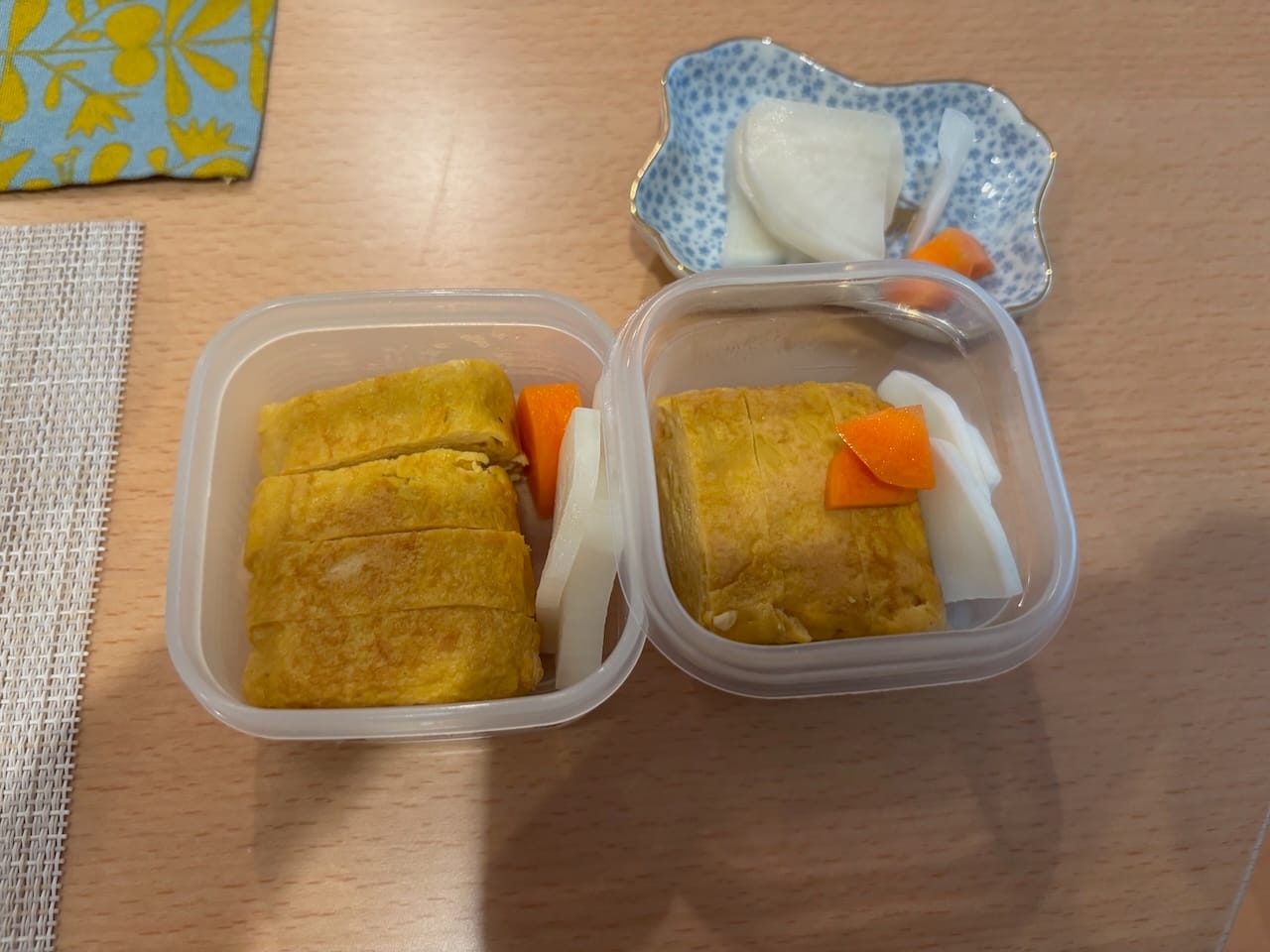
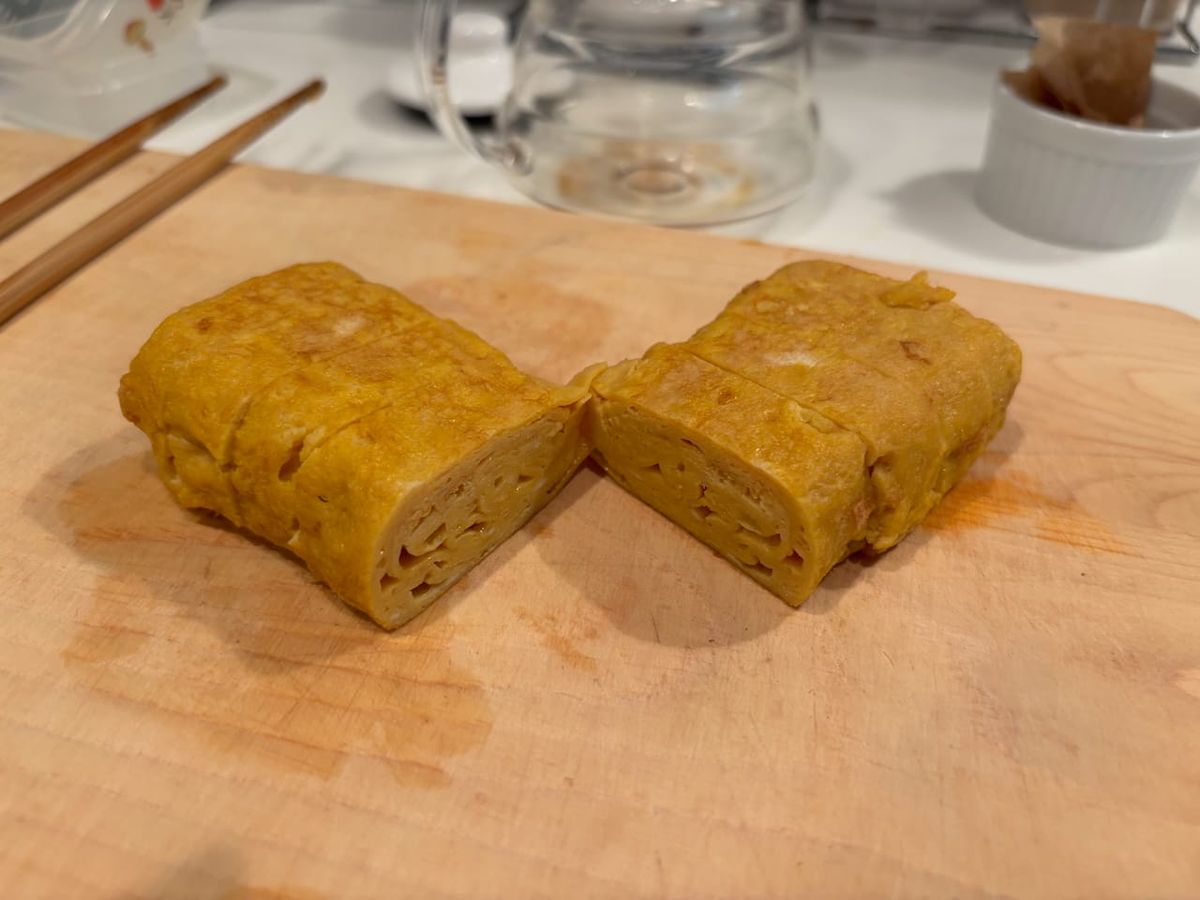
Home-made tamagoyaki and nukazuke
From my experiments, a confidently-executed "flip" leads to a good outcome while a nervous "flip" leads to a sub-optimal one.
Like most things in life, getting a great outcome boils down to practise, practise and more practise.
--Ends