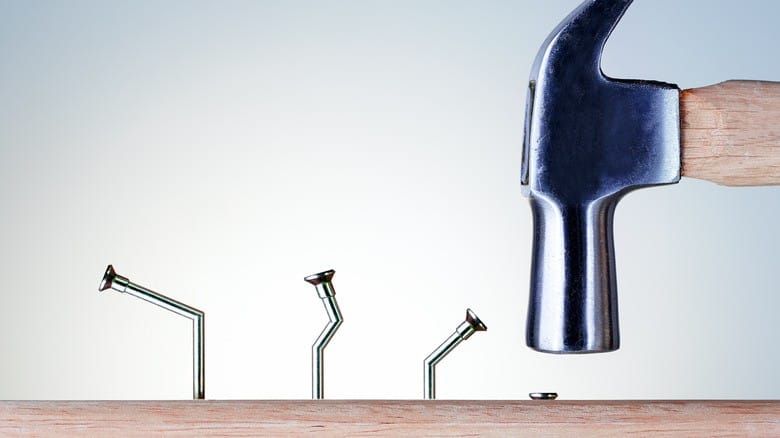
WB051: If the only tool you have is a hammer, everything looks like a nail
In early July, the National Policy Agency announced it was looking to make the gaimen kirikae (Japanese: 外面切り替え, English: Foreign Driver's License Conversion ) process significantly stricter.
The move was made in response to a series of car accidents in Japan involving foreign nationals. In one case, a man from China was allegedly involved in a hit-and-run of school students. In another case, a Peruvian man drove on the wrong side of the road, causing a pile-up.
Among the new measures being proposed are:
1) To make it compulsory for applicants to submit a juminhyo (Japanese: 住民票, English: Certificate of Residence)
2) Increasing the number of Knowledge Test questions (to 50 from 10) and passing mark (to 90% from 70%)
3) Introducing additional Driving Skills Test (Japanese: 技能試験) scenarios
Fortunately, the new regulations don't apply to me as I recently completed the conversion of my license conversion. However, I sympathise with genuine applicants impacted by the changes, as the changes are also being driven by a loophole in the existing process that is being abused.
Loopholes are made to be exploited
One would think the gaimen kirikae process is only available to long-term residents of Japan.
Strangely enough, this is not the case as short-term visitors such as tourists can use a temporary address, such as that of a hotel, as proof of their residential address in Japan. That's a pretty low bar to achieve and quite a slap in the face to long-term residents like myself who need to submit a juminhyo (and pay taxes).
In the first place, why do some tourists covet a Japanese license?
The reason is because Japanese driver's license holders can apply for an International Driving Permit (IDP), which is useful when you travel to a foreign country for holiday and want to rent a car.
Only license holders from countries that are signatories to the Geneva Convention on Road Traffic ("GCRT") can apply for an IDP. Interestingly, countries such as China are not signatories, resulting in license holders from these countries seeking a Japanese driver's license as a workaround to getting an IDP.
This loophole largely explains the dramatic increase in foreign driver license conversions over the years.
According to the NPA, there were 75,905 foreign license conversions in 2024, up from 48,885 in 2019. On balance, this increase could also be due to the increase in foreign, long-term Japanese residents.
The surge in demand for the foreign driver's license from short-term visitors has had unintended and negative downstream implications. For starters, waiting times to submit an application have blown out in recent years.
Prior to the start of the online reservation system in March this year, I read that applicants had to start lining up from as early as 500AM just to try and secure a slot. Even then, getting a slot was not a guaranteed outcome.
There has also been a domino effect on the wait times for the Driving Skills Test, which has stretched out to between three to six months.
Compounding this problem is that you must re-do the entire gaimen kirikae application if you don't complete the license conversion within six months.
The hammer and the nail
Over the past few years, the biggest losers have been long-term residents who genuinely need to convert their license. How many have the luxury of taking a day off work just to submit an application?
Though an online reservation system improves things, I think it can (and will) still be exploited. Take Singapore's online booking system for driving lessons as an example.
Of late, "entrepreneurial" people have developed software bots to book out online reservation slots and then on-sell these slots to genuine applicants for as much as S$30. Such unscrupulous behaviour also adds to an applicant's license acquisition costs.
It is quite sad when the basic social contract between human beings - be kind to thy neighbour - is exploited for profit and personal gain.
Regulations often lag behind the real-world problems they are meant to tackle. Provided the law is not being broken, there is very little that can be done to take action against unscrupulous, invisible middlemen or opportunistic individuals.
Even when new regulation is introduced, society is a net loser. Why so?
Because, when you're a policymaker and the only tool you have is a hammer, every problem looks like a nail. The end result: society is burdened with more rules and regulations (when are rules ever removed?).
--Ends