WB058: The Japanese Company Handbook
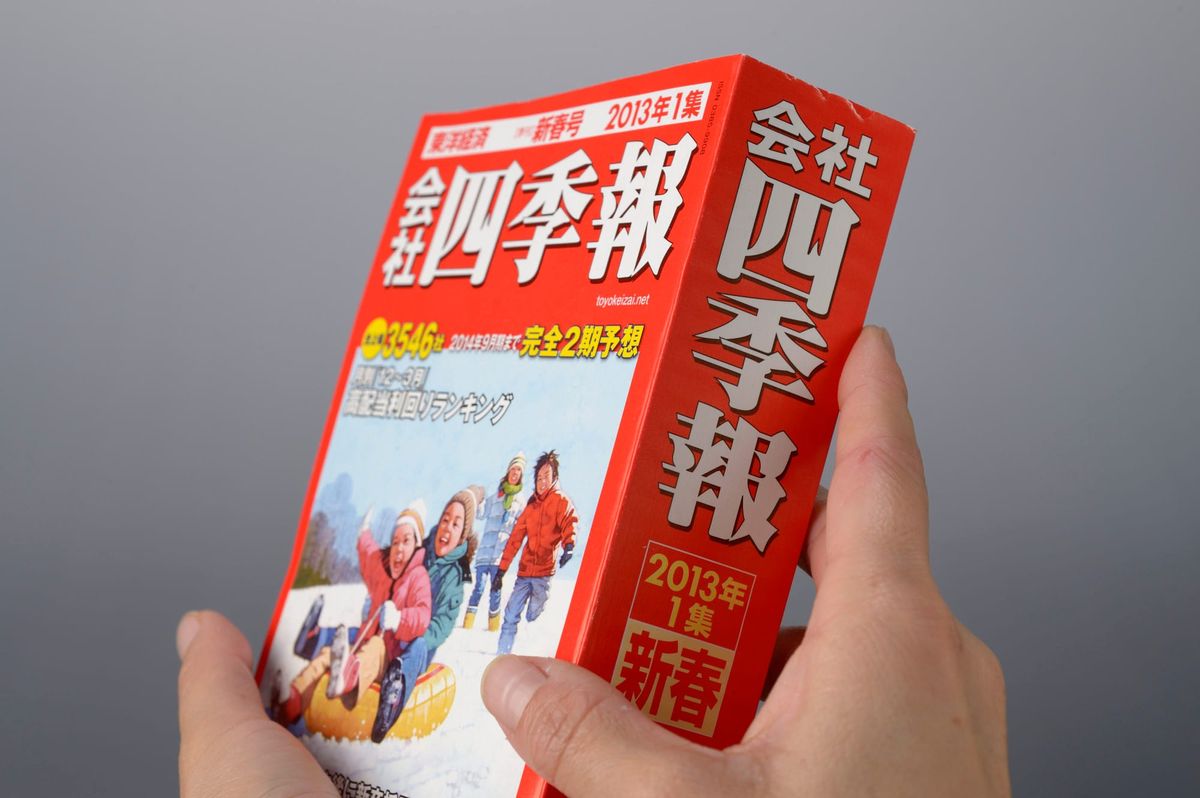
The Kaisha Shikiho (Japanese: 会社四季報) ("Japanese Company Handbook") is a widely-followed printed company handbook that covers all listed companies in Japan. This totals just under 4,000 companies (!!).
The Japanese Company Handbook was launched in 1936 by Tokyo-based publisher Toyo Keizai (Japanese: 東洋経済), a privately-held company that focuses on business and economic publications.
The handbook is published four times a year, with each volume corresponding to the season of the year.
The Japanese language version currently retails at JPY2,800 (~US$19). I consider this a steal considering how much effort it takes to put together (and edit!) the handbook and the wealth of information it contains. I also read that the book is an essential tool for local retail investors.
Many years ago, I remember ordering the English language version, which cost around four times the price of the Japanese language version.
Sad to say, I think Toyo Keizai stopped selling the print version of the English handbook a few years ago. As I am keen to learn more about Japanese companies, I have no choice but to significantly work harder to become better at Japanese.
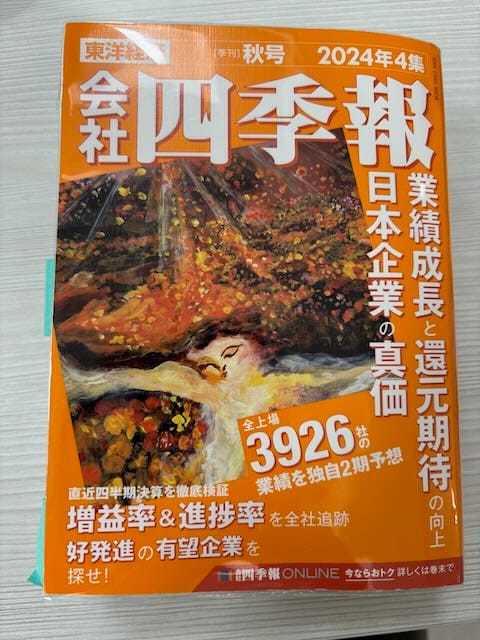
Last week, I bought a second-hand copy of the handbook's 2024 Autumn volume online for JPY800 (~US$5.00). This volume has 2,160 pages and came in pristine condition.
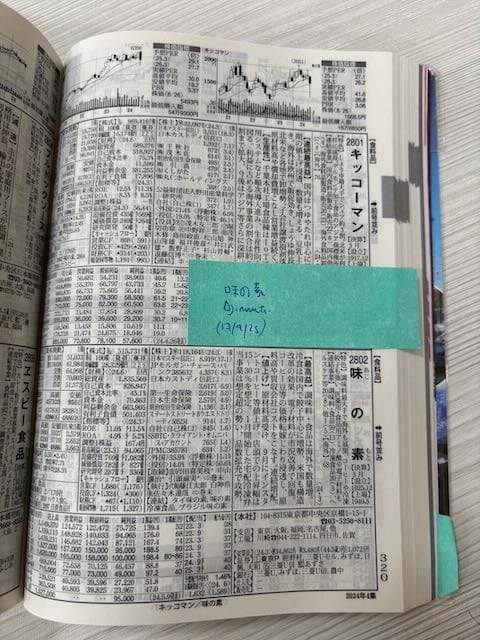
Given the language barrier, I decided to take a crack at reading up on a company I'm familiar with - Ajinomoto Co Inc. (Japanese: 味の素). Ajinomoto is probably best known worldwide for making flavour-enhancing products containing monosodium glutamate (MSG).
Apart from MSG, I learned that Ajinomoto manufactures one of Japan's leading instant coffee brands (under the "AGF" brand), frozen gyoza, amino acids for the food & pharmaceutical sectors and materials used in the electronic sector.
The Japanese entity's product portfolio is definitely more diverse than its Malaysian-listed entity, which focuses on MSG products.
Something I also found interesting is that "Ajinomoto" translates literally to "the origins of flavour" in English (味 Aji= flavour, 素 Moto= origin/source).
From first impressions, I find the Kaisha Shikiho a fantastic starting point to discover new companies or learn new things about companies you might already know about. It's tempting to use Google for this, I find it much easier to focus when reading a physical book.
Each company profile contains basic information like the company's history, main business segments, latest updates and key historical financial data (sales, operating profit, net profit, cash flows and dividends).
Each page has two company profiles. You can trust the Japanese not to be deterred by the lack of space, as all the data has been crammed into the allocated space. Definitely a sense of information overload, just like a Japanese supermarket!
Though the company profiles appear basic, I feel they give just enough information to make a decision on whether to do deeper research using other sources of information.
That said, the biggest stumbling block for me is the language, as native-level Japanese is used. Further, I gather that Japanese financial articles are written in a specific style, where verbs are omitted due to the lack of space. As a result, the meaning needs to be implied by the reader. This also explains how so much data can be crammed into this book.
Though my Kaisha Shikiho journey so far has been quite a challenge, using ChatGPT to translate unfamiliar terms has been incredibly helpful. It's also been very enjoyable learning financial terms in Japanese - something the Japanese Language Proficiency Test curriculum does not expose me to.
My target is to go through at least one company profile a week. Doing this, I'm sure my knowledge of Japanese companies and the Japanese language will improve in the process.
-Ends