WB074: Kazuo Ishiguro's "The Remains of the Day"
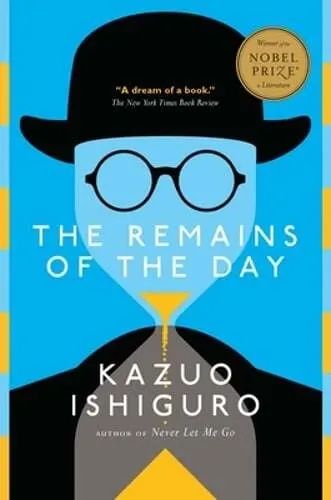
I have always been curious whether the ability to pick up and read any book is a skill that can be developed over time.
More often than not, I rarely buy or borrow books outside my comfort zone, largely for fear of ending up with a book that I don't enjoy enough to finish.
Having begun to consistently read more Japanese content (to prepare for the Japanese Language Proficiency Test) and borrow random English books from the library, I am starting to be convinced that reading, like running, is a skill that can be honed over time with consistent practise.
I recently finished reading The Remains of the Day, an English novel written in 1989 by Japanese-born British author Kazuo Ishiguro. The novel was adapted into a 1993 film of the same name, starring Anthony Hopkins and Emma Thompson.
Ishiburo has an interesting background. He was born in Nagasaki (Japanese: 長崎), Japan in 1954 and moved to Britain in 1960 with his parents. He is now a British citizen. His books are originally written in English.
According to Wikipedia, The Remains of the Day is one of the most highly regarded post-war British novels. It won the 1989 Booker Prize, awarded for the best fiction novel written in English and published in the United Kingdom or Ireland.
Ishiguro also won the 2017 Nobel Prize in Literature.
Despite not knowing much about Ishiguro or what The Remains of the Day was about beforehand, I decided to take a chance and borrow it from the library. The book didn't look terribly long and I also admit I was swayed by the "Booker Prize-Winner" label on the front cover.
Whether you enjoy reading or not, I think you will find the book quite an enjoyable and refreshing read. It is written from the point of view of a man named Stevens, who recollects his long career as a butler serving in Darlington Hall, a fictitious home near Oxford, England. Most of Stevens' recollections are from the period just after World War I.
One of the things I found enjoyable about the book is the style in which it was written.
Ishiguro first created an overarching premise to the book, being Stevens' road trip to visit a former colleague whom he had not seen in years. Within this larger story, the author weaves in different memories revolving around Stevens' life as a butler along with his relationships with the people in his life.
The outcome of Stevens' meeting with his former colleague is not revealed till the end of the book. Come to think of it, Stevens' recollections about his life are important elements in helping us better comprehend why his meeting with his former colleague turned out as such.
This brings memories of my time studying History as a subject in high school.
I learned that the study of History is not about just memorising the "what" and the "when". Rather, History is about critically thinking about these two elements to form a well-supported analysis about the "why".
Understanding the "why" helps you make more informed decisions, rather than emotional ones.
Unfortunately these days, the intellectual curiosity to learn and analyse facts is gradually being lost to click-bait headlines and fake news that are designed to trigger emotional responses.
I guess the cure to this all is to just make a determination to read regularly and broadly, and more importantly think critically.
Sure, this takes time, which is a luxury to some. But I bet if you allocate just a quarter of the time you spend scrolling on your phone each day to reading meaningful material, you will become a more learned person.
Start first by checking your phone's Screen Time function - how much time do you spend on your phone each day?
--Ends